

Can Your Bathroom Handle A Freestanding Tub? Here's How To Tell

Remodeling your bathroom might have you considering the luxury and design statement of a freestanding bathtub. These sculptural fixtures provide a stunning, spa-style vibe that adds a sense of calm and relaxation to your bathroom. This fact, among other bathroom remodel ideas, may inspire you to change your layout. However, before you incorporate one in your own bathroom, it's worth looking more into the practical side of whether or not your bathroom can actually handle one. The answer comes down to evaluating current aspects of your space so it's not forced, including the layout and floor space of your bathroom, water efficiency of your HVAC systems, weight capacity of your tub, and your overall comfort –all of which go beyond having a pretty-looking tub.
You must plan ahead when including a freestanding tub because they often sit out in the open in your bathroom, which can limit your floor plan. One major requirement is having space between the tub and the walls, ideally anywhere from 4 inches up to a foot, if possible. The average tub ranges from about 45 to 72 inches long, 30 inches wide, and 20 inches high, though larger tubs exist.Just a 60-inch freestanding tub will eat up a massive 5 feet of real estate, dominating smaller bathrooms and leaving little room for other features and fixtures. Keep in mind you need space to reach the toilet, the shower, and sink vanity. You also need to ensure that the door to the bathroom can easily open and close.
Important factors to consider before installing a freestanding tub
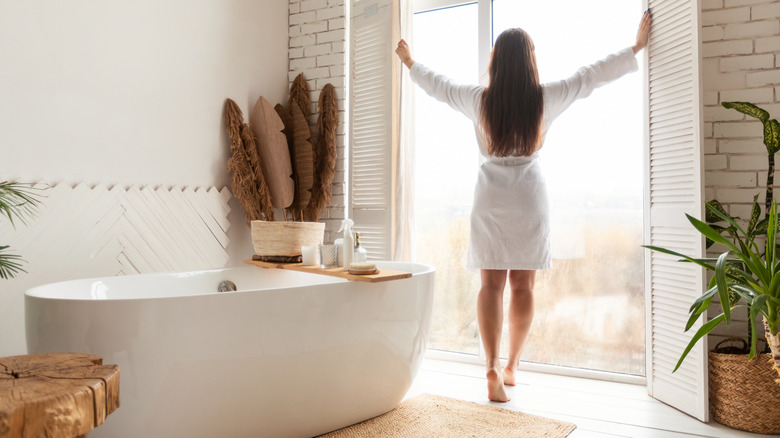
Freestanding tubs can elevate the aesthetic of your bathroom as a luxurious retreat space. The space is also about function, not just style, so it may be worth asking if you enjoy soaking that much. You might get more use out of the space with a stand-up shower. Or you can have the best of both worlds with a freestanding tub and shower fixture. These layouts feature a the tub with a floor-mounted shower fixture, and shower curtain or panel that keeps water contained. Having at least one tub in the home is also valuable for potential buyers down the road. When you add a large feature like a tub, consider some small bathroom ideas to help make your space look bigger.
To fill a freestanding tub, you'll need more water and good water pressure to fill it. Soaking tubs typically require as much as 80 gallons to fill, often upping your monthly water usage. With that in mind, you might have to review your home's plumbing to ensure it can handle all of the water each time it's drained. Next, evaluate your water heater. You'll want to check that the system can provide enough hot water so your bath doesn't become lukewarm or cold while filling.
Finally, a review of your floor joists is paramount. Freestanding tubs can be heavy, and with the added water — for a total weight of 500 to 1,000 plus pounds — your flooring may not support it.If your bathroom is on the second floor, this becomes even more crucial. When you consider water limits, heat requirements, and weight, a freestanding tub might not make the cut as part of your bathroom design.