

Hide The Eyesore Of An Old Tree Stump With This Raised Garden Bed Idea
We may receive a commission on purchases made from links.
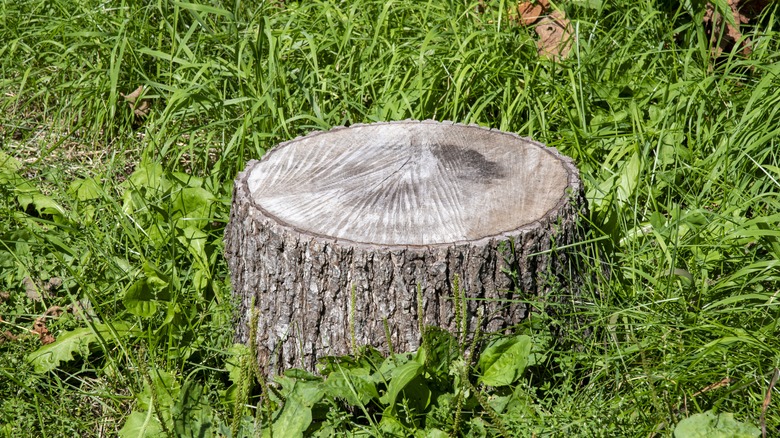
Smack dab in the middle of the backyard at our old house was a big, rotten tree stump. The tree had been removed before we bought the house, but they didn't grind the stump, so it was just there, jutting out like a scraggly brown iceberg. It wasn't just ugly; it was a hazard. There were still above-ground roots spreading around it, creating a tripping hazard (and yes, I fell more than once on those annoying roots). As it slowly decomposed, the ground around it became more unstable because the stump and roots were breaking down, softening the soil beneath. The only good thing about that old stump was that it was adding nutrients and conditioning the soil as it rotted. As a master gardener for almost 15 years, I understand the value of good soil, so at that point, I decided to create a focal point out of it by turning it into a garden bed of flowers, which thrived.
This was a quick fix for an old stump, but if you have one left from a newly removed tree, it can take about 15 to 50 years for it to break down naturally. That's why I love the idea of building a raised bed around the stump. You can create something beautiful out of an existing eyesore and hazard while speeding up the decomposition process.
Reasons to build a raised garden bed around a tree stump
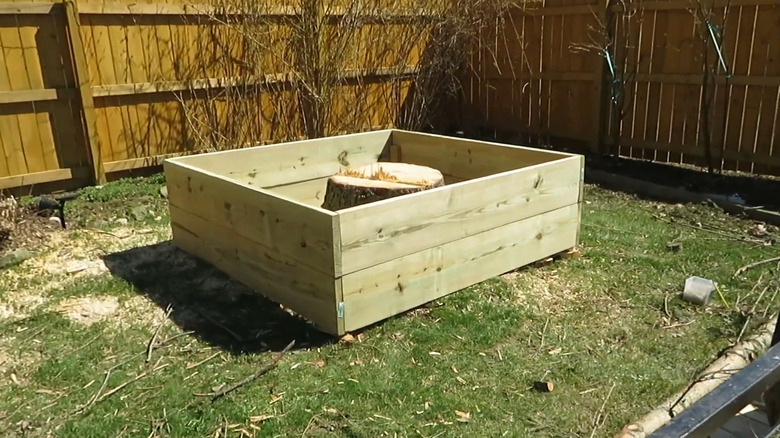
We have already discussed the fact that a tree stump in the yard is both an eyesore and hazard, so it seems obvious that a raised garden bed would be a better option. You don't want to look at and deal with that problem for the next few decades. But wait, there's more! Building a bed around your tree stump can save you money. Stump grinding is expensive. For a large tree, it could cost you over $400. In contrast, you can buy some inexpensive wood or a pre-fab kit and DIY the soil for your raised bed for much less. Plus, if you grow veggies, you'll get some free food out of the deal.
Over time, the biodiversity in your soil will help break down the tree stump. In turn, as the tree stump decomposes, it will add nutrients to your soil. The dead tree and raised bed will quickly create a symbiotic relationship, supporting each other. The moisture, various insects, worms, and fungi will speed up the decomposition process considerably. So, even if you don't want a garden bed in that spot forever, adding one for a few years can leave you with beautiful soil and, most importantly, no stump.
Considerations for building your raised bed
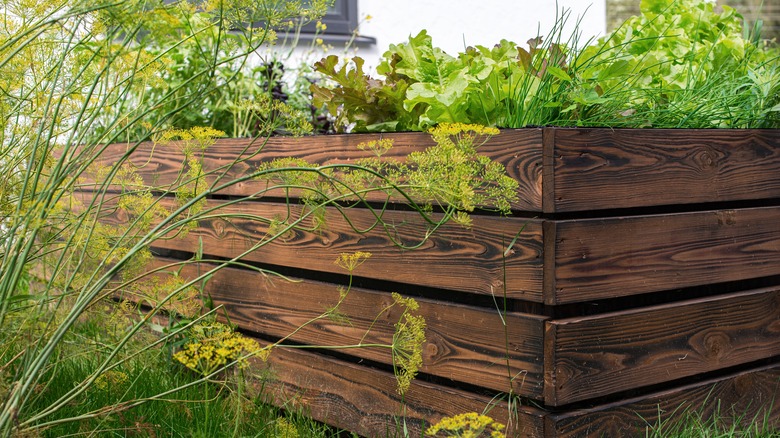
The first step to starting a raised garden bed around your tree stump is deciding which material to use. If you don't want a permanent bed there or aren't sure about it, cheap 1-by-4-inch untreated pine slats from the hardware store will last several years. There are many ways to build a simple wooden raised bed, so pick a design and measure. Your bed needs to be tall and wide enough to cover the stump itself and any large roots protruding from the base. In most cases, a 4-by-4-foot bed should do the job. Anything wider than that will be difficult to reach for planting in the center. If you are looking for a more permanent bed that will last indefinitely, consider purchasing a metal raised bed kit. Again, you'll need one that is taller than the stump, so look for a 2-foot-tall option, like this MTB Garden Metal Raised Garden Bed Kit on Amazon.
With your bed in place, it's time to fill it with a soil mix and plants. The most economical way to fill any raised bed is to create a thick layer of lawn and garden waste at the bottom. This can be sticks, untreated grass clippings, leaves, or whatever you have lying around. Then, top that with the best type of soil for your needs. Finally, plant what you want to grow and enjoy your new garden.