

Repurpose An Old Crock Into A Yard Feature Birds Will Love

We may receive a commission on purchases made from links.
There are many advantages to having a bird bubbler in your outdoor space. This type of water feature uses a pump to pull water upward from a deep container and over a shallow area on top, creating a bubbling effect. You may get more feathered visitors with a bubbler than a standard bird bath, since they're drawn in by the movement of the water. The bubbling motion can encourage playful behavior in some of the birds that stop by for a quick dip, like sparrows, chickadees, and buntings. Plus, since the water circulates often, mosquitos don't tend to breed there like they would in a stagnant bath. High-end water features can retail for hundreds of dollars, but you can save money and get the same benefits when you upcycle an old crock to create a DIY bubbler that will attract more birds to your yard.
Crocks are cookware that are typically used for fermenting (think making pickles). They're not to be confused with crockpots, the commonly-used term for plug-in kitchen appliances also known as slow cookers. A watertight fermentation crock can hold the water for the bird bubbler, and is big enough to fit a pump to create those bubbles. A flat rock at the top of the crock then acts as a perfect perching place. You're in luck if you have a crock handed down from a family member or laying around the house, but you can also buy a used one at a thrift store or garage sale. Just make sure to inspect the vessel (often made of ceramic) for any cracks that could compromise its usefulness.
Transform used cookware into a bird haven with this DIY
For this DIY, you'll need a pre-loved crock, cleaning supplies including dish soap and bleach, a terra cotta pot, submersible pump, an assortment of rocks including flat types like flagstones, and a drill. With all these things and some ingenuity, you're on the way to a working bird bubbler. First, give the crock a thorough cleaning with dish soap, water, and a scrubbing brush. Sanitize the used cookware by pouring in a 10% solution of diluted bleach, made from nine parts water and one part bleach, and letting it sit for three minutes. This helps vanquish any mold that may have built up in the course of the fermentation the crock was used for, which is dangerous to birds if it gets into the water.
Once the crock is clean, put together the pump. You will then place the pump inside the crock and weigh down its tubing with some stones. The POPOSOAP Solar Bird Bath Fountain Pump is a great option, since you won't have to worry about plugging it into a power source. Your terra cotta pot can come in handy to keep the pump in place — turn the pot upside down and thread the tubing through its drainage hole before setting it down around the pump. The final piece is drilling a hole in the rock that will sit at the top of the feature. Pull the tubing through the hole, and all the components will be in place. Fill the crock up with water, let the pump charge, and check if any settings on the pump need to be adjusted. You'll have to keep the mini solar panel in the sun, but placing the bubbler itself in some shade is a tip to attract more birds.
Tailor a DIY bird bubbler to your yard and style
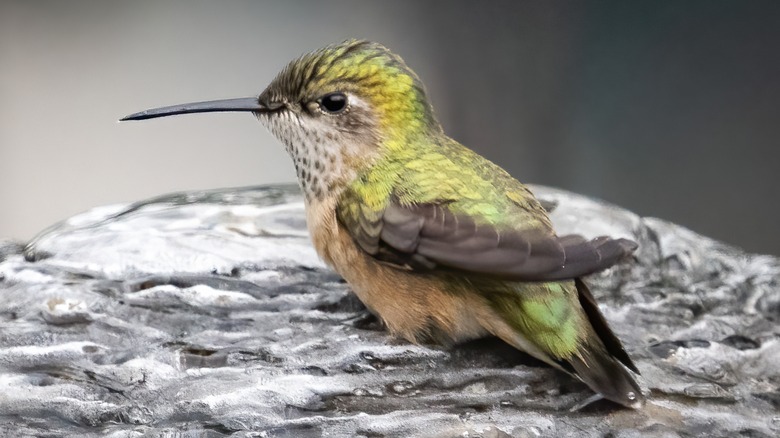
Every garden is unique, so there are some adjustments you can make to this bird bubbler DIY to match your own space and preferences, making use of what you have on hand. If you don't have rocks or a drill strong enough to make a hole through one, you can actually use a plastic saucer or tray, such as those made for serving chips and dip. Just like the crock, you may have a spare one lying around the kitchen or find one while thrift store shopping. You can cut a hole in the center of the dish, thread the pump's plug through it, and place it on top of the crock, which you can still use as a reservoir.
There are also various pumps you can use beyond the solar kind, as long as they have a cord you can thread through the surface of your bubbler. Certain electrical pumps, for example, have dials that adjust the strength of the flow for a more customizable DIY water feature. Just make sure you can place it within range of a power source. While the crock can be freestanding, depending on how much space you have to work with, you can also bury the vessel in the ground so it appears more like a natural stream.