

You Need To Replace Your Plastic Storage Containers Way More Often Than You Think
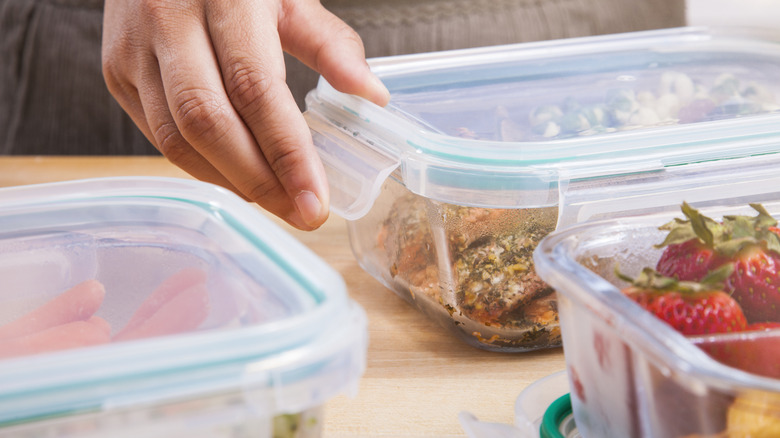
Plastic storage containers are great for meal-prepping, packing leftovers, and being more eco-friendly when it comes to storing food. It's quite easy to overstock your cupboards with a large array of reusable plastic containers. Before you know it, you have shelves full of containers in varying sizes, often with mismatched or misplaced lids. While you can argue that plastic food containers are meant for long-term use and reuse until they're visibly damaged and therefore unusable, there is an actual determined timeframe for when you should be swapping out your plastic containers, and it's more often than you would think.
A common misunderstood practice — like how often you should be washing your bedsheets – is to purge your pantry of overused plastic containers after at least six months to a year of use, but it's heavily dependent on whether they're showing signs of wear. There are several signs to look for if you think your plastic food containers might have met the end of their safe usage time. Storage containers at the end of their lifespan will look cloudy, have warped lids, and can lose their seal. Overused plastic receptacles can also develop a smell that just seems off or retain the smell of food that was stored in them. Discoloration is also an indicator that it's time to recycle your plastic food container. If you notice any of these signs or if you've been using your plasticware for half a year or more, then it might be time to swap out the containers for a new set.
Why it's important to monitor and replace your plastic containers
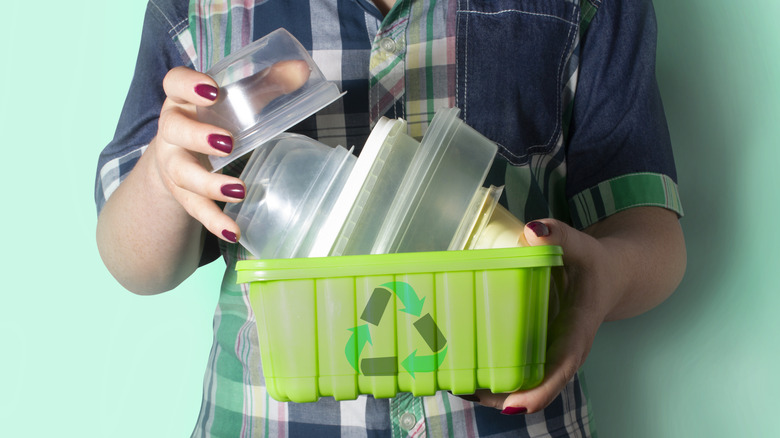
Every good thing must come to an end, and the same can be said for your plastic containers. If you notice any of the aforementioned signs of wear and tear in your plasticware, it's important to toss them into the recycling bin and replace them. While they are a great alternative to single-use, disposable food storage items, plastic food storage containers are made from, well, plastic. The chemicals found in plastic can contaminate and seep into the food stored inside the container if you continue to use it beyond its time. Scratches, stains, and cracks in the plastic can cause microplastics to be released and ultimately absorbed by food stored inside the container. Keeping damaged plastic food storage containers can also run the risk of harboring mold, which can form inside cracks and tears that can be missed when cleaning.
While the long-term effects of consuming microplastics are still being studied, preventing yourself and your loved ones from accidentally ingesting these chemicals is a preferred course of action. To lower the risk of this, be sure to monitor the plasticware in your collection, keeping an eye out for staining, cracks, scratches, and lingering smells. If you notice any signs of damage, recycle and replace that plastic container immediately. To avoid microplastics altogether, you might want to consider upgrading your food storage game by making the switch to glass Tupperware.