

The Essential Tip To Prevent A Buried Downspout From Freezing In The Winter
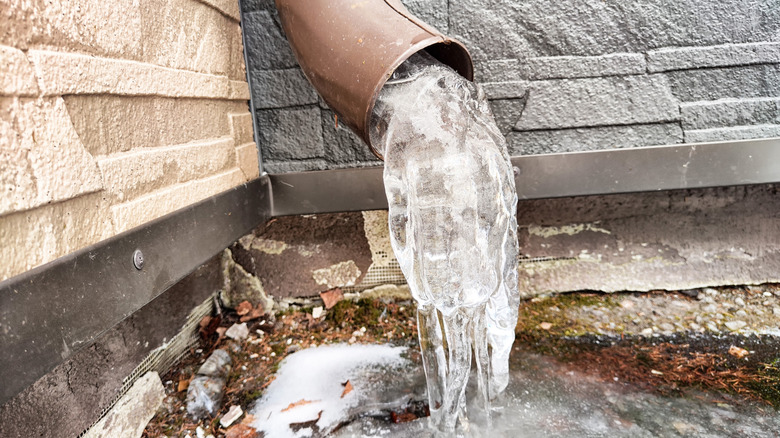
Buried downspouts are a useful way to move water away from your foundation without having unsightly hoses in your yard. In fact, they are one of the best downspout extensions to consider to save your home's foundation from water damage. They also handle winters better than some other options, as they are buried underground and do not freeze as easily as surface downspouts would. However, they can still do so, especially if not taken care of properly. Thankfully, with one or two additions to your downspout system, you can reduce the chances of them freezing up and causing issues. Additionally, if the weather is extreme and they do still freeze for some reason, you have more options to fix the problem quickly. Venting your downspout is essential, and a very easy process. Generally, they are installed right at the end of the visible area, before it continues underground. Depending on how far your vents go, you may also want to place an additional one somewhere in the middle of the underground system.
Vents are just pieces with open holes that help to control airflow and pressure. The force between the water and air slows down the flow, which keeps liquid in the downspouts, and therefore gives it time to freeze before it can leach out of the pipe. Not only do the vents help regulate the air in the gutter, but it acts like a cleanout, so if you get a lot of debris from your gutters, it's easier to access.
A vent on your downspout is essential
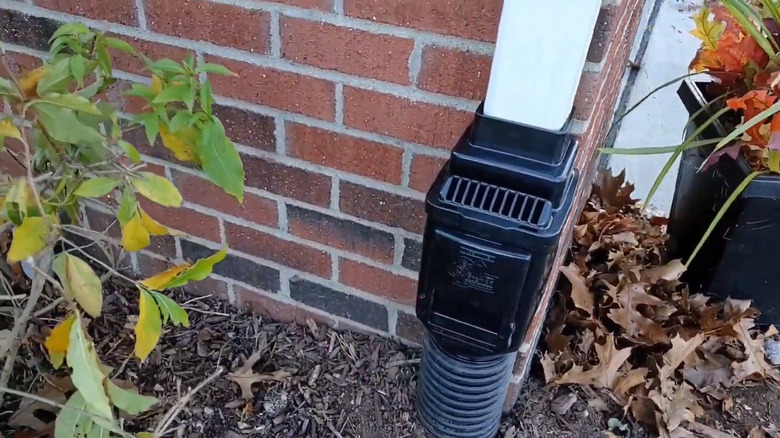
There are ways to heat your gutters in the winter to prevent ice damage, but these vents allow for better draining, which helps to stop water from sitting in your downspout and freezing over the winter. It does this by bringing in air and giving it a space to escape to prevent bubbles, therefore reducing the chances that the liquid can stay or slow down long enough to actually freeze. This process is simple, but incredibly effective.
Frozen downspouts are more than just an inconvenience, which is why sometimes, you may need to call a professional to take care of a frozen downspout. After all, if your underground system freezes, your gutters no longer have a place to deliver the water, and it will sit in the spouts between your roof and the ground. If there is enough liquid, it can also sit in your gutters. Both of these are far more likely to freeze, as they not only deal with actual air temperatures, but they are also exposed to air flow, which can further chill. So if your underground downspout freezes, there is a high chance that any water sitting in your system aboveground will also freeze, which can lead to damage to your roof and your gutters. Having a vent allows the system to move even if some parts are frozen, and gives you a point to pour in warm water to help things melt.