

Is Your Countertop Bowing? Here's Why (And How To Fix It)
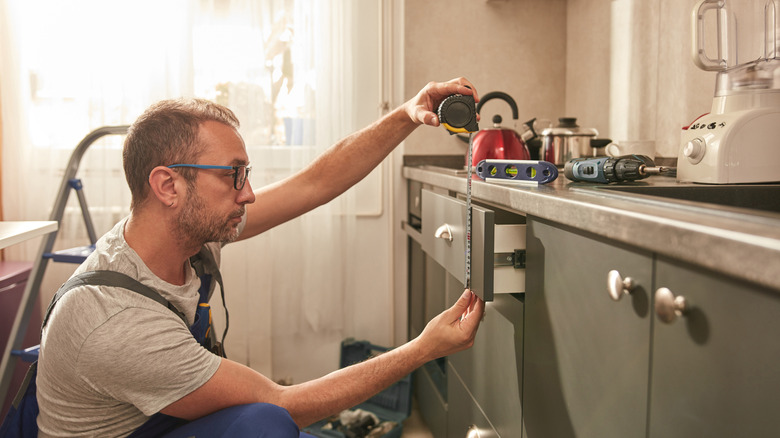
Between the high temperatures and moisture, your kitchen is a hostile climate for design materials. As a result, the low-maintenance materials you used for your kitchen countertops may show signs of damage and warping. This not only causes an aesthetic hiccup but can also keep you from using your countertop to its fullest. And that's without taking regular wear and tear into consideration. This is especially true when it comes to bowing. Sometimes, a replacement may be needed, especially if the damage is severe, but usually, the problem is easy to remedy — and you have options. DIY fixes for bowing countertops include drying up excessive moisture and using counterpressure to flatten out the bend.
Most kitchen countertops warp in two ways: cupping and bowing. If your countertop is bowing, then it's damaged along its length. Cupping, on the other hand, affects the width or depth of the countertop. Even if you carefully considered every type of countertop before your kitchen remodel, laminate or wood countertops will be particularly vulnerable to warping. While some timber species naturally have minor surface variations, bowing is most often the result of environmental factors: temperature changes, humidity, or water. Even natural stone countertops, like quartz, aren't trouble-free. Extreme heat or cold and heavy loads can cause bowing. While proper installation techniques can go some way toward preventing countertop bowing, mild to major warping may occur regardless.
DIY fixes for bowing countertops depending on material
The first step is to identify the cause of bowing or cupping in your countertop. For example, if you have a laminate countertop that's swelling or showing signs of bowing, it may be an indicator of water damage. If you didn't spill anything recently, you may need to locate the source of the water. Otherwise, you can use a hairdryer to evaporate some of the moisture in the laminate surface and underlying particle board. Set the appliance to low; you want to avoid excess heat, which could make the problem worse. Once fixed, consider sealing the surface with wood glue and water — it's a preventative measure you can take to safeguard your laminate countertops.
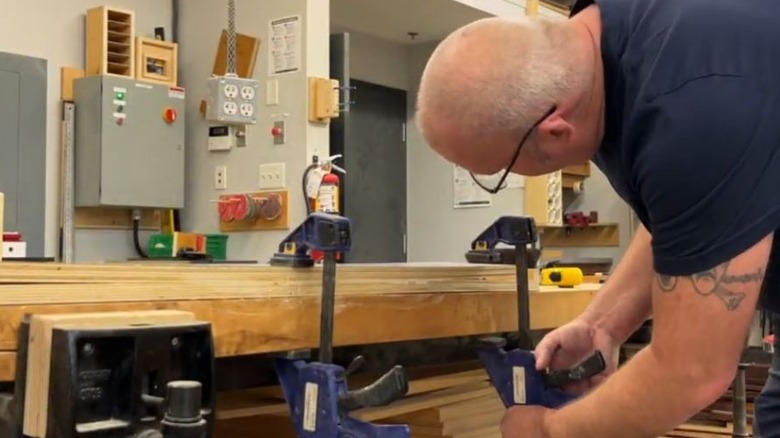
Do you have a solid wood butcher block countertop? Once again, you may be able to use heat to re-flatten the warped areas. Cover the affected area with a damp towel and run a clothes iron over it. If you're able to remove the countertop from the cabinetry, you may be able to press out the bow. Transport the wood to your garage or workshop and set it on a large, flat surface — like a workbench. Affix multiple clamps to the countertop, tightening them until the surface is flat. Quartz or granite countertops can warp or bow for many of the same reasons as other materials. Unfortunately, the fix for these materials is not so simple. You may have to resurface the countertop, which involves grinding down the surface of the stone. It's usually a job for a professional. Before diving into fixing a bowing or cupping countertop, it's important to remember that solutions are material-specific.