

Your Outdoor Pillows Could Use A Vintage, Affordable DIY Upgrade
We may receive a commission on purchases made from links.
DIY projects are usually a fantastic way to get the outdoor living décor of your dreams while sticking to a budget. However, today's rising fabric prices are making this far more difficult to achieve. If your outdoor pillows are in need of a refresh, it may be time to approach material sourcing differently. Rather than buying new fabric, check what you have stored away in the attic or go thrifting for vintage — or vintage-look — tablecloths. You often come uncover gorgeous, unique printed textiles at far better prices than retail stores offer. Then you can use them to make new covers for your patio cushions, just as you would regular upholstery fabric.
Vintage tablecloths often feature colorful fruit or delicate floral patterns. Many also have intricate lace or otherwise-detailed borders. These prints and embellishments are perfect for patio furniture; you want something that will energize and refresh this social space. However, the soft cottons and other natural fabrics vintage tablecloths are sometimes are not the best fabrics to choose for upholstered outdoor furniture. To make sure your new outdoor pillows will stand up to the elements, you either need to weatherize the tablecloth, find a waterproof tablecloth, or take the cushions indoors when you're not using them. Once you have your vintage tablecloth of choice in hand, gather your you outdoor pillows, a sewing machine or hand-sewing supplies, and, if you want to weatherproof your cushions, a spray-on fabric protector, like Scotchgard Sun and Water Shield.
How to use a vintage tablecloth to reupholster your outdoor pillows
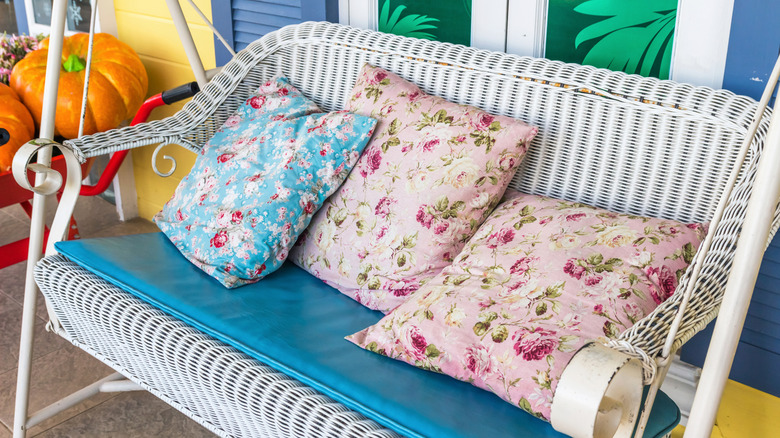
While this DIY is undoubtedly a genius way to repurpose an old tablecloth, you need to make sure the material can handle the extremes of outdoor living. Outdoor tablecloths have protection against water and harmful UV rays so they can last longer. If you find a tablecloth you think may be water-resistant but aren't sure, test it by pouring some water over it. (Don't do this when you're inside the thrift store!) If the water beads and rolls off, the tablecloth is likely waterproof, but if the water soaks into the fabric, it probably won't handle wild weather and needs to be treated. To weatherproof your indoor pillows for outdoor use, wash and dry the tablecloth first. Then lay it flat outdoors and spray both sides one time. Leave it to dry overnight, then test it again.
With the fabric ready, you can reupholster your outdoor pillows as you usually would but with the tablecloth instead of upholstery fabric. Measure your pillows from seam to seam, adding an inch or so for hemming. Cut out a square for the front of the pillow based on the measurements and a longer piece for the back. Cut the back in half, hem the two overlapping edges, and lay the pieces flat. They should overlap by at least a few inches. Lay the front piece of fabric face down, and serge or zig-zag stitch the pillowcase closed. Flip the pillowcase right-side out, and insert the pillow through the envelope closure in the back. If you sprayed the fabric with a protector, expect to reapply it seasonally.