

The Common Item Everyone Has That Is A Germ Magnet — Yet Has Probably Never Been Cleaned
Cold and flu season are stark reminders that germs are everywhere. On every surface you touch on a daily basis, thousands (if not millions) of bacteria and germs can reside within every square inch. Thankfully, most of the bacteria you regularly come into contact with are relatively harmless, but some could cause serious illness and contamination. While it is nearly impossible to clean every single surface you touch, you can help keep yourself and your loved ones illness-free by staying on top of disinfecting high-traffic surfaces like kitchen counters, door knobs, and cabinetry. It's also important to regularly sanitize one common item that you likely don't clean often (if at all) but is a breeding ground for bacteria — your set of house and car keys. In a MoneySuperMarket survey of U.K. drivers, one-third of respondents said they never cleaned their car keys, so don't feel too guilty if you've never taken time to tidy yours up. Still, there are plenty of good reasons to clean your keys every week or two.
If you haven't gotten around to choosing and installing a keyless door lock, house keys are among the must-have items you should have on you prior to leaving your home. Even if you keep your set of keys on you at all times, they are still exposed to a variety of hands and surfaces. A bundle of keys on a lanyard or keychain may encounter a large amount of people and environments, making them prone to picking up and carrying loads of bacteria, germs, and dirt throughout the day. Once you come home and drop them into a key holder, they can also contaminate other surrounding objects.
How to properly and thoroughly clean your keys
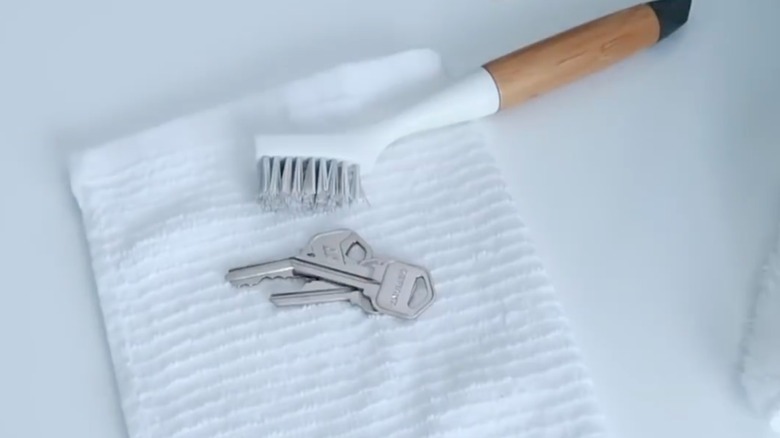
You can wash keys individually or have them take a communal bath. If opting for the latter, be sure to remove any keychains with absorbent or delicate materials that might get ruined in a dish soap bath. Fill a bowl with warm water, and add a few drops of dish soap into it. Dunk your keys into the soapy water, stirring them around or letting them sit to let the grime get loose. From there, use an old toothbrush to scrub away at dirt in hard to reach places, like in the teeth of your keys or in the keyring holes. Rinse off excess dirt and dish soap from your keys under running water or by dunking them into a bowl of fresh water. Once sufficiently cleaned, thoroughly dry them off with a towel. Make sure your keys are dried completely to prevent rust from forming. If you want to disinfect your keys, wipe them down with rubbing alcohol and let them air dry.
If your keys are slightly rusty and crusty to begin with, you can get rid of the rust by adding a vinegar cleanse to your key-cleaning treatment. The acetic acid in this versatile cleaning tool works well to remove rust. Simply mix equal parts of warm water and white vinegar, and let your keys soak in the solution for half an hour. Scrub with steel wool, baking soda, or your old toothbrush to remove the loosened corrosion. Rinse the keys well, and dry them thoroughly after to finish up.