

The Fertilizer That Helps Leafy Greens Grow & Protects Them From Disease
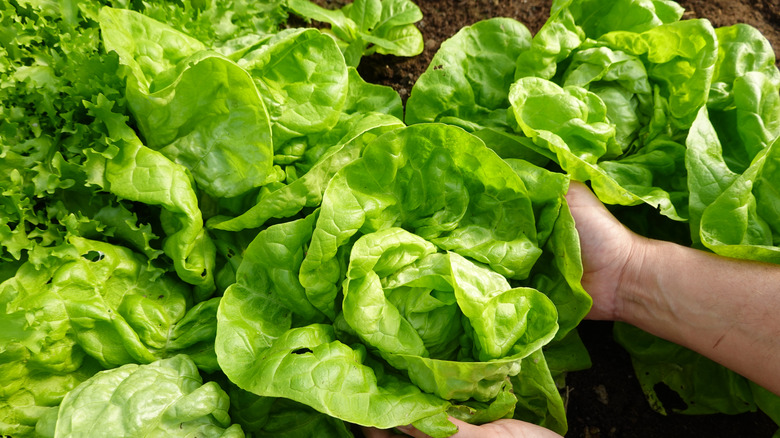
There are plenty of reasons to choose gardening as a hobby. Spending time out in nature and learning how to care for plants will improve your mental health, encourage local community building, and help develop life skills — including how to grow your own vegetables for a start toward healthier eating. Leafy greens, especially cool-season crops like lettuce, spinach, arugula, and kale, are great sources of vitamins A, C, and K, with plenty of other health benefits. If you want to get a jump on growing leafy greens of your own, it's worth stockpiling some wood ash to use as a fertilizer.
Fertilizers are a universal aspect of gardening because they provide a great utility: mixing macro, minor, or micro nutrients into the soil that's otherwise missing for a plant's necessary growth. They can also adjust the pH level of soil, as certain acidity levels can lock up those nutrients. There are a number of ways to repurpose fireplace ash around your home and garden, but one of the most useful is making it a soil additive for plants like leafy greens. Wood ash contains a substantive amount of potassium, calcium, and phosphorus, as well as trace elements like iron, magnesium, and zinc. The carbonates formed by burning wood are also good for neutralizing soil acid, not to mention being a great source of the organic matter that helps leafy greens in particular.
How to incorporate wood ash into your leafy green gardening routine
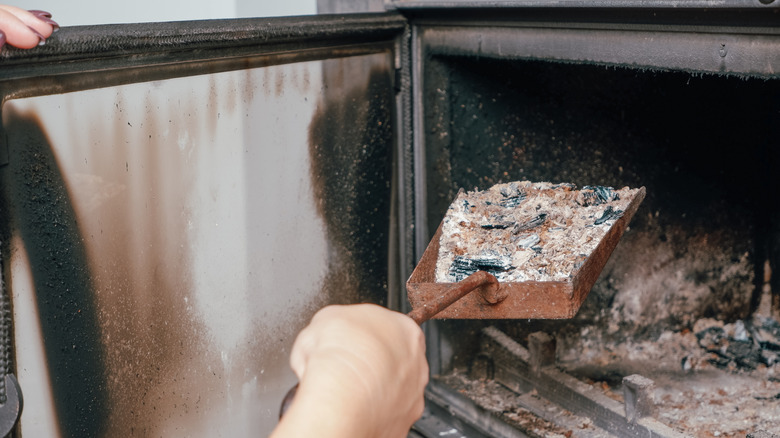
Burning one cord of wood can equal roughly 20 pounds of ash, which is perfect to fill approximately 1,000 square feet of leafy green-growing soil each year. It's best to mix the ash into moist soil, incorporating it throughout the top 2 to 4 inches. However, it is worth noting that wood ash is highly water soluble, so it can change pH as well as other factors very quickly for anything that you plant. Watering too heavily can also result in nutrients leeching out, which means less of the benefits get to your leafy greens. A good rule of thumb if you want to grow this type of crop is to apply an inch or so of water every week, typically through drip irrigation in morning hours.
The process of burning wood to make ashes can help tackle some common leafy green diseases like clubroot in the cabbage family. Clubroot is a disease caused by bacteria that infects the soil through transplants or compost. This disease is most destructive in acidic soils, so balancing the pH with wood ash as a fertilizer can be an effective strategy for prevention. If your plants are affected, be sure to never compost your plants if they're infected with clubroot.
Be careful of issues when overusing wood ash fertilizer for leafy greens
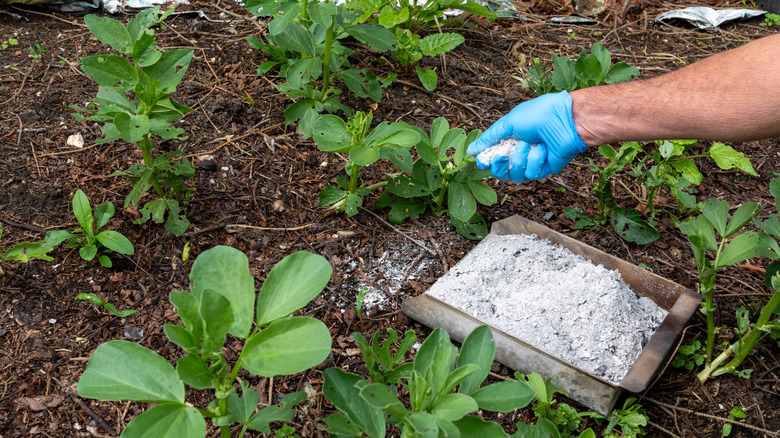
Though wood ash is a great soil additive to make your garden bed more basic (although it's about half as effective as traditional alkaline sources like lime), you'll want to be careful when gathering and using it. Only use ash from natural woods, as pre-treated materials or wood grown near industrial sites can leech toxins into your soil. Because the alkaline nature of wood ash is a caustic material, you should avoid direct contact with it and avoid breathing it in. Wearing long-sleeves, eye protection, a mask, and gloves is recommended when working with wood ash.
Overusing wood ash in your garden can lead to problems like chlorosis, in which the soil pH is too alkaline for your leafy greens and other crops to properly absorb nutrients. If you're looking to grow crops such as potatoes alongside your kale and cabbage, higher pH levels can lead to additional problems such as potato scab disease. Even so, if bitter greens are your preferred solution to fill an empty winter garden, ash is a great additive to adjust the soil's pH value and incorporate nutrients. Just be sure to watch the amount you're using carefully so as not to have any adverse effects on your garden, and you'll be ready to harvest individual leaves or whole crops of leafy greens in no time.