

12 Stunning Woodpecker Varieties You're Likely To See In U.S. Gardens
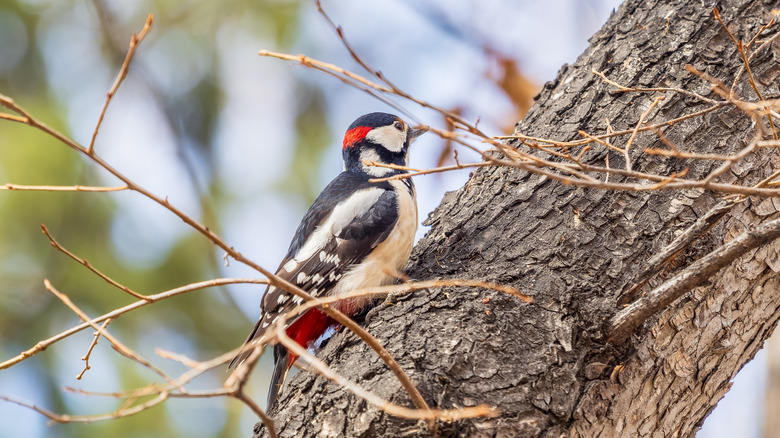
If you've ever had the pleasure of hearing a rhythmic tapping noise from the eaves of the trees in your yard, then chances are you've encountered one of the many varieties of woodpeckers in the United States. These iconic birds are known for their tough beaks that drill into trees, a behavior which can be for finding food, mating, or nesting purposes, and their ability to withstand cold temperatures even in the chilly New England. Their incredible hearing allows them to detect the movement and sounds of bugs, guiding them to their next pecking spot. If you live in the U.S. and you've discovered a woodpecker or two in your garden, it might be one of the following popular varieties: the Pileated woodpecker, the Acorn woodpecker, the Northern Flicker woodpecker, or the Red-bellied woodpecker.
There are more than 20 varieties of woodpecker that can be found in the U.S., and despite popular opinion, they are not the tree-destroyers some people claim them to be. While they do drill into trees for their food, woodpeckers tend to prefer diseased or dead trees, rarely going after healthy ones. These small but powerful creatures can help keep insect populations at bay, create homes in trees for other animals like bats, squirrels, and other birds, and eliminate pests that harm the health of your trees, the latter of which is a major benefit to attracting woodpeckers to your yard. Their presence has even been known to aid farmers, particularly when roosting, as seeing woodpeckers like this can be a sign of a brutal winter.
Northern Flicker woodpecker
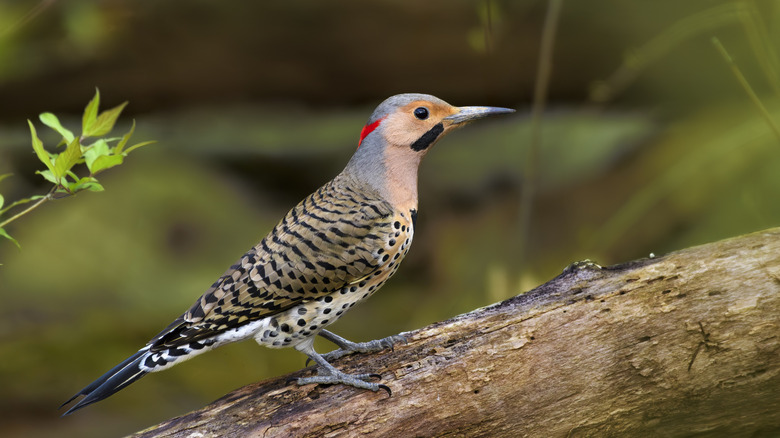
One of the most common types of woodpecker found in the U.S. is the Northern Flicker woodpecker. It can be identified by its under-wing colors, which vary by region. Northern Flickers in the east and north will have yellow (Yellow-shafted Flickers), while those in the west will have red (Red-shafted Flickers). Meanwhile, in the Great Plains, you will see a blend of the two, typically with brown and black striped backs. While they do feed on trees, typically dead or diseased trees, they are also known for scavenging on the ground for their dinner.
Gila woodpecker
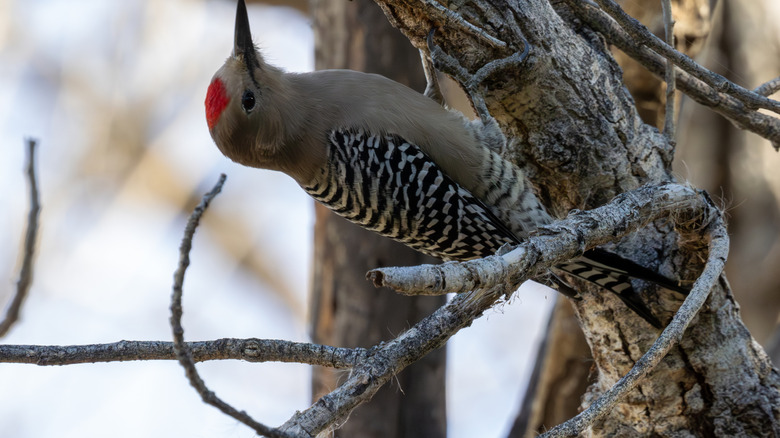
Similar to the Northern Flicker, Gila woodpeckers feed from both trees and off the ground, snacking on berries, cactus fruits, and insects. The males and females look very similar with a black and white back, white patches on their wings, and brown faces. The only difference is that male Gilas have a bright red spot on the top of their heads. Gila woodpeckers are mostly found near the desert, in states like California, Nevada, and Arizona. When it comes to nesting, these birds prefer drilling into and hiding out in cacti. Listen for their specific call, which has a short, screaming, trill sound.
Pileated woodpecker
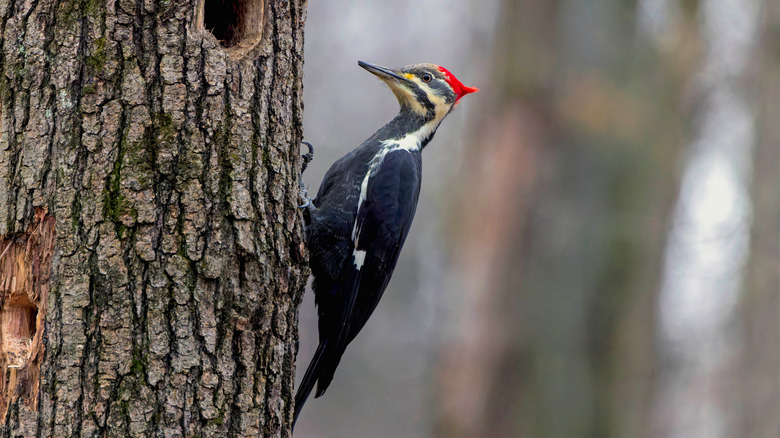
One of the most noticeable types of woodpecker in the U.S., and the largest in North America, the Pileated woodpecker can easily be spotted by its size and bright red crest on the males. The rest of the bird is black, with a yellow or white stripe on its neck. You may recognize its call, which has a high-pitched "cuk-cuk-cuk" sound, often rising in pitch. These creatures can be found in forests across the country, from Washington state to Maine. They usually nest in dead trees, sometimes even utility poles, and prefer to eat insects, nuts, and fruit.
American Three-toed woodpecker
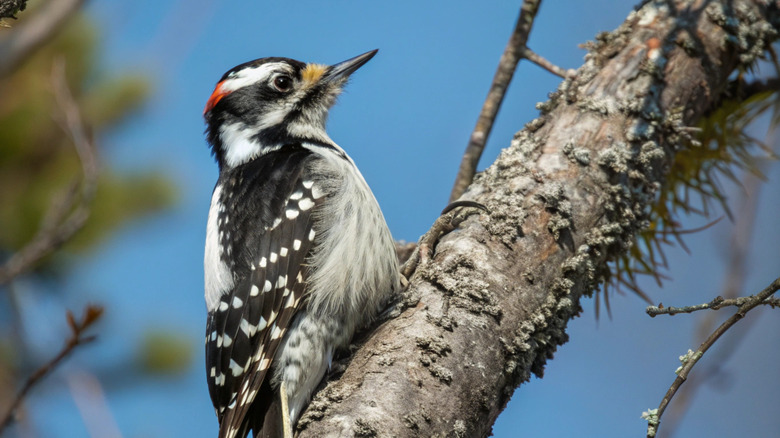
The adorable yet mighty American Three-toed woodpecker is typically found in the north west of North America, specifically in states like Montana, and spreading up into Canada. It is small in stature, about the size of a robin, and you can spot one by its black and white feathers and yellow crown on the males. Known for its very specific style of feeding, the American Three-toed prefers to use its strong beak to tear and chip off dead tree bark to find the insects underneath. You can typically find them in spruce, fir, and pine trees.
Arizona woodpecker
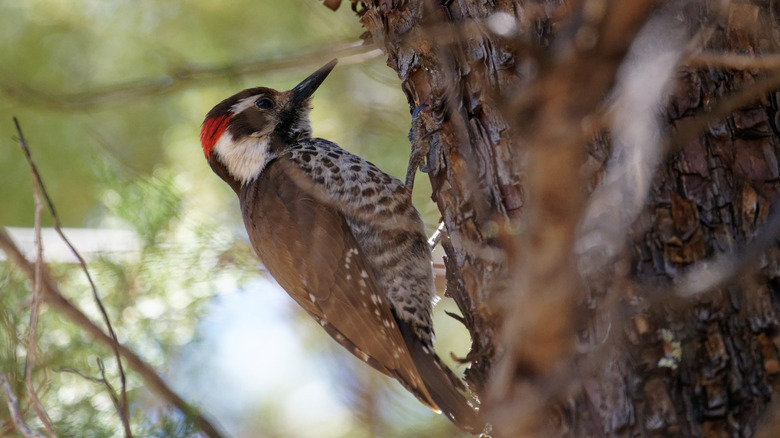
If you live in Arizona, specifically in the southeast region of the state, you will most likely spot a classic Arizona woodpecker in your garden. These birds are quiet, preferring to live and forage in oak trees. You can spot them by their typically black and white spotted breasts, black outer feathers, and patterned faces. The males will have a bright red spot on the back of their heads. Arizona woodpeckers are about the size of a robin or sparrow, and have a sharp chirp as one of their calls. You might even see one hang upside down or flip around branches of trees.
Hairy woodpecker
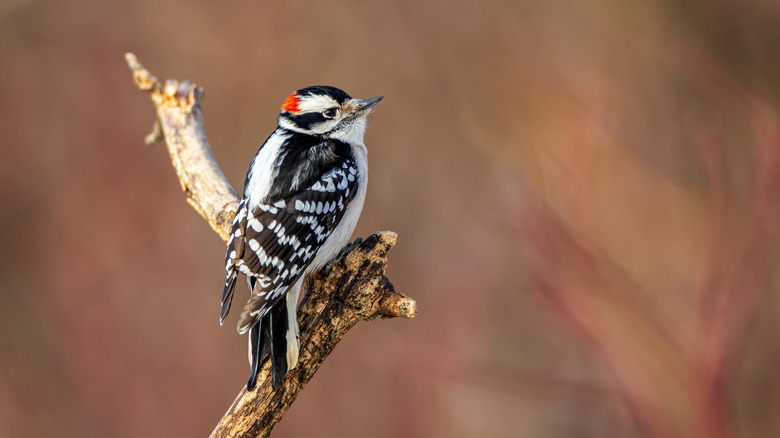
The larger counterpart of a downy woodpecker, the hairy woodpecker sports similar black-and-white coloring with red hats on the males. Besides their larger stature, these birds also have longer bills and a more upright posture. You can spot the hairy woodpecker nesting across most of the U.S., usually migrating south in the winter. Typically, these birds nest in either deciduous trees on the eastern side of the country or in conifers and aspens on the western side. While they mostly eat insects, hairy woodpeckers will also snack on seeds, berries, sap, and larvae.
Acorn woodpecker
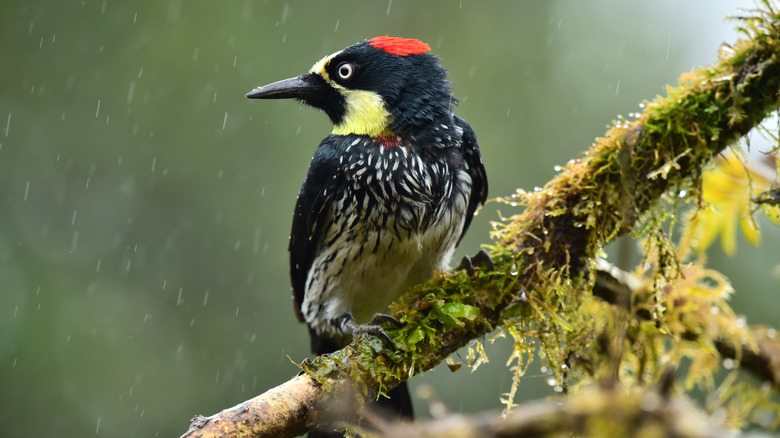
One of the most striking varieties of woodpecker, the Acorn woodpecker is an easy one to spot. Their black outer feathers, white underbelly, yellow-marked face, and red-feathered hat mark them as incredibly unique birds. These woodpeckers usually reside in oak woodlands in the western region of the U.S. They tend to live in small colonies and, as you may have guessed from their name, love to hoard and eat acorns, which they gather to store for the winter. They are known for trying to hide these acorns in homes, so you may want to try and prevent these woodpeckers from ruining your home's siding.
Williamson's Sapsucker
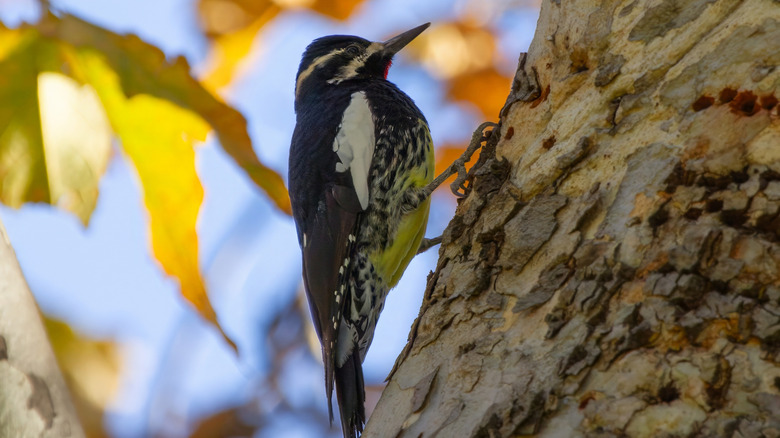
If you live on the mountainous western side of the U.S., you may just spot a Williamson's Sapsucker nesting in your yard. These woodpeckers migrate south in the winter, some as far south as Mexico and as east as Louisiana. At first, the males and females were thought to be completely different species, due to their contrasting appearances. While the females may at first look similar to the Glia woodpecker, Williamson's Sapsuckers have black chests. Males are primarily black, with white and yellow accents. You can find these birds nesting in trees like fir, spruce, aspen, and pine.
Ladder-backed woodpecker
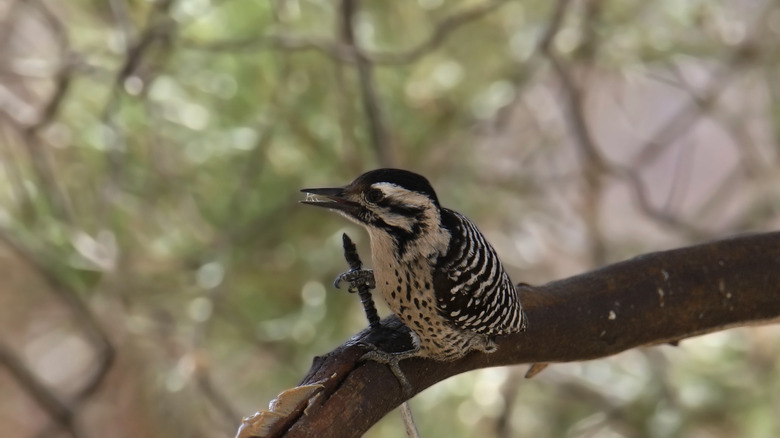
Unlike many of their fellow woodpeckers, the Ladder-backed woodpecker doesn't reside in trees; it tends to prefer cacti and mesquite for its home. In fact, this bird used to be called the "Cactus Woodpecker." Smaller than most of their relatives, these ladder-backs are excellent at making homes even in dry bush, and are mostly found in the southwestern region of the U.S. Specifically, they reside in Southern California, Arizona, New Mexico, and Texas, extending down into Mexico. These aptly named Ladder-backed birds have horizontal white and black stripes down their backs and often a red crest on their heads.
Downy woodpecker
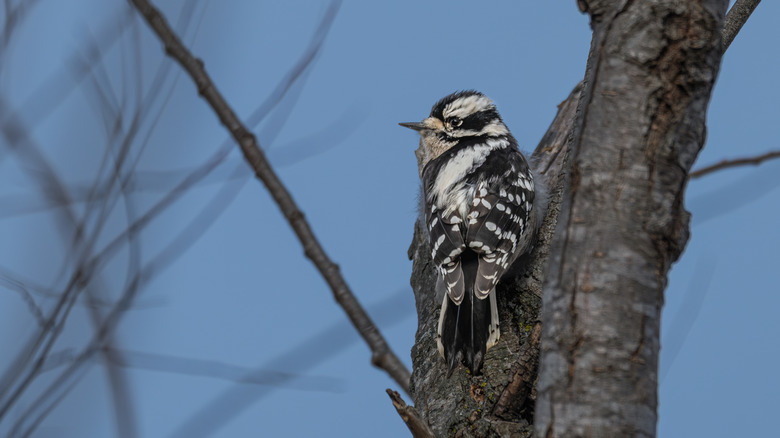
If you've ever spotted a woodpecker at your backyard feeder, there's a good chance it was a downy woodpecker. These tiny birds, the smallest of the species in North America, can be found year-round throughout the U.S. and can be easily spotted by their iconic black and white spotted backs. The males also sport a red hat on their heads. In fact, many beginner bird watchers start by identifying these birds. You can listen for their specific call, which falls in pitch and includes chirps, drums, trills, and rattles.
Nuttall's woodpecker
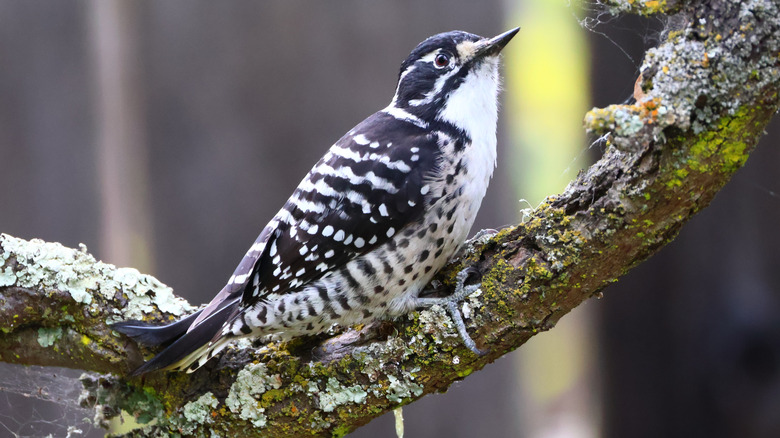
Named after English botanist Thomas Nuttall, Nuttall's woodpecker is a tiny black-and-white bird known for its stripe-and-dot patterned wings. The males sport a red crown on their heads, another notable feature. These small creatures forage for food primarily in oak trees in California, but often dig their nests into other types of trees. If you live in this region and have an oak tree or two on your property, you might just spot one. Feeding on insects like beetles, caterpillars, and ants, Nuttall's woodpeckers can typically be seen in and around oak trees near bodies of water like rivers.
Golden-fronted woodpecker
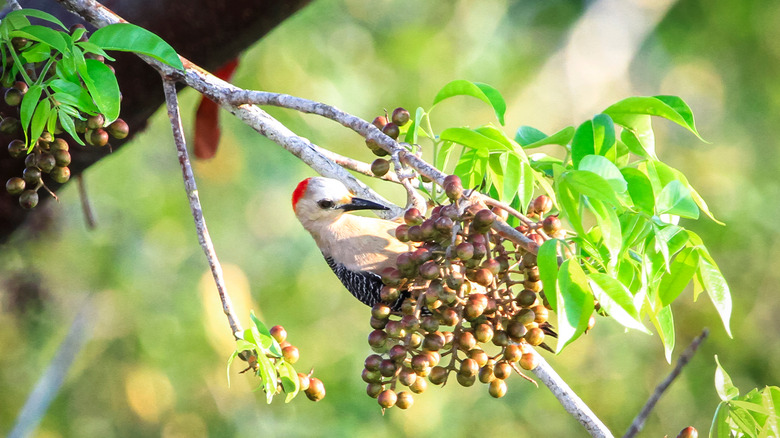
Golden or Gold-fronted woodpeckers, as you might expect, can be spotted by their yellow neck and belly. Females in particular have a more "golden" appearance, while males have red spots on the tops of their heads. These birds are most commonly found throughout the states of Oklahoma and Texas, often expanding down into Mexico. They enjoy drilling into native plants such as oak, prickly pear, pecan, agarita, and hackberry. Unlike some quieter varieties of woodpecker, such as the Arizona woodpecker, these golden-fronted birds are vocal and noticeable, and are typically most active in the mornings.