

10 Seeds To Start In January For A Summer Garden Full Of Stunning Blooms
We may receive a commission on purchases made from links.
With the beds lying fallow and the winter winds continuing to howl, January can feel like the quietest time of year in the garden. However, if you hope to enjoy flourishes of floral color in your borders when the balmy months of summer finally roll around, then January is actually one of the best times to get started. After all, the most successful gardens grow as the result of proper planning, and this starts long before the mercury starts to climb.
Of course, success in the garden has different meanings depending on the things you prefer to grow. But if you're hoping for a garden full of blooms come summer, then one of the best uses of your time in January is to start sowing your favorite flower seeds. You don't need lots of fancy equipment, and you don't even need much spare space. Provided that you have some soil, some seed trays, and a sunny windowsill or two on which to put them, there are lots of flowers that you can get started in January to ensure a successful summer.
Some, like Rudbeckia, are sensitive to frost, making early indoor sowing the easiest way to ensure a summer full of flowers. Others, like geraniums, grow best in warm conditions, yet take up to ten weeks to become "ground" ready, making January an excellent time to get them started. The specific sowing requirements vary depending on the flowers you choose to sow, but what all of the below growers have in common is that, come summer, they are sure to help fill your garden with blooms and turn your yard into the envy of all who come to visit.
Black-eyed Susan (Rudbeckia hirta)
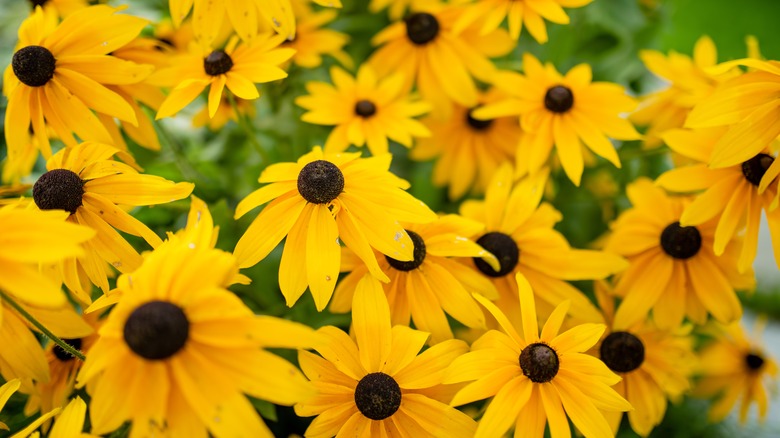
Hardy in zones 3 to 9, black-eyed Susans delight those who plant them with vibrant blooms of black and gold. Before you go ahead and sow them in your garden, though, there are some things you should know about black-eyed Susans to help ensure your success. One is that, despite their hardiness, they're not the most frost-tolerant species. With this in mind, if you want to get a jump start on your summer flower garden by sowing your Susans during the winter, either indoors or via a winter sowing method. Do this early in the year, like in January, with the goal of transplanting them outdoors once the risk of frost has passed.
Seeds should be sown shallowly (as they need light for germination) in a moist seed-growing mix. For even better germination, try chilling the seeds for four weeks once sown — ideally in the fridge. This process, known as "cold stratification," simulates the exposure to cold conditions that the seeds would experience in their natural environment. After four weeks, warm your seeds and keep them at a temperature of around 70 degrees Fahrenheit using a heated mat, and cover them with plastic to prevent them from drying out. Alternatively, you can instead try "winter sowing" them, by planting the seeds in something like a gallon milk jug, cut in half, and then taped shut and placed outside.
Your seeds should start to germinate within about three weeks. Allow them to establish all the way until spring, then start to harden the plants off, exposing them to the outdoors for a few hours at a time. Once the risk of frost has completely passed, and you've given your plants a chance to harden, transplant them into the ground, and enjoy the gloriously golden and "black-eyed" blooms that earn this plant its name.
Purple cone flowers
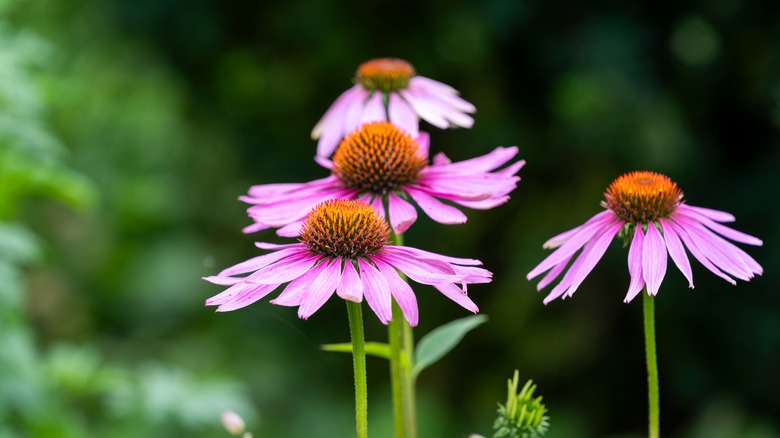
If you're looking for a plant that'll have birds and butterflies flocking to your yard all summer long, then allow us to introduce you to purple coneflowers (Echinacea purpurea). Hardy in zones 3 to 8, they're relatively easy to grow, in fact, they can be sown directly into the ground during the fall. Doing so allows them to capitalize on natural seasonal conditions, like rainfall and temperature fluctuations, which are key to the seeds' success. If you've missed the autumn window, then don't worry. You can still enjoy the deep purple color of this gorgeous flower species by sowing it indoors during January.
Early sowing is key to seeing flowers from this plant in its first growing season. Being a perennial, it can sometimes spend the first season focusing on root development. But if you get ahead of the game, sow your seeds early enough, and allow them plenty of time indoors to establish themselves before transplanting, then you'll have a good chance of bountiful blooms during your first growing season. The seeds will need at least eight weeks of indoor germination and growing time ahead of transplanting. You may also want to cold-stratify the seeds in the fridge in order to replicate natural conditions and break the seeds' dormancy mechanism.
Dianthus
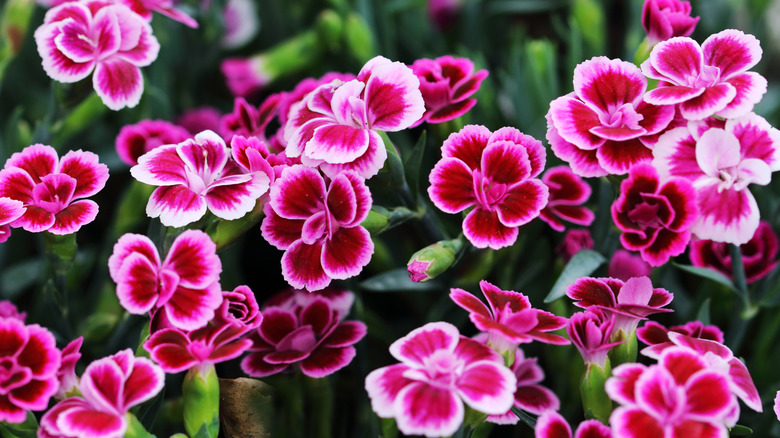
There are plenty of reasons to add dianthus (Dianthus spp.) to your garden's growing scheme. They smell fantastic, for starters, often reminding passers-by of vanilla and cloves. The decorative flowers are also edible, perfect for adding some visual flair to summer salads and date-night desserts. There are various types to choose from, with different varieties hardy across zones 3 to 8, however, perhaps their greatest allure is that they bloom all summer — often from May all the way through to the fall.
The key to success with growing and caring for dianthus is to give the seeds plenty of time to germinate. They usually take between two and three weeks to emerge, and from there, they need a further five or six to establish themselves before they're ready for transplanting. Sow seeds thinly in compost and keep them at a steady 65-70 degrees Fahrenheit. Once they start to emerge, ensure that the seedlings have at least 16 hours of sunlight per day — either in a sunny sill or with the help of grow lights. Start feeding your seedlings at around three weeks, and give them a chance to harden off before transplanting by placing them outdoors for a few hours per day for around a week.
Petunia
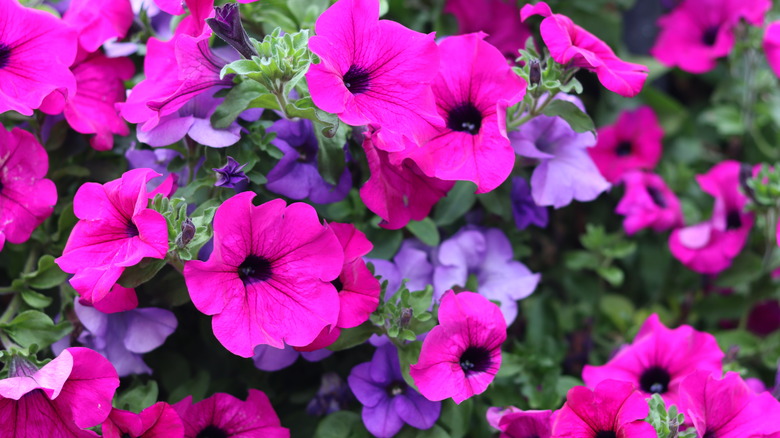
Petunias (Petunia spp.) are incredibly popular, and for good reason. They're easy to grow, and once established, will bring reliable flushes of color to your garden all summer long. They also sport an array of vibrant colors and growth habits, suiting themselves to various garden types and schemes, from flower bed accents to show-stopping hanging baskets. And while you'll typically find petunias "ready to go" at your local garden store come spring, it's entirely possible to cultivate your own by sowing them indoors in January.
The trick to starting petunia flowers from seed in the winter is to sow them very thinly, in a spot where they're guaranteed lots of sunlight, and ideally with a heat mat that keeps them at a steady 70 degrees Fahrenheit. A sunny windowsill is a good bet, and if you're unsure, you can always bolster the lumens your seeds receive with the help of grow lights. Sow them at least ten weeks before your intended outdoor planting date, and ensure that you only transplant them once the risk of frost has well and truly passed.
Lobelia
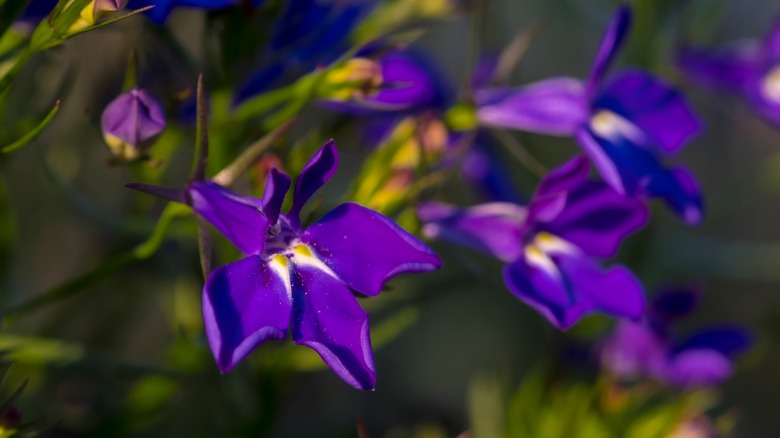
Forming either mounds or trailers of gorgeous, iridescent flowers (depending on the cultivar you choose to grow) from spring into fall, lobelia (Lobelia erinus) delivers punches of blue, white, or pink. It's perfect for containers and flower-bed edges — and popular with butterflies. Technically a perennial, lobelia sits on the "tender" side of that classification. This means that they're often grown as annuals in zone 10 and under.
Sowing lobelia indoors in the late winter is a great way to get ahead of the game, and set the stage for flowers through the growing season. Sow on the surface of your seed soil mix, and keep the trays at a steady 55-65 degrees Fahrenheit using a heat mat. Once the seedlings begin to establish, hold off until the risk of frost has passed before you think about transplanting, and harden them off first. Lobelia flowers best in mild summers, and blooms can stall in hot conditions. To guard against this, choose a planting site that will receive some relief from intense summer sun, or place in containers that are easy to shift if you see your lobelias are getting scorched come summer.
Penstemons
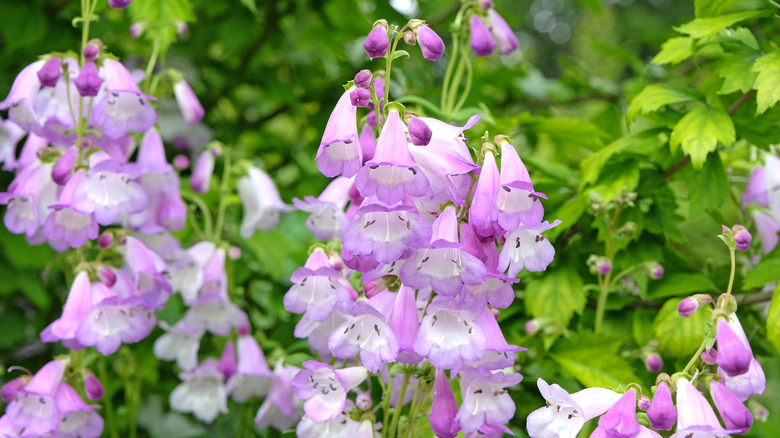
Relied upon by gardeners to bring a perennial source of color to their borders in all but the coldest climates, penstemons (Penstemon spp.) are an excellent flower to get started in January. Once established, they promise abundant displays of everything from orange and white to purple, and when they bloom, they attract an array of pollinators, including hummingbirds. They flower from summer all the way until autumn, too, and with their semi-evergreen foliage, penstemons can continue to add color to your borders even when the rest of your garden is falling fallow.
To see success with this particular type of flower, it's recommended that you cold-stratify your seeds a couple of months prior to January — ideally in the fall. Place them between damp paper towels and refrigerate them, to simulate the cool conditions they'd experience in their natural environment. Leave them there for a couple of months, then sow them gently in a prepared seed mix. Don't transplant until later in the spring (May is a good time) when the soil is warm enough to encourage the roots to bed in.
Nasturtiums
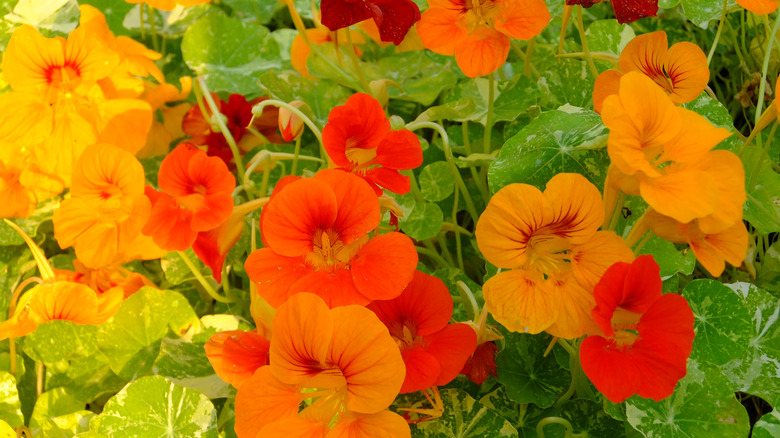
Nasturtiums (Tropaeolum spp.) are popular for a host of reasons. First and foremost, their multi-hued flowers are a boon to gardeners who want to enjoy an easy show of summer color in their borders. Those same flowers are also edible, making fantastic additions to salads. What's more, since they are immensely attractive to pests like aphids, they are often the flower of choice for gardeners who need to deter insects from their other flowers, acting like a trap plant. They're super easy to grow from seed, and once established, they'll continue to flower through summer and into the autumn.
One of the best times to sow nasturtium seeds is late in the winter, ahead of your final frost date. Do it indoors, tucking them in beneath a very light layer of seed sowing mix. Hold off until the risk of frost has fully passed before you transplant, and when the time comes, try to be careful, as the delicate roots are not appreciative of disturbance.
Impatiens
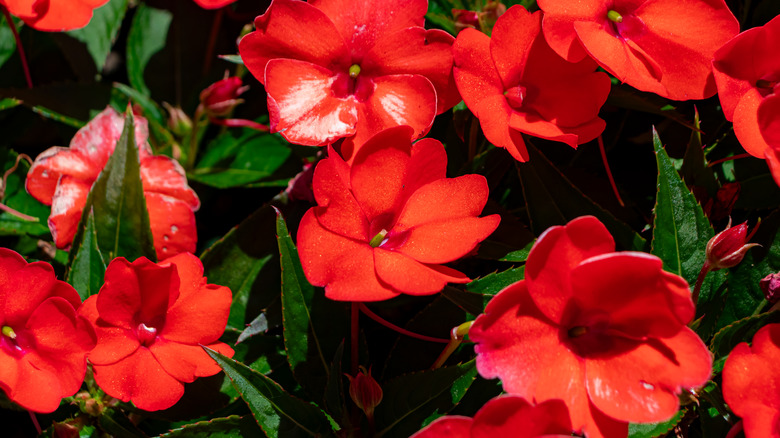
Whether or not they are named for the feeling they inspire in more impetuous gardeners as they take their time to establish, impatiens (Impatiens spp.) can, eventually, be relied upon to bring dazzling shades of red, purple, pink, white, and even orange to your garden's borders. They're only hardy in zones 10 to 11, and one of the things you should know about impatiens is that they are on the "tender" side of perennial. This means that they'll only return each year in frost-free climates. Impatiens also has a slow growth habit, so if you want to propagate bedding plants to place out in spring, then you'll need to germinate the seeds during winter
Sowing in January gives the seeds enough time to germinate and grow into robust, transplant-ready specimens by the time spring rolls around. From there, they'll flower all the way through until autumn. Since the seeds are so small, it's advised that you grab some wooden toothpicks. Wet the end of one and "dab" the seeds in order to pick them up. Place seeds on a bed of moist, commercially-prepared growing soil, then cover lightly with vermiculite. To maintain humidity and moisture levels, consider covering the tray with a dome.
Geraniums
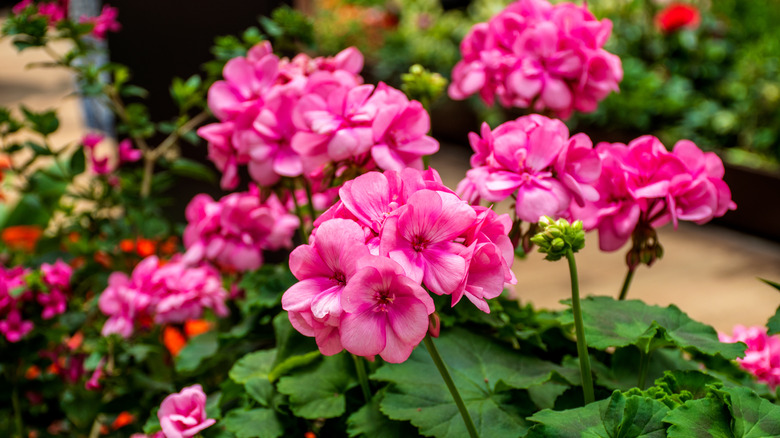
If you live in hardiness zones 9 to 11, you may well be able to grow geraniums (Pelargonium spp.) as perennials. If not, then the best way is to sow them afresh each year and grow them as annuals, and the best time to start them is late in the winter — well ahead of their blooming season. Like impatiens, geraniums can take a little while to get themselves going, typically requiring up to 15 weeks from sowing to start flowering. This means that the longer you can give them, the more chances you'll have of summer success.
Light potting mixes are best, and you can even use soilless mediums such as Seed Starting Jiffy-Mix. Sow no deeper than ⅛ of an inch. Seeds germinate and grow best in bright light and temperatures between 70-75 degrees Fahrenheit. If you don't have a sunny windowsill that'll afford lots of diffused light, consider supplementing with some grow lights.
Sweet peas
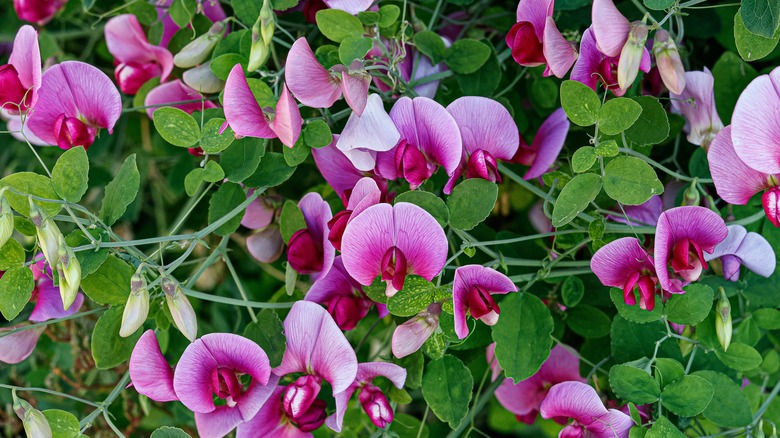
Sweet peas (Lathyrus odoratus) promise showy displays of myriad colors throughout the summer. Dwarf types are perfect for hanging baskets and container gardens, while certain varieties can be bought that'll climb 5 feet and over if you use a trellis to provide your plants with ample support. Flowering occurs in late spring and early summer, typically tailing off as the heat increases. These whimsical, scented legumes love cool temperatures, and giving them a head start with early planting indoors means they're have more time to get established in the ground while conditions are still mild.
Arm yourself with a cell tray and fill it with your chosen seed sowing mixture. It's worth giving your seeds a chance to moisten before sowing, so wet some paper towels, place the seeds between them, and leave in a plastic-covered container overnight. Sweet peas tend to germinate well at around 50-55 degrees Fahrenheit. Once germination has happened, they're happy with lower temps during the vegetative phase. Aim to get them into the ground around the last frost date (they're not as sensitive to frost as other species on this list).