

The Best Way To Get A Moldy Shoe Looking Clean & Brand-New Again
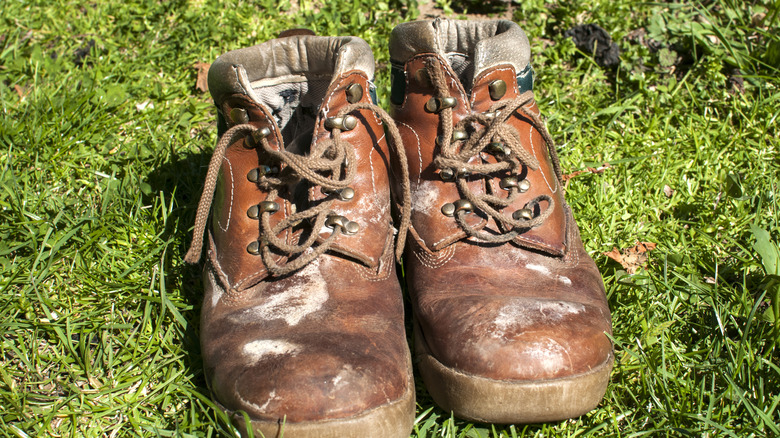
Mold spores are everywhere, barely noticed until they start to show themselves on anything they can eat. Around the house, they'll most likely be found on fabrics like wool, cotton, linen, and silk. Wood, paper, and leather are also tasty treats for the tiny fungi that thrive in dark, damp spaces with poor air circulation. If you only wear shoes made from synthetic materials, your footwear is probably safe from mold and mildew because there's nothing in them that appeals to the organisms, but natural materials in the right environment are irresistible. If you discover mold growing on your shoes you can get them looking clean again with a little elbow grease and a couple of kitchen ingredients used to kill mold that you probably already have on hand.
The most common types of household mold look like splotches of black or colorful spots. Mold's equally destructive cousin, mildew, typically looks grayish white, and it may turn brown over time. Left untreated, they'll continue to grow and the condition of your shoes will continue to deteriorate. Fabrics like the canvas your casual shoes are made from are particularly susceptible as the mold works its way into the spaces between the threads that constitute the fabric, and you may find that the only solution is to throw the shoes away. That's one of the reasons you should treat mold as soon as you discover it. The other is the danger mold presents to your respiratory system.
The best way to clean moldy shoes
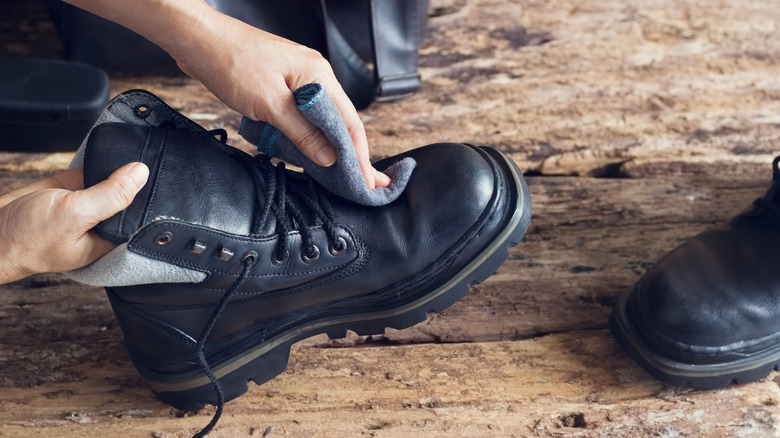
The first thing you should do when you find mold is to remove as much as you can with a stiff brush. Because of the dangers inherent in inhaling mold, wear a mask. Ideally, you should do your remediation outdoors to prevent the spread of mold indoors. After you've brushed the visible mold off, neutralize the area by dampening a microfiber cloth with equal parts water and vinegar or rubbing alcohol and wiping the moldy area, both inside and out if needed. Let it sit for a few minutes and wipe the area clean. If your shoes are leather or suede, use a leather cleaner after you've brushed the mold off but before applying the vinegar solution. Finish by drying the leather shoes and conditioning them.
You may still have stains on your shoes after brushing them and neutralizing the mold. Shoes made from organic material other than leather are harder to clean. If your shoes are machine washable, follow the manufacturer's instructions for washing them. If they're not, you may be able to remove the stains with a paste made from equal parts vinegar and baking soda. Spread it on the spots and let sit for 30 minutes before hand washing.
Let your shoes dry in the sun and make sure they are completely dry before storing them in a cool, well-ventilated space. A simple tip for successful long-term shoe storage is to add a desiccant in the container to absorb moisture. Small packages that easily fit in a container are available online or at big box stores.