

Grow In Water Or Soil: How To Choose The Best Option For Your Countertop Garden
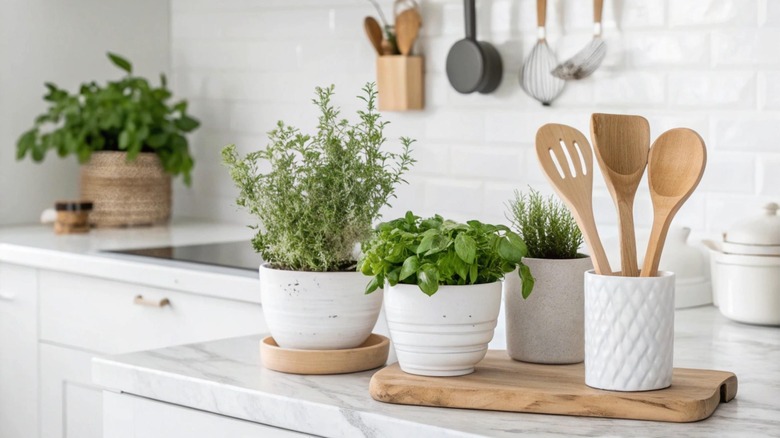
Starting a countertop garden is a brilliant idea for bringing plant life into your kitchen. Rather than spending money on expensive supermarket bunches that turn to mush pretty soon, you gain a steady supply of fresh herbs, leafy greens, and even fruits for your salads, stews, dishes, and beverages right when you're cooking. It also doesn't require any dedicated garden space, making it ideal for renters and homeowners alike. Plus, those little pots make cute decor.
However, when you're starting out, you may feel puzzled about growing your plants in water or soil. And frankly, it boils down to your goals, expectations, time, budget, and effort. Growing plants in water is inexpensive, mess-free, and relatively painless. But it limits your growth options, unless you give your edibles a nutrient boost or grow them in a hydroponic kit. In contrast, soil-grown plants demand a bit more maintenance, space, and budget, but compensate for the extra effort with lusher and sturdier growth. Besides, you have a greater repertoire of edibles to choose from.
When growing plants in water makes sense
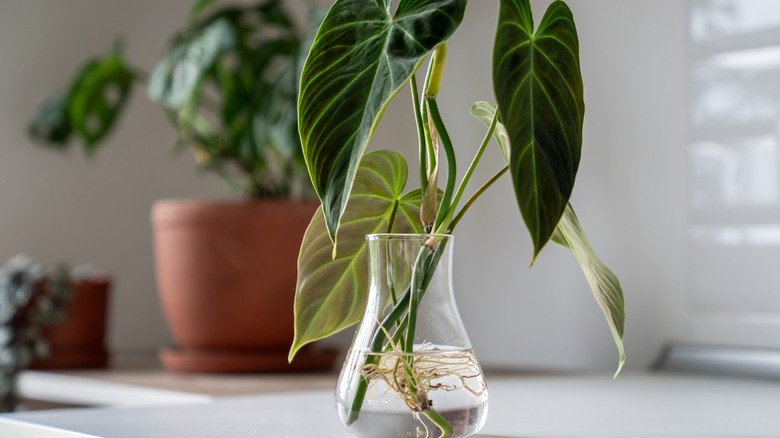
Growing houseplants in water is easy. With kitchen scraps or cuttings borrowed from a friend or stripped from market produce, you can start new plants in tap water. Given adequate light exposure (being in front of a window helps), they'll sprout roots, eventually rewarding you with fresh leaves and herbs in a few weeks.
You don't even require any fancy setup; just reuse old glass jars lying around your house. You can even use your old coffee mugs instead of throwing them out for better cost savings. Another advantage is low maintenance, since you don't have to deal with pesky weeds or soil-borne pathogens. However, algae may play spoilsport and inhibit root development in clear glasses. To avoid that, use colored or opaque tins, as they filter out light (this may make growth tracking difficult), or add hydrogen peroxide.
Growing plants this way also takes the guesswork out of watering, making it more efficient. Roots absorb water as they need, and whenever the level goes down, you can top it up. But you must refresh the water every week to replace the lost oxygen. Unfortunately, you cannot grow all varieties of plants in water indefinitely. While some herbs can grow in your kitchen without any soil – such as mint, basil, oregano, thyme, lemon balm, and sage — along with short-season leafy greens like lettuce and celery, flower or fruit-bearing plants grow better in soil over the long term. This may become a limiting factor in your planting goals.
When growing plants in soil is more worthwhile
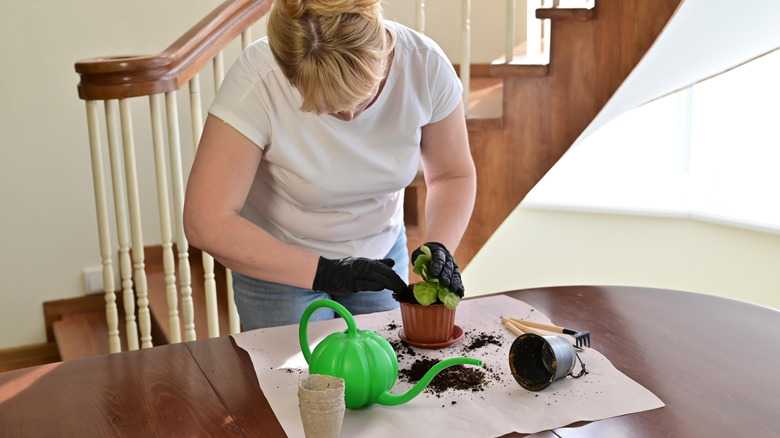
Choosing soil for your countertop garden is better when you want to grow plants that reach a considerable size or are heavy feeders (as is the case with fruiting plants or those with a long harvesting season). That's because they can absorb more nutrients from the soil. Moreover, such plants tend to grow stronger roots, ensuring faster growth and better long-term health and vigor. Plants are highly adaptive and grow roots according to their potting medium. Water-grown plants usually have stringy, thin, creamy white roots and won't fare well should you feel the need to transplant them into soil. Meanwhile, those potted in the soil tend to develop thick roots. Unpruned roots can outgrow the container, requiring repotting — though this also means they can support bigger plants.
Nonetheless, growing plants in soil can be more expensive, as you must invest in pots and potting mixes. Accommodating them also uses up more space, which may already be at a premium on countertops. Not to mention, they require heavy maintenance. Despite constantly monitoring the soil for moisture, it's easy to under- or overwater if it has poor drainage. At the same time, you need to take precautions against fungus gnats and other pests that like to infest potted plants. Monitoring root growth and health is a lot harder, too, since you must lift the plant out of the soil, rather than just water.