

Can You Use Tap Water On Your Houseplants? Here's What We Know
We may receive a commission on purchases made from links.
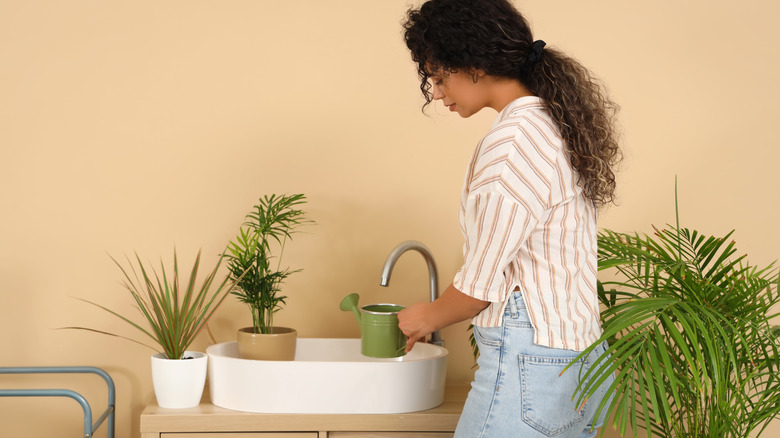
If you are like most people, watering houseplants is a simple ritual — turn the tap on, give each pot a little drink, and move on with your day. But is using tap water on your houseplants a good idea? After all, tap water is not just water once it leaves a treatment plant. Many municipal water systems routinely add disinfectants like chlorine or chloramine, and some even add fluoride to the water supply. This could be immediately harmful to sensitive plants and to all plants over time if these elements build up in the soil with repeated watering. However, if your tap water comes from a private well, it might be safe to use on your houseplants. Just make sure it does not contain any of these additives or any sodium-based water softeners, as they can also damage the plants.
The damage from these additives often shows up in the foliage. Take, for instance, ferns and spider plants. When exposed to chlorinated water, these plants frequently develop scorched leaf margins. Likewise, dracaenas, cordylines, calatheas, inchplants, and marantas are sensitive to chemicals like fluoride in the water and can develop leaf injury when hydrated with tap water. Houseplants are especially at risk with tap water because the chemicals just get stuck in their pots. Outside, they usually seep deep into the ground, away from the roots, or get washed away with rainwater. To keep your houseplants healthy in any condition, learn which types of water are suitable for them or how to make tap water safe.
The best water for your houseplants
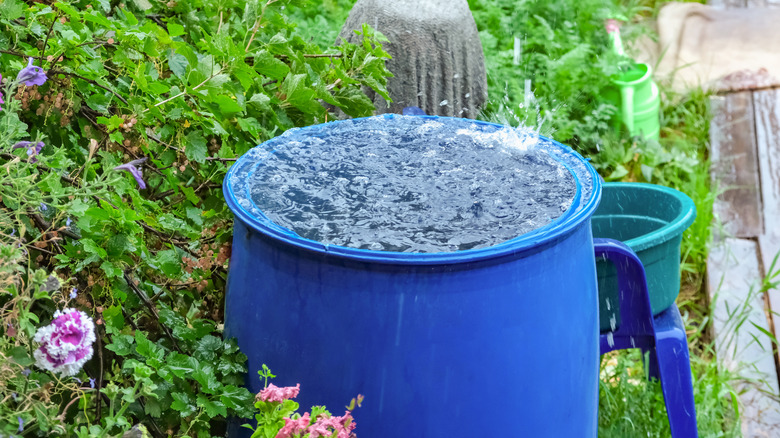
Using rainwater is probably the easiest upgrade from tap water for hydrating your plants. Also, it is a clever way to reuse rainwater around your home. It is naturally low in dissolved minerals and has no added chemicals, either. Plus, it contains nitrates that are essential for plants. You can collect rainwater in small containers, but using a larger receptacle like a rain barrel usually makes the whole process easier and more efficient. Just make sure that the container stays free of algae and dust.
Distilled water is also a good choice for watering your houseplants. If you have a dehumidifier at home, you likely won't even have to purchase distilled water at a store. Dehumidifier water is essentially just distilled water — as long as you keep it clean. You can even make your own distilled water at home from tap water. Water distillers designed for home use, like the Vevor 1.1 Gallon Distilled Water Machine, boil the water, capture the steam, and condense it into a container. Just keep in mind that distilled water lacks the nutrients and nitrates plants need.
However, if none of the above options work and you still have to use tap water for your houseplants, there are effective ways to purify your household water and eliminate harmful toxins before using it on your plants. For instance, you can use water filters to treat tap water. Activated carbon filters are probably the best type of water filters for this purpose. They help remove chlorine and fluoride from tap water, keeping your houseplants healthy and safe. For convenience, try a filter that fits onto the faucet, like the Cecefin Swivel Water Filtration System.