

What Is Micro‑decluttering—Why The Trending Method Could Transform Your Home

We may receive a commission on purchases made from links.
We get it: Creating a chore chart or planning a closet clean-out session can be overwhelming. Everywhere you look online, it seems like another home organization hack has popped up. Each promises to change the way you clean your home and complete your daily chores. We've all heard of Marie Kondo's KonMari Method, where you get rid of anything that no longer sparks joy. Maybe you've tried the four-box method, where you place items in four separate piles: trash, store, donate, or keep. Then there's the one-box method, the game-changing tip that will help declutter your home by slowly removing things from it. If none of these strategies were quite the right fit for you, there's a new trend emerging that might be: micro-decluttering.
Though definitions vary depending on who's promoting it, micro-cluttering can be defined as a bite-sized strategy. Instead of tackling your entire home at once, you focus on splitting tasks into chunks. How you do it depends on what works best for you; it can look different to each person. Micro-decluttering could mean focusing on just one corner of a room, the inside of a closet, a messy playroom storage trunk, or a junk drawer. It can also be much easier to get tasks done in short sprints, rather than blocking out an entire afternoon. Micro-decluttering is about being realistic with your expectations. Clearing out a single spot is more productive than leaving big tasks half-done. This could be the tip you need to clean and declutter even when you're overwhelmed by a mess.
Set a decluttering schedule
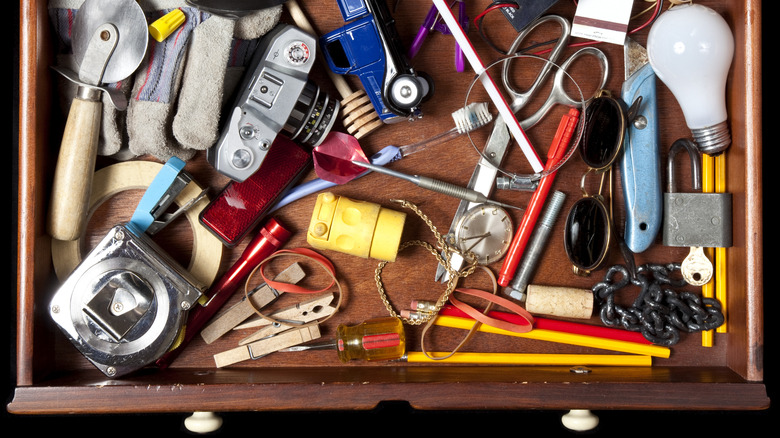
Before getting started on your micro-decluttering journey, you need to get out a digital or paper calendar and plan ahead. If the idea of de-cluttering your entire home in just one week sounds way too hard, revise your expectations and prioritize your goals. A great place to start is, for example, deciding to overhaul one room of your home per week for months. Or, if your goal really is to complete an entire home overhaul, don't overwhelm yourself by tackling an entire room. Instead, divide the space into smaller sections. Using the bedroom as an example, consider focusing on areas like under the bed, the chest at the end of the bed, each dresser drawer, and the nightstands.
Mess can build up quickly if you don't address it often — especially in high-traffic areas. If you do want to create a bit of structure that will keep your home clean daily and weekly, create a weekly to-do list. Assign one particularly clutter-prone area of the home to each day of the week — your kitchen counter on Mondays, your entryway on Tuesdays, and so on. Dedicating one day a week to these spots will ensure they stay clear of mess and buildup, reducing your stress. Micro-decluttering, when done correctly and consistently, can lead to long-term organization. Doing a little bit each day clears the clutter faster than it may appear on the surface.
Limit yourself to an area and time slot for decluttering
If you struggle to stay focused on a single task or get irritated with yourself for not achieving more than you believe you ought to, especially when tidying your home, micro-decluttering can help. It keeps you focused on your goals, not frustrated by them. Sticking to small habits leaves you with a cleaner and more organized home over time — without all the stress of huge overhauls. Two big components of this method include limiting yourself to a single area and setting a timer. As mentioned, it's important to be realistic with your cleaning expectations and assign yourself one (ideally small) area to work on per time slot. When it's time to complete a decluttering chore on your plan, limit yourself to just that area.
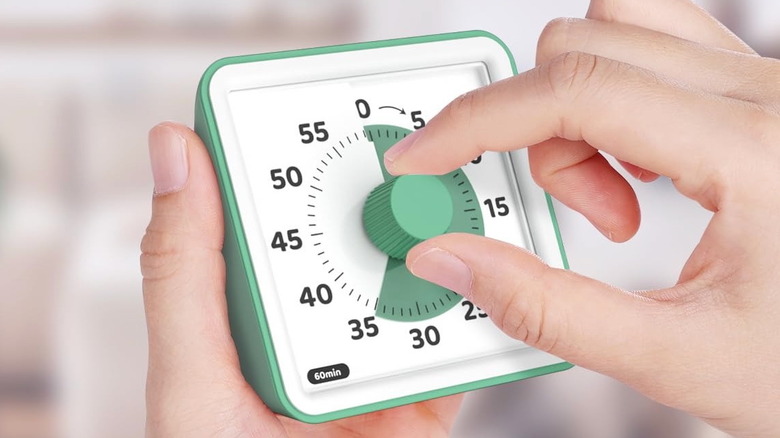
It's also a good idea to limit the amount of time you spend decluttering a single spot. Setting a timer will be your best strategy against clutter. Our phones can be distracting, so ideally, put them away in another room. Instead, use an old-school Liorque Visual 60-Minute Countdown Timer. You can, for example, set the timer to 10 to 15 minutes, then hone in on the task. Once you've set your timer, set your phone down in another room and get to work. Sometimes listening to a podcast or music — instrumental music is best for concentration — can help you get into the flow. Once the timer goes off, it's time to stop. Even if you feel like you have the motivation to continue, it's important to take a break. Grab a snack, pet your dog, or even go for a short walk outdoors. You can set the timer for another session or be happy with the fact you've done 10 or 15 minutes.