

8 Signs That Your Indoor Plant Needs To Be Repotted (And 3 Signs They're Ok As Is)
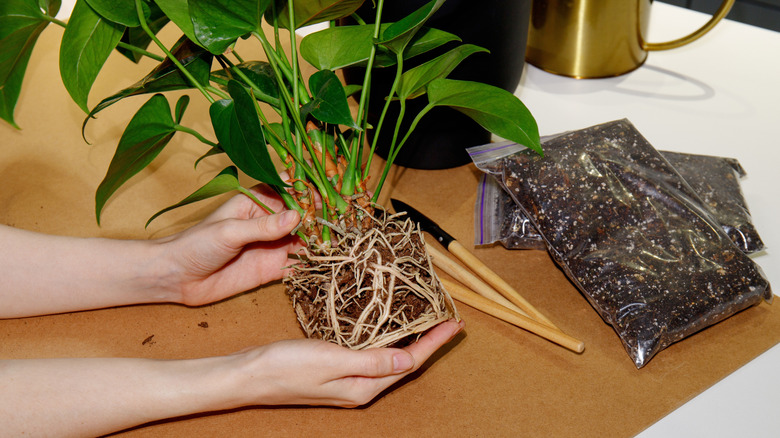
There are many reasons why you may need to repot your precious plants. The obvious one is that it needs more room to grow. However, your plant is just as likely to need repotting if the roots have been allowed to rot or if the quality of the soil has seen better days. What's more, while it's easy to think that common plant issues like wilting, slow growth, and yellowing leaves are the fault of poor watering or mismanaged light levels, often the real issue is the pot. So how do you know that's the case? What signs can you look out for that may indicate that your plant is looking for a new abode?
That's precisely what this guide is here to help you find out. Firstly, we'll cover signs that your plant needs repotting. Things like yellowing leaves, stunted growth, and a growing inability to retain moisture in the soil can point towards your pot being the problem and can cause even the most low-maintenance houseplants to become a source of horticultural heartache. Similarly, if roots are starting to bulge from the bottom of the pot or are protruding from the soil's surface, that's almost always a sign that your plant is ready to upsize.
Of course, certain signs can sometimes point to issues that have nothing to do with the pot. For example, if you've moved your plant recently to an area where light levels are different, and it's started to struggle, then there's a good chance the issue isn't the pot. And some signs can merely prove that you've gotten your pot sizing spot on. For instance, if your plants are currently throwing out an abundance of colorful blooms and new leaves, then they're probably quite happy where they are.
Repot plants whose roots are protruding from the topsoil or drainage holes
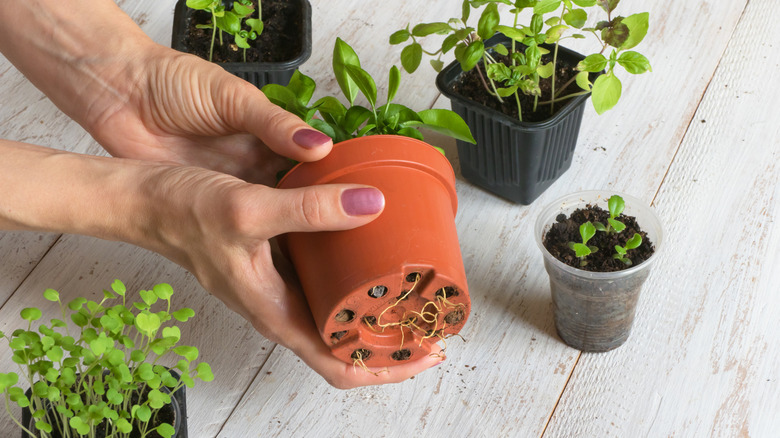
If your plant's roots are starting to protrude from the soil's surface or through the drainage holes at the bottom of the pot, this is a tell-tale sign that it has outgrown its current abode. It's a symptom of a condition known as "bound roots," whereby the roots begin to wrap around and encircle the inside of the pot in their effort to find more space. In turn, this limits the plant's ability to absorb moisture and nutrients, and while the pot size is the culprit, it can lead to further symptoms, like stunted growth and yellowed leaves, which can mislead you into questioning other areas of your plant care strategy.
So, if you see roots starting to emerge from the soil's surface, then it is absolutely time to increase the pot size. Roots will usually grow down and outwards first, and only once they've completely run out of avenues in those directions will they attempt to go up. Fortunately, it's quite easy to revive a root-bound houseplant, and by giving it a larger container with fresh potting mix, its roots will be able to continue growing down and outwards once more. Crucially, they'll be better able to absorb water and nutrients, thus restoring your plant to its old, healthy self.
Yellowing leaves could be a sign that roots have started to rot
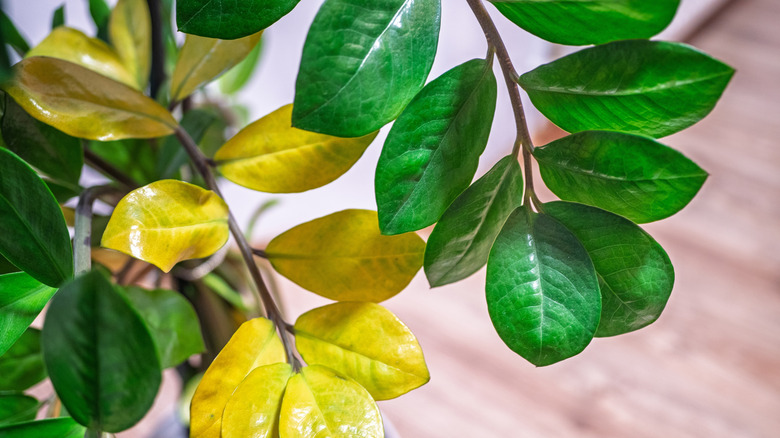
If the leaves of your plant are starting to yellow, don't ignore it. It could be symptomatic of a potentially deadly condition known as root rot. As they rot, the roots become less and less able to function properly, and if the condition is allowed to go untreated for long enough, it can lead to the death of your plant. Wilted leaves are another sign, especially if they remain wilted after appropriate feeding and watering.
So, how does this pertain to your plant's pot? In actual fact, the pot's size and design play a key role in how well roots develop. As we've touched on already, a pot that's too small will cause roots to become bound, which itself can render them unable to soak up water and nutrients. If there's not enough drainage (or the drainage hole has become blocked or clogged), then the soil is likely to be left waterlogged. And if that's the case, then your pot may actually be depriving your plant's roots of oxygen, leaving them susceptible to fungal diseases that in turn can lead to rot.
Even if your pot provides ample drainage and is the right size for your plant, if it's filled with the wrong potting medium — for example, a clay-based soil that retains too much moisture for your plant — then the best way to deal with your root rot problem remains repotting. Depending on how badly afflicted the roots are, you may need to try treating your rotten roots with hydrogen peroxide. You should also review the kind of potting mix you use, ensuring that the replacement soil drains suitably well for your plant and its unique moisture requirements.
A cracking container could indicate that the plant needs a larger home
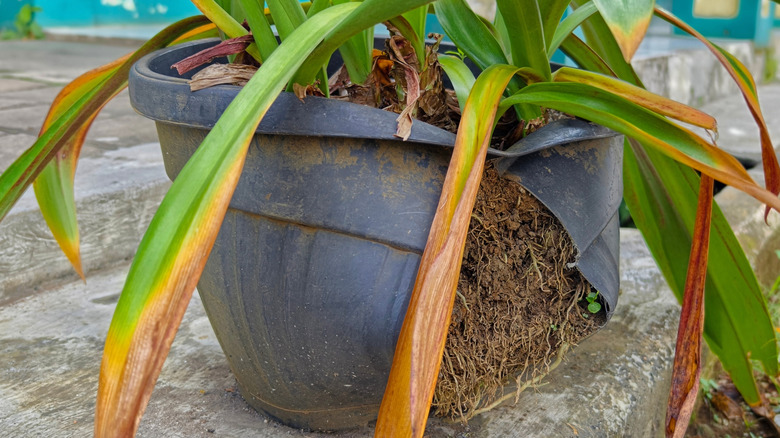
A plastic pot that's starting to crack or bulge is only likely to do this if the root system inside has outgrown its home. As the roots expand and thicken, they place increasing amounts of pressure on the walls of your pot. And while it can be tough to spot in solid ceramic or terracotta pots, it's usually quite visible in flexible plastic pots. This also makes it easier to treat at an earlier stage. As mentioned earlier, when roots become bound, they lose their ability to effectively deliver water and nutrients, which, in the long term, can eventually spell doom for your plant. In other words, it's important to fix the problem quickly.
So, if you notice one of your plastic pots starting to crack or bulge in strange, unnatural directions, take a closer look. If the roots are starting to poke out of the bottom of the pot, through the top of the soil, or through a crack in the plastic, then find your plant a new, larger pot. Remove it from its old home, gently riddle the depleted soil from between the roots, and then place them in some fresh, new potting mix.
If your plant needs watering more regularly, it may be time to repot it
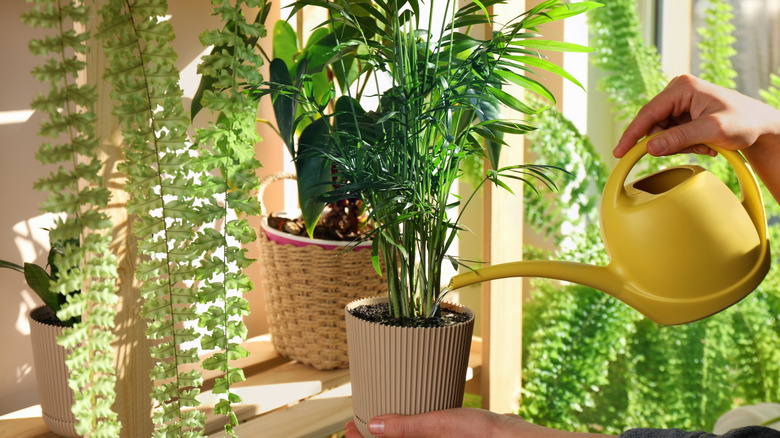
If you're struggling to keep your plant watered for as long as you used to be able to, then it may not be the amount of water that you're giving it that's the problem. The problem, in all likelihood, is the pot. As plants grow, they inevitably outgrow the pots that we start them in, and if we're not vigilant, their root balls can become bound and compacted as they wrap themselves around the pot in search of extra space. As they do so, they displace the soil around them, rendering it increasingly less able to retain the moisture they need.
This sign is quite easy to spot. Firstly, if you're organized and have a calendar full of reminders to water your various plants, then it'll quickly become clear if certain specimens are drying out faster than usual. You can also assess how quickly the water runs through the plant and into the bottom of the pot. If it seeps through really quickly, then chances are the roots have filled the pot and displaced the soil around them, meaning it's time to increase the size of the pot.
Less vigorous growth is often a sign that it's time to increase pot size
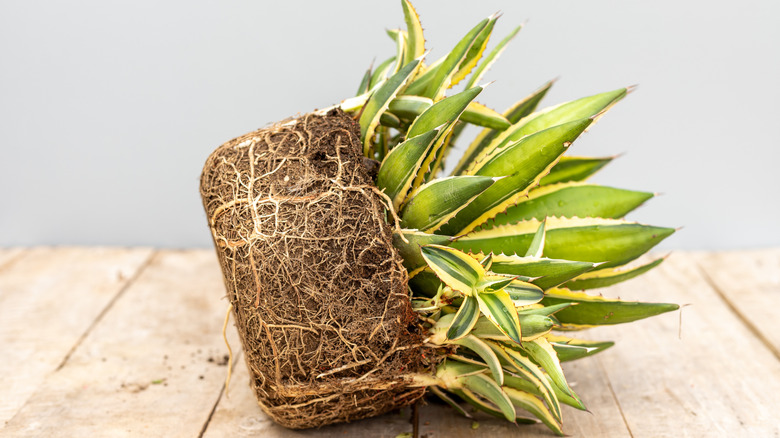
If you're trying to cultivate the perfect indoor garden, then ensuring your plants are paired with the right-sized pots is key. Young plants, especially, are almost guaranteed to outgrow the first couple of containers they're potted in, and when they do, they may start to grow less vigorously than before. So, if you notice a lack of new foliage or a diminishing return of blooms compared to previous seasons, then take a closer look at what's happening beneath the soil.
If the pot is too small, then the roots are likely to appear bound and may even be protruding from the soil's surface or the drainage holes at the bottom. The soil will likely feel loose, dry, and clumpy. If it does, then riddle the roots gently and try to remove as much of the depleted soil as possible without causing damage. When that's done, repot the plant into something more substantial, and be sure to give it some fresh soil. Do that, and you should see your plant bounce back to its vigorous self in no time.
Dropped leaves may mean it's time to ditch the old pot
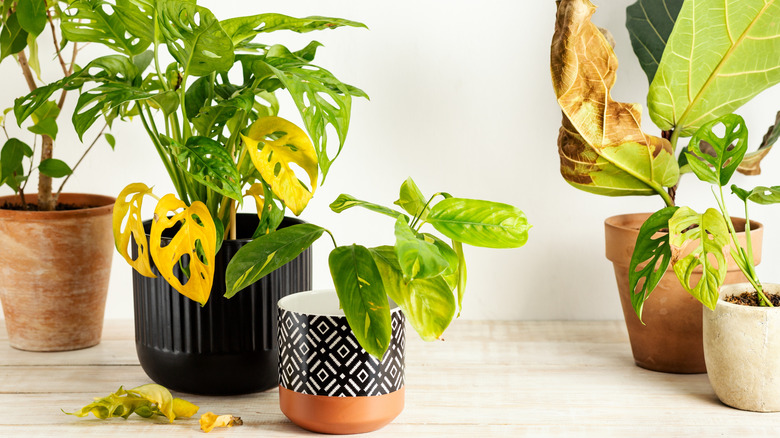
If your plant is starting to shed its leaves, then it could be for one of a few reasons. A lack of sunshine, an overabundance (or lack) of water, and even the wrong temperature can all cause plants to start dropping leaves. However, if your plant has only recently started to drop them, and you've otherwise made no changes to the amount of light, water, or heat that it receives, then the most likely reason is that the pot is too small. As the root system grows, it needs more nutrients. Unfortunately, as the roots begin to become bound in the pot, they find themselves decreasingly able to absorb them. They also start to displace and separate the soil, which reduces its ability to retain moisture.
The cumulative effect of all of this is an unhealthy plant, and the longer it's left untreated, the more likely your plant is to start ditching its leaves. Now, if it is the size of your pot that's the problem, then it's easy to diagnose. Simply lift the plant from the pot and assess the roots. If they appear to have outgrown the pot size, are protruding from the pot, and the soil around them feels loose and very dry, then your plant needs a bigger home.
If your plant struggles to stay upright, the pot may be too small
When a plant starts struggling to stay upright or begins to lean, it's usually more than just a cosmetic issue. It usually means that the pot is too small to support the plant's growth, and it's especially common with larger houseplants. When the container is too small, not only does it inhibit the root's ability to provide nutrients and water to the plant, but it also prevents them from spreading and providing a sturdy anchor. To put this into perspective, imagine a tree and its roots. Even smaller trees have surprisingly expansive root systems; in fact, they can spread outwards to a distance of up to three times the tree's height. Now picture your indoor plant's roots. How tricky must it be for them to keep the plant upright if the walls of your chosen pot are preventing them from spreading?
As a rule of thumb, a pot should be big enough to accommodate the typical-sized root system of the plant you're trying to grow. For example, say your chosen plant usually develops a root ball of around 12 inches. You should ensure that your pot is large enough so that they can grow to that size without becoming bound and displacing the soil. If you get the balance right, you shouldn't need to worry about tipping or leaning plants. The additional soil will add weight to the pot to help anchor it, while the larger diameter will ensure the roots can spread out and prevent the main stem of your plant from tilting.
Soil that stays wet long after watering is often due to a pot that's too big
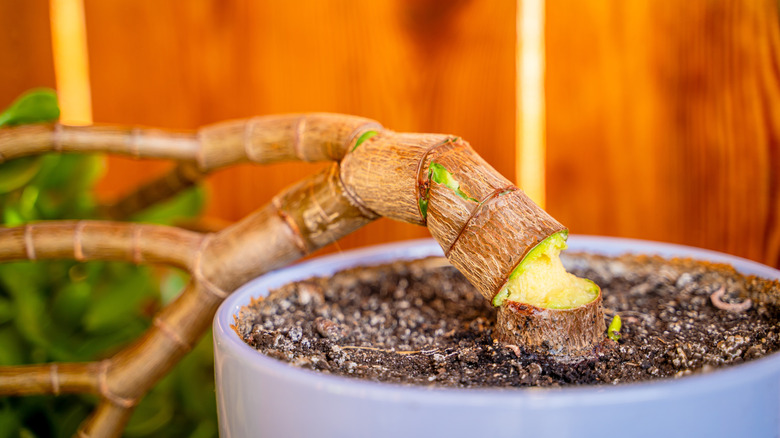
One of the biggest issues with using pots that are too big is that they make it very easy to overwater your plants. You don't need to drench the soil in order to do it, either. If your pot is too big and there are too few roots compared to the volume of soil, then the soil is unlikely to dry out as quickly as it should, since there aren't enough roots to suck the water from it. In turn, waterlogged soil can lead to a host of annoying problems, including diminished amounts of oxygen delivered to your plants, and in many cases, root rot. So, if you notice that the soil of your houseplants is staying soggy for days at a time, then it could well be time to downsize.
As for what size pot you should use, it depends. If your plant is close to maturity, then give it a pot that matches the typical-sized root system of the plant you're trying to grow. If it's younger, then you'll need to increase the pot size incrementally. For slow growers, aim to ensure your pots are at least an inch wider in diameter than their root balls. You can go slightly bigger with faster growers to avoid the need for constant repotting, but again, you should avoid dwarfing the plants, as you could run into issues with saturated soil and root rot.
A vigorous flush of flowers probably means your plant is happy as it is
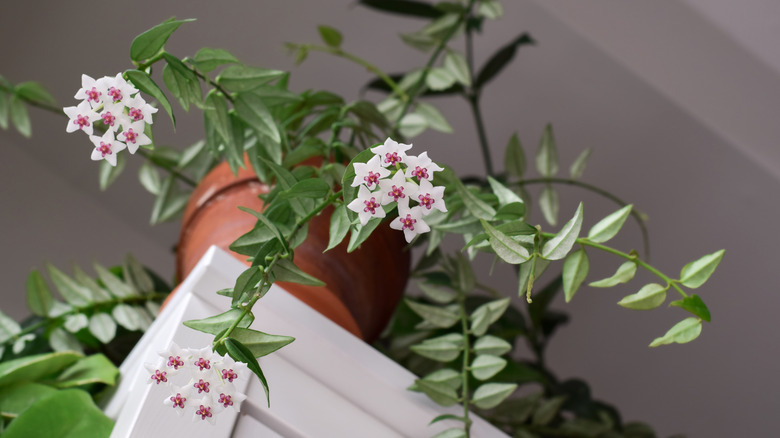
Even the best indoor blooming plants are likely to struggle if housed in the wrong-sized pot. In other words, if you're currently benefitting from a bounty of colorful blooms, then chances are your plants are perfectly happy where they are. If their pots were too small (or too big and therefore oversaturated with water), your plants would be far less likely to flower happily. In place of bountiful blooms, you'd likely be seeing issues like brown leaves, leaf drop, root rot, or a leggy, lackluster appearance — all symptomatic of overly small or large pots.
Generally speaking, plants that have outgrown their pots are far less likely to flower. Even those that do will throw out fewer blooms than in previous years. What's more, any flowers that do appear are likely to look less healthy or colorful than they should. In other words, don't overthink it. If your plant looks happy, then it almost certainly is.
Healthy leaves usually mean that the rest of the plant is fine
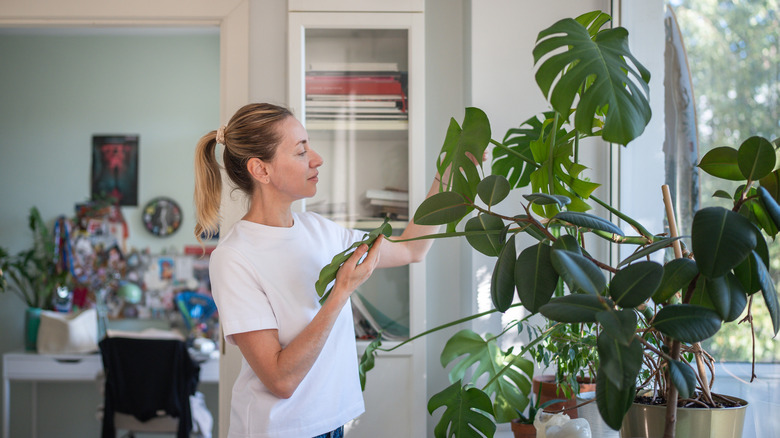
Sometimes, the easiest way to know whether your plant needs repotting is simply to look at it. If it's healthy, then it should look well-balanced with even growth, and its leaves should look vibrant and shiny. If it's a flowering type, then as you approach the flowering season, you should also start to see plenty of flower buds forming. There should be few, if any, damaged-looking shoots, and you shouldn't be able to find many, if any, yellowing leaves.
To be absolutely sure, you can always pull the plant gently from its pot and make sure that roots haven't bound inside. If you spot any issues around your plant, you can always take pictures and run them through one of these amazing apps to ensure your plant is nice and healthy. However, if upon looking you feel that your plant is growing evenly, that the leaves are nice and green, and that there are plenty of flower buds starting to form, then honestly, it's probably fine where it is.
If your plant is shooting plenty of new foliage, then the pot is not a problem
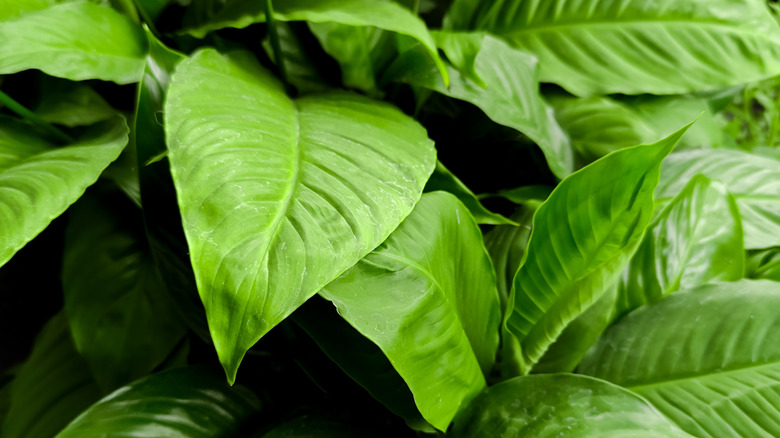
It sounds really obvious, but if your plant looks to be growing healthily, then there is unlikely to be a problem with your pot. Don't forget that the production of new stems and leaves requires a surprising amount of resources — not just water and nutrients but also space for the roots to spread. In a pot that's too small, then, instead of spreading, roots become bound. In turn, this causes the soil to displace, rendering it increasingly less able to hold onto moisture and nutrients. In other words, an undersized pot provides perhaps the least conducive conditions to good growth.
On the other hand, if there are lots of new stems appearing on your plant, and those stems are quickly starting to sprout new leaves, then that's a surefire sign that your pot is spot on. It means that the roots have enough space to grow, thus providing ample structural support to the plant itself. It also means that the soil is retaining enough moisture without waterlogging the roots, and crucially, it means that there are plenty of nutrients present to help fuel such steady growth.