

Should You Reseal Grout After A Deep Clean? Here's What We Think
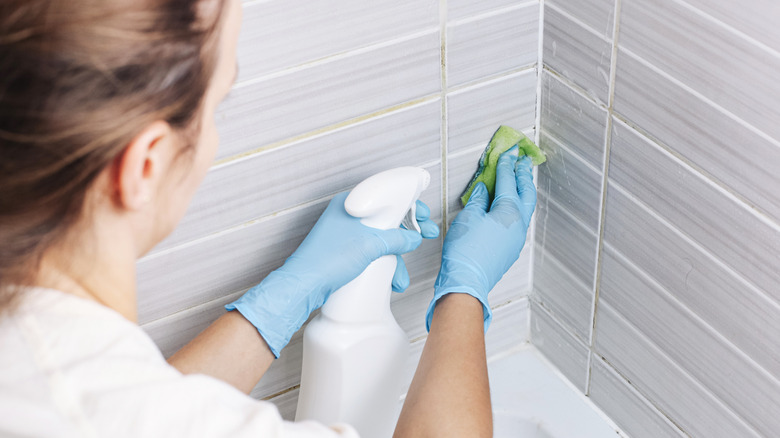
A deep clean where you've scrubbed away at your dingy bathroom floor or kitchen backsplash grout can make your tile look as good as new. But removing oil, stains, and old residue from your grout can be challenging, especially if the grout isn't sealed, because the material is porous. It's good to have an idea of the worst cleaners for grout and tile and find safer alternatives. Once cleaning is done, you may consider resealing the grout. But should you, really? The short answer is yes, but it depends on how the cleaning was done, what signs your grout shows, and how sealing ties into your regular maintenance routine.
It's helpful to understand and avoid grouting mistakes when DIYing a tile installation — those mistakes could damage the grout. Contaminants such as food, dirt, and oils can penetrate it, leading to staining and mold or mildew growth over time. Grout is also susceptible to water infiltration, causing it to eventually break down and loosen the tiles around it. However, a grout sealer can penetrate deep to create a protective barrier that aids in repelling water, dirt, and grime. It can help to keep your grout from deteriorating and keep it cleaner longer. Without a sealant, even freshly cleaned grout can quickly reabsorb dirt and oils, undoing all of the hard work you just put into cleaning it.
Helpful tips and tricks for resealing grout after a deep clean

Most of the time, you should reseal the grout after a deep clean, since some cleaning approaches strip the sealant. You can use simple DIY cleaning methods such as vinegar, baking soda, or bleach, and safe chemical cleaners, but be aware that any acidic or strong cleaners (including vinegar) can cause grout and sealants to dissolve, increasing the need for a repair and reseal. One of the easiest ways to clean your grout and tile is with a steam cleaner, since it's less likely to cause grout breakdown.
It can be helpful to reseal after each deep clean in more high-traffic or wet areas, specifically. The grout is more likely to wear down every six to 12 months, and you can align resealing with your deep cleaning routine. Moldy spots, discolored areas, crumbling, and uneven grout lines are signs that it's time to clean and reseal. In less-trafficked areas, resealing after a deep clean every 12 to 18 months (up to 24 months) helps ensure your grout remains protected.
Choose a proper sealant to make ongoing maintenance easier. There are two types: solvent-based and water-based. Within those categories are penetrating and non-penetrating sealers. Penetrating sealants go deep in grout, protecting against water intrusion in areas like bathrooms, while non-penetrating sealers provide a topcoat, better suited for kitchen backsplashes. When applying, work in small areas and ensure the grout is completely and evenly covered. Lastly, test it after an hour of drying by dripping some water to see if it sits on the surface. You can apply another sealant coat if needed.