

11 Different Types Of Bird Feeders (& The Species They Best Attract)
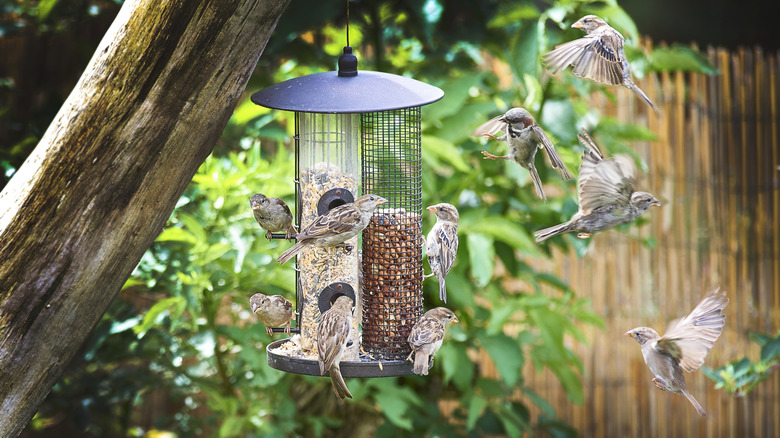
If you're hoping to increase biodiversity in your yard and invite more wildlife, one of the best things to do is put out some bird feeders. This provides supplemental sustenance for the winged wanderers in your area, and is an especially helpful way to keep birds safe during the winter when food is likely to be scarce. However, it's not quite as simple as hanging a cage from your favorite tree and filling it with seeds and peanuts (although there's absolutely nothing wrong with this). To make your garden a haven for birds, consider the species that are likely to be in your area, and tailor your feeder choices to them.
Believe it or not, there are a surprising number of bird feeder designs available. Some are designed to provide smaller food items to slighter species that might otherwise be crowded out by larger birds. Others are designed specifically for one or two species, such as hummingbirds and woodpeckers. In this article, we cover the various types of bird feeders you're likely to come across at your local garden store. More than that, we explain which species each is most likely to attract and why, letting you put on the best possible banquet for the birds you'd like to befriend.
Tube feeders attract an array of cling-feeders, such as chickadees, finches, and nuthatches
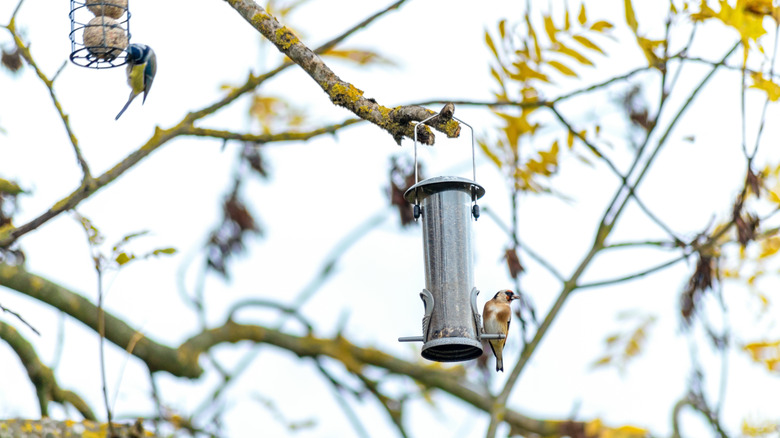
As long, cylindrical cages with multiple feeding ports and perches, tube feeders are some of the most recognizable bird feeders you're likely to find in your local garden store. You can hang them from trees or from a shepherd's crook, and you can fill them with various types of bird seeds. The vertical shape keeps food items protected from the rain, especially if you add a baffle to the top (which can also help keep squirrels out of your seeds). The shape also helps prevent the feeder from becoming soiled, since bird droppings fall to the ground instead of into the food.
This type of feeder is perfect for attracting smaller birds while keeping larger species away, especially if you choose a product with fine wire mesh and small feeding ports. It's an especially good choice in gardens where species such as chickadees, finches, and nuthatches tend to visit. These birds are cling-feeders and are therefore quite happy latching onto the cage of vertical tube feeders to snack on the goodies inside. This isn't to say you can't use tube feeders for larger species. You can; you just need to buy a feeder with larger feeding ports since this lets you use larger foods. In fact, using a tube feeder for larger birds is one of the best ways to enjoy their presence without the risk of starlings overcrowding your yard (starlings often struggle to feed from tubular feeders).
Platform feeders attract various species, from cardinals and jays to doves and towhees
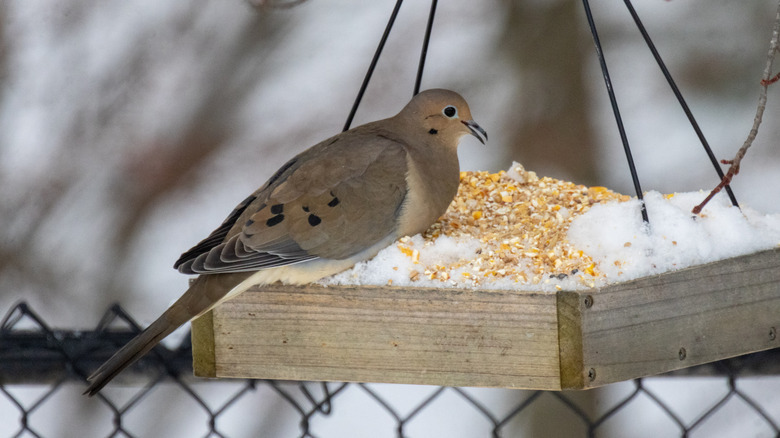
Offering an open, tray-style platform for birds to land and feed on, platform feeders can be mounted on posts, hung from trees, or simply placed on the ground. Because they don't feature tubes or feeding ports, you can scatter them with any type of bird feed, from cracked corn to sunflower seeds. This, in turn, makes them a superb option for attracting an array of different species.
This doesn't mean all species are likely to land on your platform feeder. Certain birds, including smaller cling-feeders such as chickadees and nuthatches, are more likely to be attracted to tube feeders suspended from a tree with smaller food items. However, depending on the food you offer, cardinals, jays, doves, towhees, and other larger species are sure to thank you for a well-stocked platform feeder.
There are a few important things to remember when installing a platform feeder in your yard. First, ensure your seed doesn't spoil too quickly; your feeder should have plenty of holes for drainage. You should also aim to clean your feeder regularly since it's likely to collect bird droppings and can quickly become a hotbed of bird-borne diseases. Finally, to ensure you're attracting desirable species, keep an eye on the birds visiting your feeder. If you notice aggressive birds, such as starlings, starting to swarm and bully other species away, consider adjusting your feeding strategy. You could feed in the morning or at dusk, when starlings are either roosting or on their way to roost. Alternatively, you could feed with hard-shelled food types, such as black oil sunflower seeds, which starlings tend to struggle with.
Hopper feeders keep food fresh for various species depending on your chosen seeds

Hopper (or house) feeders are essentially enclosed containers with a roof and a central reservoir that dispenses food when it's required. This ensures only the amount of food required by visiting birds is exposed to the weather, as opposed to mesh-style feeders and platform feeders where the food is constantly exposed to the elements. Hopper feeders are great for gardeners who have less time on their hands to keep topping them up; depending on the number of birds you have visiting, you may only need to fill your hopper feeder once every few days.
As for the birds these feeders attract, it's really down to the food you decide to use. They can be used to encourage a variety of species, and while fewer birds are likely to visit hoppers compared to platform feeders, the difference isn't huge. Cardinals and jays, chickadees, finches, nuthatches, sparrows, and titmice are all likely to thank you for a well-stocked hopper. Since birds can perch on the house-style structure, these feeders make eating more comfortable for mid-sized species that might struggle with tubes.
That sounds like an awful lot of upside, and honestly, there's not much to say against the use of hopper-style feeders. However, if the food inside the hopper isn't regularly cleared out by local birds, you may need to clean it to avoid a build-up of mold. It's also important to stick to one type of seed, rather than a mix of different foods, since this can lead to overcrowding. If you'd like to diversify the food on offer, consider using multiple feeders to attract different bird species into your yard.
Window feeders give you a front-row view of small species such as finches, nuthatches, and sparrows
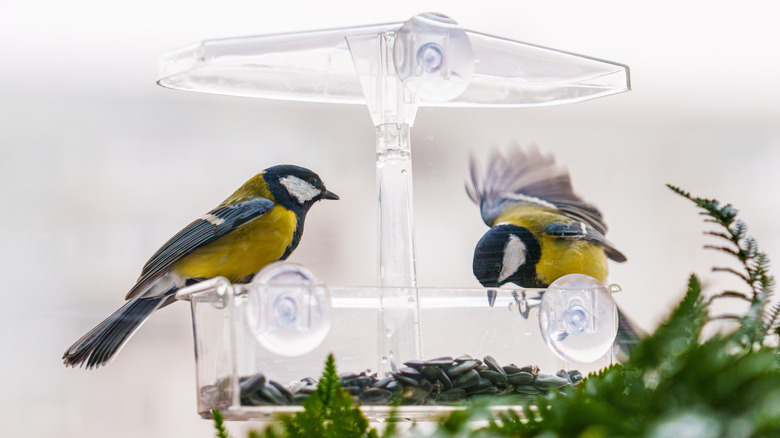
These compact feeders are usually fitted with suckers on the back that let you mount them directly on your home's windows. They're usually built from clear plastic to let you see what's happening inside them (otherwise what's the point), giving you a front-row seat to the feeding action without having to step outside. While there are both pros and cons to using window bird feeders, they are an excellent way to reduce the risk of birds colliding with your windows — especially if you keep your panes scrupulously clean.
Window feeders are not the most versatile in terms of the species they attract. Generally speaking, they attract smaller, common garden birds such as chickadees, titmice, and finches, all of which are comfortable landing on the small perches and trays that these feeders are fitted with. Being smaller, these feeders also contain less food, which may mean you need to top them up more frequently.
Nyjer feeders are perfect for finches, pine siskins, redpolls, and indigo buntings
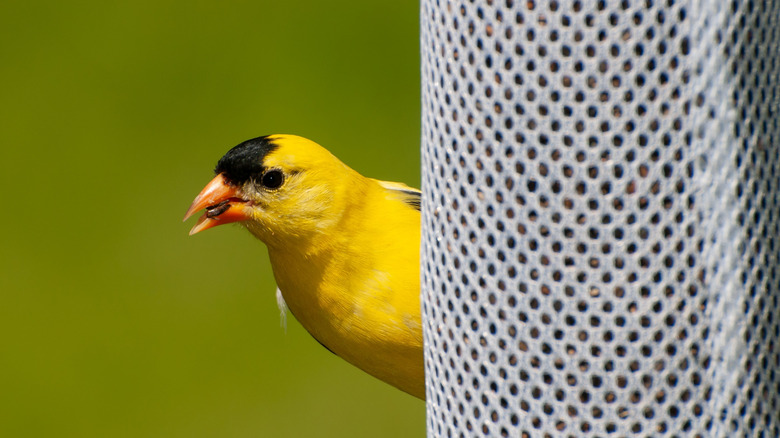
Typically featuring a fine wire mesh and very small feeding ports, these specialized feeders are designed to hold nyjer seeds. High in energy yet exceptionally tiny, they are the perfect food for smaller-billed birds that struggle with larger morsels. Goldfinches, in particular, are known to love nyjer seeds. Other finches are also likely to thank you for installing one of these feeders, as are various smaller species such as pine siskins, redpolls, and indigo buntings. What's more, since nyjer seeds are so small, you're unlikely to have issues with larger birds overcrowding your feeder and bullying smaller species out of the way. Oh, since squirrels prefer larger food items, they're also less likely to come sniffing around this particular type of bird feeder.
Getting the most out of your nyjer feed is about more than simply filling it with seeds and hanging it in your yard, though: You need to position it somewhere larger birds are unlikely to gather. While larger species shouldn't be interested in your nyjer seeds, their constant comings and goings may be enough to intimidate smaller species and discourage them from feeding freely.
Tail-prop bird feeders are the feeder type of choice for woodpeckers
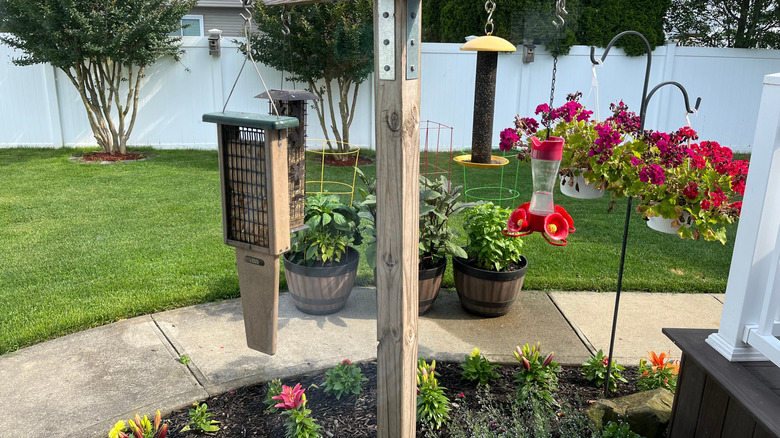
If you're trying to attract more woodpeckers to your yard, one of the best ways to do it is to install a tail-prop feeder. Used for dispensing suet, tail-prop feeders are designed with a board that makes it easier for woodpeckers and other stiff-tailed species to feed. It makes feeding feel more natural for them — the board replicating the surface of a tree — and is likely to encourage an array of woodpecker species, including hairy, red-bellied, and even pileated woodpeckers to visit your garden.
It's not only woodpeckers that are likely to visit this type of bird feeder. Don't forget that suet is one of the most popular types of bird food you can offer. With that in mind, you shouldn't be surprised to also see chickadees, nuthatches, and wrens paying a visit. While they don't necessarily need the board to brace their tail feathers on, cling-feeders such as these can still benefit from the extra perch space tail-prop feeders provide.
Caged feeders are great for feeding suet to birds such as jays, pine warblers, and Carolina wrens
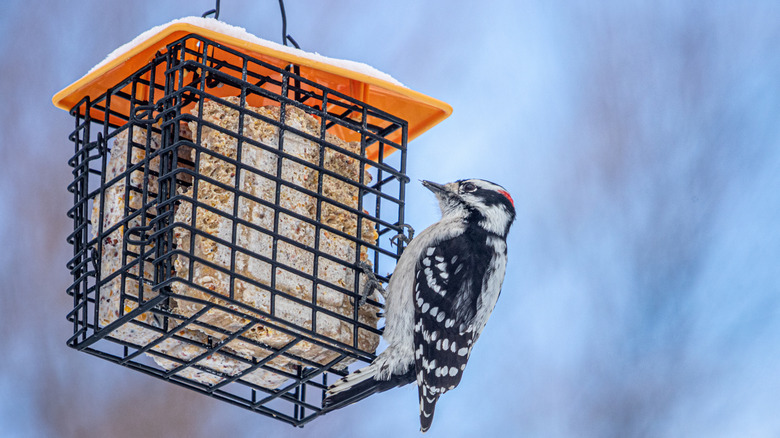
Cage-style feeders feature an open-wire structure that lets birds cling to it as they peck at the food inside. They're also one of the most versatile types of suet feeders and can be used to attract a wide array of birds, from woodpeckers and pine warblers to jays, titmice, chickadees, and Carolina wrens.
It's not just the cage-style build that makes them popular. Suet is one of the more versatile types of bird food and usually contains a variety of nuts and seeds, which attracts a diverse range of birds. Cages can also be placed in various spots around your yard; hang your cage from a crook or suspend it from a branch of your favorite tree. Just be mindful that, while cage feeders are great for attracting different bird species, they can easily become crowded if certain species, such as starlings, get wind of their presence.
You should also remember that suet can spoil quite quickly, especially if the weather's warm or wet. Hot weather causes the fat to melt and the cake to turn rancid, while excess moisture is a surefire recipe for mold growth. To ensure you don't accidentally feed with spoiled suet, start with a little at a time. Once you have lots of visitors coming regularly, up the amount you use. However busy your feeder, aim to clean it weekly; if there's any suet left when you clean it, discard it and replace it with fresh food.
Upside-down suet feeders discourage crowding species such as jays and starlings
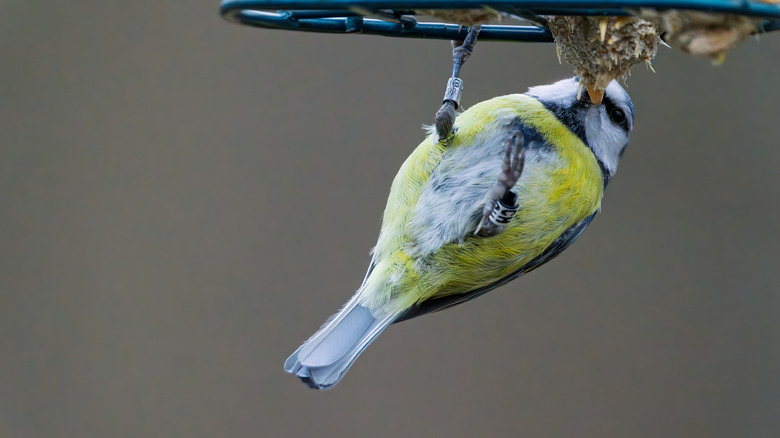
If, despite your best efforts, you're struggling to deter crowding species, such as jays and starlings, from overtaking your feeder, an upside-down feeder may be the best solution. Working in much the same way as a caged feeder, this specific type is designed to angle the suet cake downwards, forcing visiting birds to hang upside down to extract food from it. More agile birds, such as woodpeckers, nuthatches, titmice, and chickadees, feed from upside-down feeders quite happily.
Jays and starlings, meanwhile, are less inclined to dangle and may decide to fly elsewhere in search of a decent meal. Of course, you may not want to completely deter these species from your garden. You may just want to ensure every species in your area gets a fair look-in, so why not incorporate both regular and upside-down suet cages across your yard?
Suet logs are a natural way to support cling-feeding birds such as woodpeckers, chickadees, and blue jays
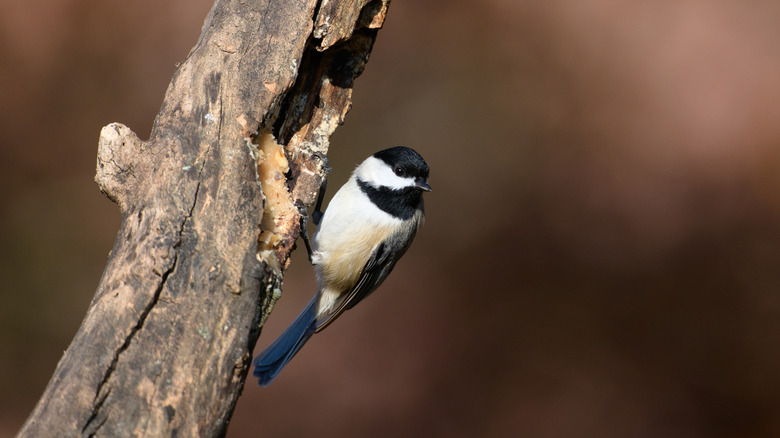
If you want to feed local birds without detracting from the natural look of your garden, why not make your own bird feeder by drilling holes into a wooden log? This type of bird feeder, known as a suet log, is great for attracting cling-feeding species such as woodpeckers, chickadees, and blue jays. Since it's made from wood, it mimics the natural feeding stations these species are used to in the wild.
Titmice, wrens, and even cardinals are also likely to enjoy this type of bird feeder. The trick to attracting diverse species is to drill holes of various sizes. Intersperse larger holes with smaller bores to attract birds of different shapes, then stuff each opening with suet. You could also DIY your own batches of bird suet and tailor the ingredients to the birds in your area. Lace your suet with nyjer seeds for smaller birds, and add hard-shelled sunflower seeds.
Hummingbird feeders are likely to be remembered by individuals for years to come
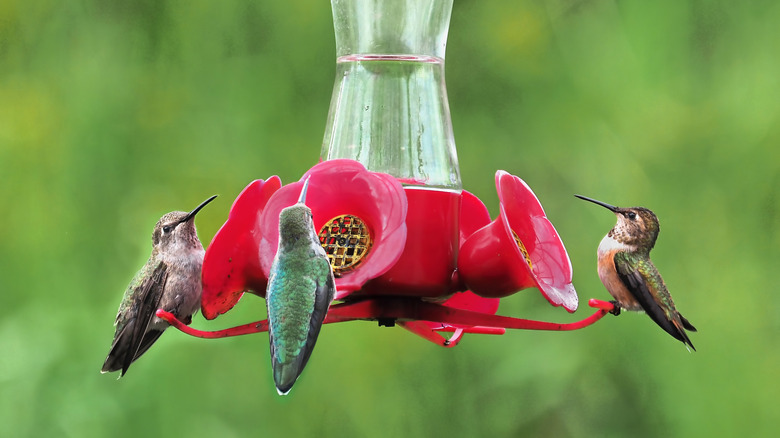
Designed, as the name implies, to attract hummingbirds, this type of bird feeder comes in a range of shapes and sizes. However, most, if not all, work in the same way. These feeders feature a reservoir you fill with sugary water (otherwise known as nectar), and most are red, which is supposed to replicate the color of a hummingbird's favorite flowers.
The key to success with hummingbird feeders is consistency. This means keeping the feeder topped up with nectar, ensuring it's kept clean, and placing it in the same place every year — ideally a safe spot that's out of reach of predators. You should also put your feeder out in early spring, in time for the arrival of migratory males. Despite traveling thousands of miles each year, hummingbirds have an astonishing memory when it comes to food and often return to the same feeding grounds. Provided your feeder is in position and you've mastered the perfect homemade hummingbird nectar recipe, you could well find yourself welcoming the same individuals into your yard across multiple visits.
Pine cone bird feeders are a fun DIY for families and attract an array of acrobatic species
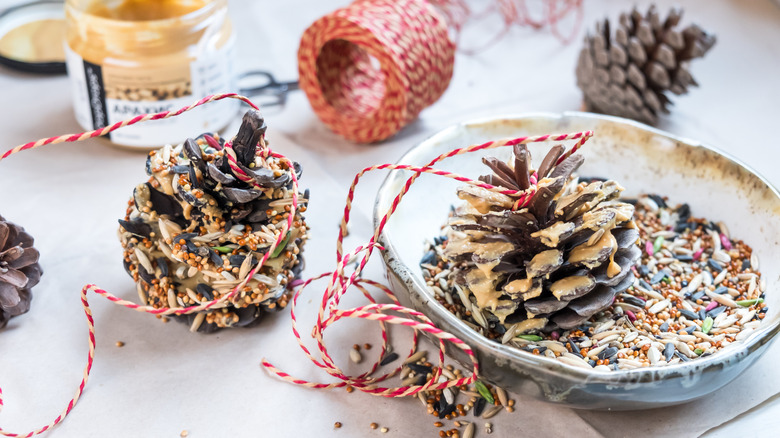
This fun DIY bird feeder is perfect for making with your kids, and attracts an array of different bird species depending on how you make it. The first thing to do is find a pine cone. The best time of year to find these is usually in the fall. If you have a conifer in your back yard, you probably don't need to travel far to find one. Even if you don't, your nearest park is sure to have one or two evergreens that are likely to drop some cones for you to use. Once you have one, give it a clean, then tie some string around the top to form a loop. Coat the pine cone generously with peanut butter, roll it in some seeds, and voila — you have your very own homemade bird feeder!
The best seeds for your bird feeder depend on which birds you want to attract. For example, if you want to attract nuthatches, chickadees, and cardinals, then sunflower seeds are a good choice. For smaller species, such as goldfinches, indigo buntings, and common redpools, use smaller seeds, such as nyjer or thistle.