

Say Goodbye To Slugs In Your Yard With 13 Organic Methods
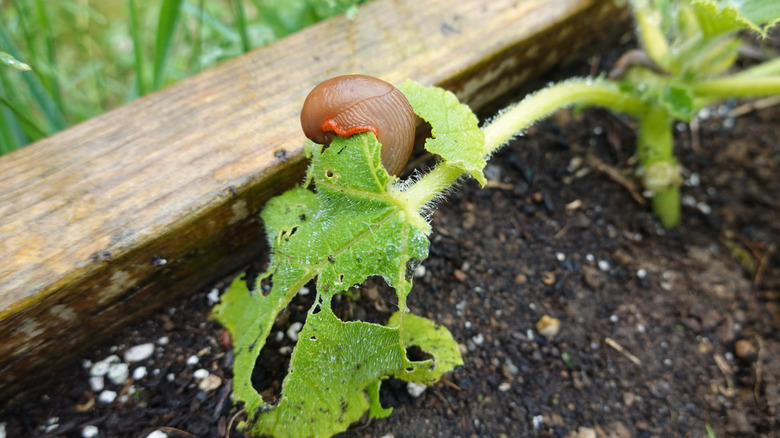
I'm a master gardener who specializes in organic growing and permaculture, so I've spent the past few decades testing all kinds of natural ways to keep slugs off my plants. These persistent garden pests are mostly nocturnal and thrive where the soil and foliage stay damp, and where there's plenty of tender leafy growth near dark, cool shelter. The number of slugs you see is only a fraction of the number that are actually lurking in your garden, and that's without counting the eggs laying in the soil.
Common myths for deterring slugs, like using citrus peel, don't necessarily work, and they put people off trying other natural controls. There are plenty of organic slug control methods, but many people try just one thing and expect a miracle cure. But what works is combining multiple natural strategies to keep slugs at bay without having to resort to chemical interventions that harm all kinds of wildlife, from pollinators to birds, amphibians, and mammals. Natural control centers around making your garden less hospitable and your plants less desirable, and welcoming other helpful wild things into your garden.
Open up slug-prone beds so they dry faster
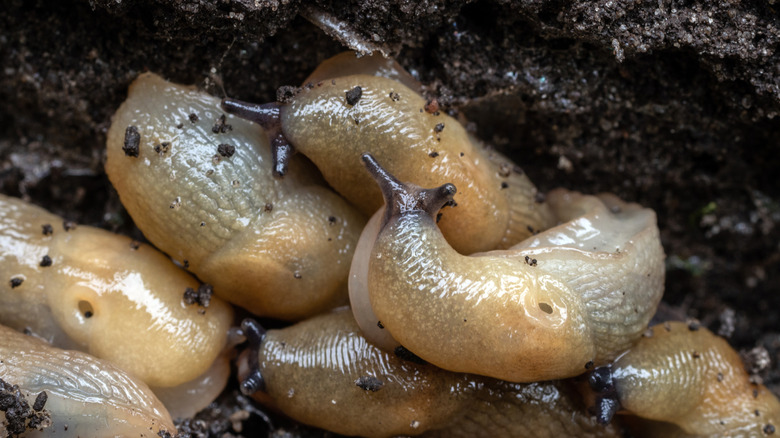
If you've got beds that are full of slugs, chances are, they're also full of leafy, cramped plants, or there's a lot of dead leaf and debris build up at the bases of the plants. Where this happens, it stays damp, dark, and moist, because airflow is severely restricted. This is prime slug habitat. But also, it increases the risk of plant diseases, particularly fungal pathogens, which also thrive in these same conditions. Slugs like these environments because of their physiology. They lose water through their skin very quickly, which is why they avoid hot sun and exposed surfaces, sticking to dank, humid areas whenever possible.
So make your garden less hospitable by opening up the beds. Now, that doesn't mean scalping them, but it does mean cutting away large, dead leafy growth close to the ground, clearing away excessive debris, and thinning out the plants. You don't have to strip them all completely, but it's a good idea to thin out the leaves where they are very dense. And, where plants have grown too close together as they mature, you should consider moving a few of them, or at least dividing them to reduce their overall mass. You can always replant the divisions in a different part of the garden. If you also have problems with soil staying wet for long periods, or you have compact or clay soil, add plenty of rich, organic fibrous matter, like straw and well-rotted manure that will, over time, break down into the soil and improve its structure and ability to drain and dry out.
Water early in the day instead of in the evening
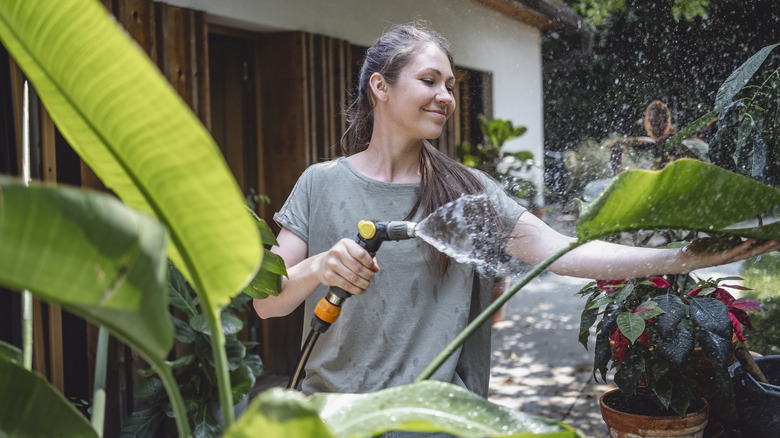
Because slugs are nocturnal, and they travel most freely over a thin film of moisture, leaving watering until late afternoon or evening is a mistake, as it makes it easier for them to move fast and eat away at your plants for longer. You're basically creating a slip 'n slide for slugs with a delicious all-you-can-eat buffet at the end, which nobody wants. Staying wet for too long also creates a better environment for plant pathogens to multiply and infect your plants.
The solution is ridiculously simple. Switch up your routine and water early in the morning. This gives the garden time to dry up before dusk when slugs are most active. And a study by Agriculture, Ecosystems & Environment found that switching to watering in the morning was equally as effective as using awful metaldehyde slug pellets at reducing slug activity. With the benefit, of course, that you don't poison anything else that comes into contact with them, or pollute your soil. Whether you water manually with a hose or a watering can, or you have an irrigation system in place, change to a morning watering routine. Be sure you water or direct your irrigation heads at the root zone, rather than soaking the whole plant. Otherwise, water can stay on the leaves, limit airflow, boost humidity, and encourage slugs if they don't dry off before nightfall.
Hand-pick slugs during dawn or dusk patrols
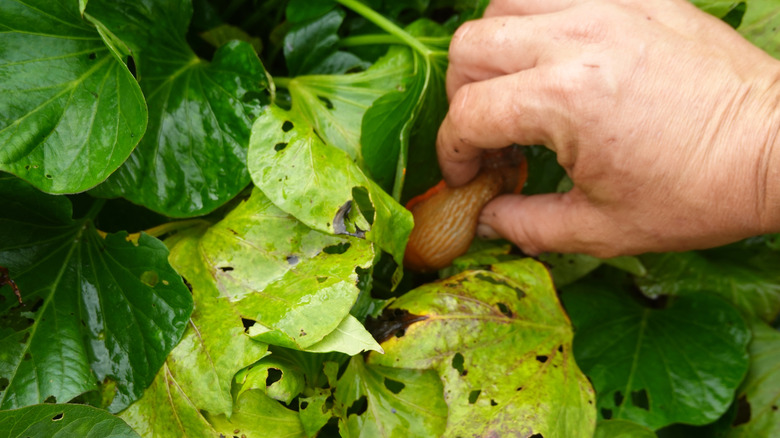
This one is a bit gross, but honestly, it's one of the most effective ways of controlling slugs. Yep, picking them off by hand and drowning them in a tub of soapy water is horrid, but works so, so well. You can even get some of the older kids involved and have a "competition" for who can collect the most slugs. You might not be able to cover the entire garden, but you can focus on the most vulnerable plants or wherever the slugs are most concentrated.
This trick works best at dawn or just after dusk, when slugs are out in force. You'll need a head torch and a tub of soapy water. Target beds where you know you've got a lot of slug damage and around soft leafy plants that are most vulnerable to slugs, as well as seedlings and fresh plantings, as slugs can decimate these very quickly. Look at plant bases, check under leaves, and look at bed edging, as you'll often see slugs appearing in droves from between old wooden bed edging and the soil line. You won't get rid of every slug in your garden, but with a few short slug-plucking sessions every week during peak slug season can significantly reduce numbers and damage. Now, I don't generally like killing things, even slugs, but I do, because just relocating them a few miles away makes them someone else's problem.
Use boards, pots, or tiles as daytime slug traps
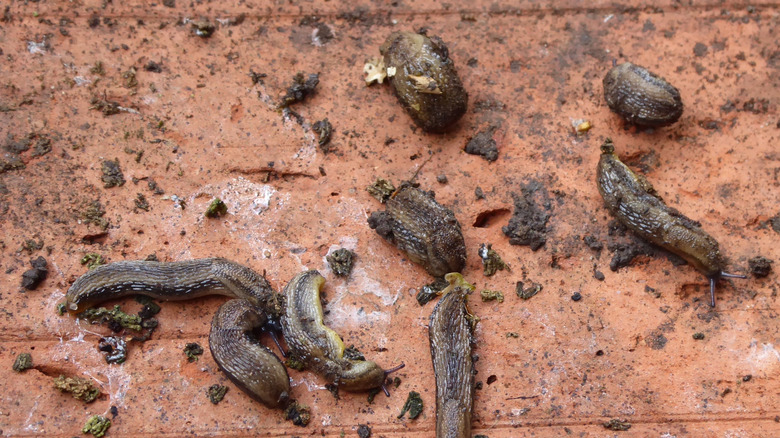
Kill them with kindness. Literally, in this case. Give slugs the perfect shelter and they'll gather there during the day. Use an upturned plant pot, old tiles, or even old wooden boards on damp soil near vulnerable plants or beds. This encourages slugs to seek shelter in daylight from exposure, dehydration, and predators. Just pop a pebble or small chock of wood under one edge or your trap so the slugs can easily get inside.
It's a bit of a shortcut for dawn and dusk slug patrols. Instead, you provide shelters that they gather under, and then, every morning or evening, go ahead and empty the shelter into your soapy water. Yes, it involves drowning them again, but it's easy, fast, and very effective. Just remember not to abandon the traps, as otherwise you create a shelter and breeding ground with easy access to your most vulnerable plants. If you've got lots of predators around, leave a slightly larger gap under one side of the trap, so predators can get in there and feast.
Bury beer or yeast traps in hot spots
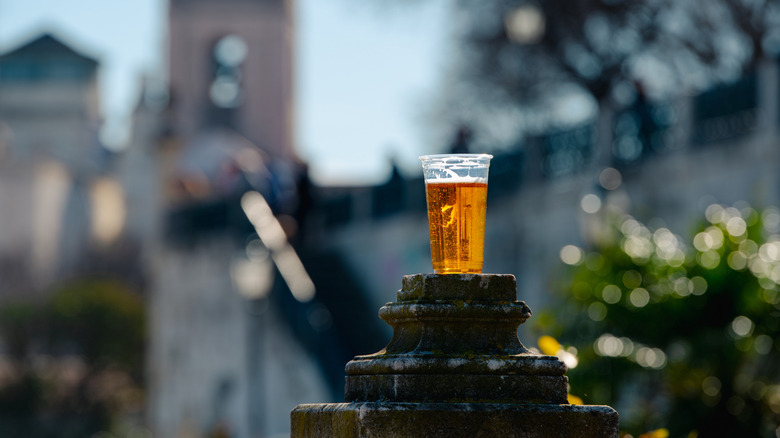
I was sceptical when I first tried beer traps. Now they've been a slug-control staple in my garden for at least 20 years. Some folks are aghast at the idea of wasting perfectly good beer to lure slugs, but boy does it work well. And it doesn't need to be good beer. The cheapest stuff you can find, or half a stale bottle someone didn't finish will do the job just fine.
Take an old cup or container and bury it so it's slightly above soil level to reduce the risk of useful terrestrial beetles and similar insects falling in, but no more than a 1/2 inch above. You can use yogurt pots, empty jars, or really any other container that's taller than it is wide. Fill it half way with beer. Add a twig, so anything that isn't a slug can climb out. Let it sit in the ground and check on it every few days. Slugs can't resist the yeast in the beer, and they'll climb their way into the beer and drown, unable to haul themselves out. Use these traps around the edges of beds with vulnerable plants, or where you suspect heavy slug activity. And do note that you'll need to empty out the hideous dissolving slug and beer concoction periodically and add fresh beer, or the slugs will end up avoiding the noxious cup of death, as it no longer smells of delicious beer, and they'll head back to your plants, instead.
Add copper bands to key pots and raised beds
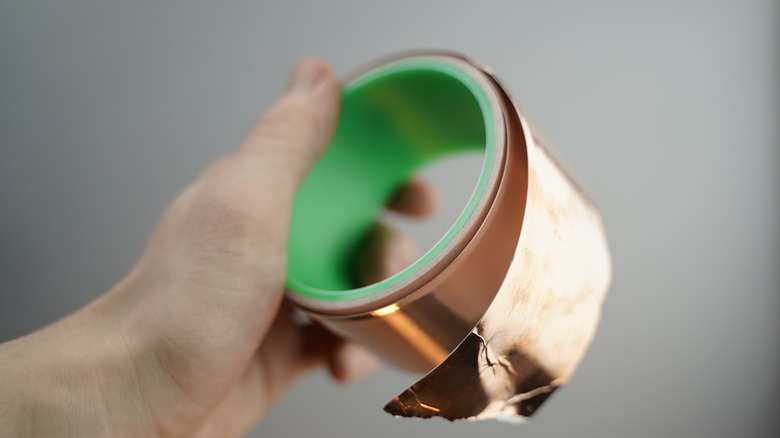
Copper tape works in a super-interesting way. It reacts with a slug's natural slime and creates a mild, but effective, shock. So, naturally, slugs dislike being shocked, even lightly, and therefore avoid crossing the copper tape. It doesn't do them any real harm, and it's a handy emergency fix for potted plants, single plants, or small areas you can construct an edge around to apply the copper tape.
For the best results, clean the area where you're going to put the copper tape. Even if you're going to use non-adhesive copper banding, clean anyway to make sure no debris accumulates on top of the copper and provides a bridge for the slugs to cross. Note that narrow tapes are no good — you need a wide band, so that much of the slug's body comes into contact with the tape. It also needs to be an unbroken band right around the pot. You can't use it around whole borders, though. And it's not terribly effective around entire raised beds, as there may already be a slug burden inside.
Reduce deep mulch and debris near particularly tender plants
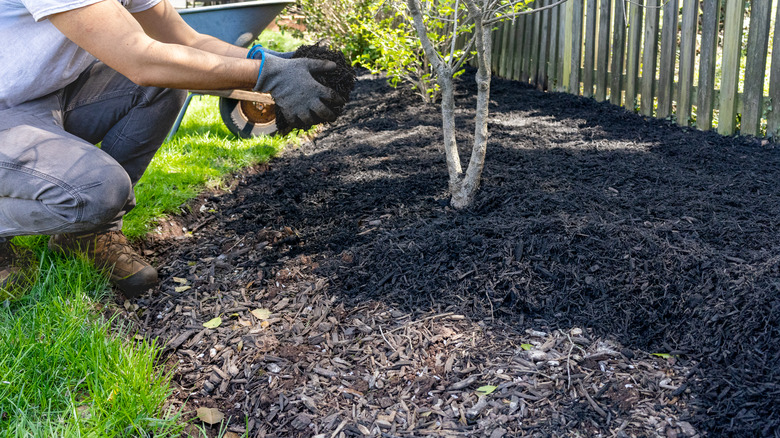
Leaf litter, piles of logs, and mulch are all very helpful in the garden, and I use and recommend them extensively. They're great for soil health and supporting wildlife. However, they can be problematic around the wrong plants. Hostas, lettuce, brassicas, and most young plants are all already targets for slugs, so adding moisture-retaining, loose mulch is problematic, because it gives slugs somewhere to hide during the day, and easy access to your plants at night.
To be safe, don't mulch around delicate plants until they're well-established and until you have other controls in place, like copper bands and slug traps. And, when you do apply mulch, leave a 2 or 3-inch gap around vulnerable plants. Thin out ground covers in shady areas where you have plants that slugs love, too, so you can reduce their habitat. Where you do apply mulch, add a slug trap or two, as well, and empty it regularly to reduce their numbers.
Companion plant at-risk plants with others that slugs don't like
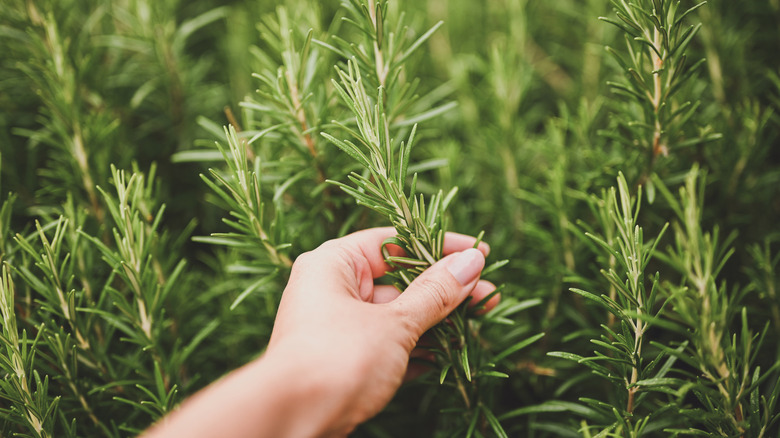
Companion planting is my favorite organic tool for pretty much anything. It's brilliant for deterring pests, improving the flavor and health of plants, encouraging pollinators, bringing predators, and improving biodiversity and soil health. And it can be part of your slug reduction strategy. Slugs like easy targets — things with soft leaves and that aren't too strongly scented. Common targets are hostas, delphiniums, lettuces, brassicas, peas and beans, potatoes, tulips, other tubers and leafy plants.
What they don't like are woody plants and aromatic herbs. Rosemary, thyme, sage, and lavender are all good choices. Slugs also tend to avoid ferns with tough fronds, alliums, both ornamental and edible, hardy geraniums, and woody or gritty perennials. Plant these around or among your most at-risk plants and in parts of the garden where you've got the heaviest slug burden. The idea is to make their favorite spots and your most delicious plants inhospitable and less appealing.
Provide extra protection to seedlings
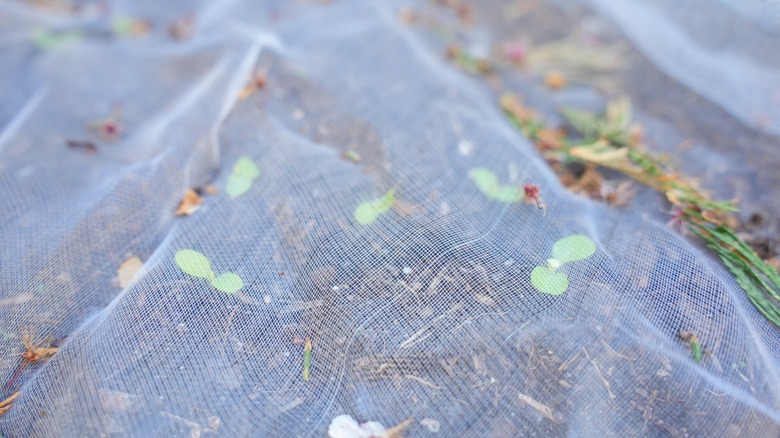
Young plants are extremely vulnerable to slugs. Aside from the size issue, they have thinner cuticles and minimal stored energy, so a single night of slug grazing can decimate a whole crop of tender juveniles. While any small plant is vulnerable, those in direct-sown rows are particularly at risk, as a slug will just work its slimy way right down the line, munching one plant after another.
If you direct sow, then use protective row covers and keep the surface drier, and avoid mulching. Fine mesh row covers and cloches work well if you weigh them down on all sides. You may also want to use deterrent plants and traps. If you sow indoors, don't just assume your plants will be safe. I keep my trays raised on metal shelving units, I make sure the trays don't touch the walls of the greenhouse or polytunnel, and I use a wide band of copper tape around the legs of the shelving to make sure that no slug can reach my seedlings. And, before you bring any pots or containers into the greenhouse, check the bottoms and under the rims.
Use sacrificial trap crops to lure slugs away from delicate or important plants
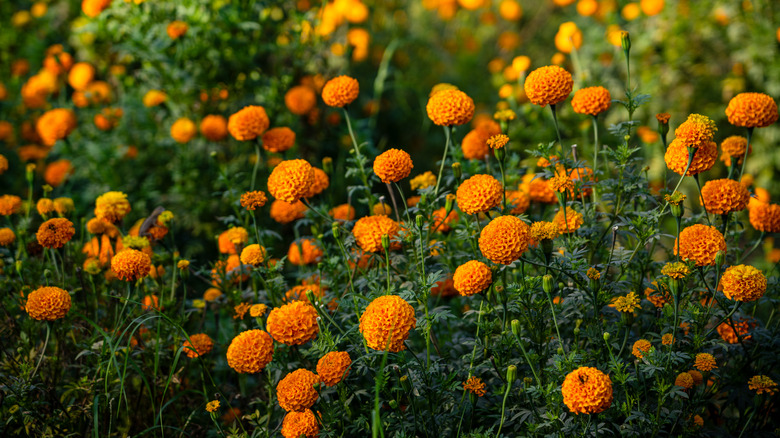
Growing trap crops is another form of companion planting and it works wonders for controlling slugs. Basically, you grow something slugs love and cannot resist. But you do it with the understanding that this is a purely sacrificial crop and that the slugs will absolutely destroy it. Trap crops lure slugs away from other plants that you want to keep slug-free.
I usually use marigolds or lamb's lettuce as a trap crop for slugs. You plant a good-size row or patch of these sacrificial plants along one edge of a bed where you've got plants you want to protect. I also like to plant a row of deterrent plants between the trap crops and the vulnerable plants I'm protecting as a secondary barrier. Then, every few days, do a manual slug patrol at dawn or dusk to remove as many as possible from the trap crops.
Encourage beetles, birds, frogs, and hedgehogs
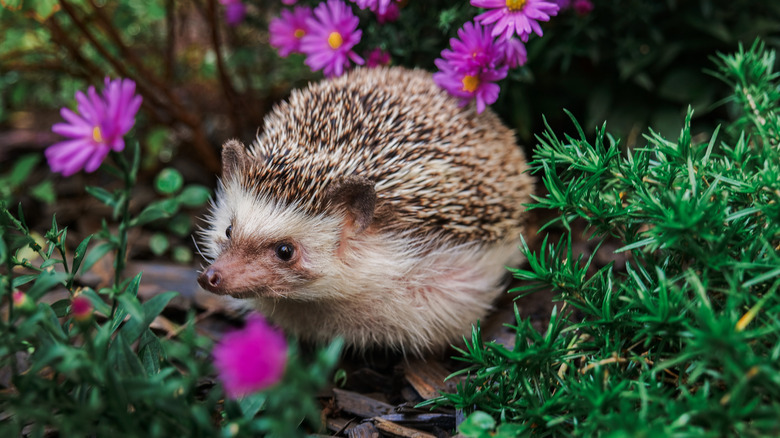
Slugs don't have too many natural predators, but there are a few. When you over-tidy your garden, you make it less appealing to these natural predators. Instead, you want to encourage them into your garden, as they'll eat vast numbers of slugs. Ground beetles, rove beetles, slow worms, frogs, toads, hedgehogs, shrews, thrushes, and blackbirds all happily devour large quantities of slugs. Every one they eat is one less that's eating your crops and laying eggs. And, interestingly, some slug species, like the leopard slug, prey on other slugs and don't actually eat living plant matter.
To encourage these predators, start by making your garden bird-friendly, with plenty of food and cover. Keep at least one log pile or stumpery, and make sure you've got some leaf litter and rough grass for the beetles. Hedgehogs and amphibians appreciate plenty of ground cover and mixed hedges where they can shelter and hunt. Don't over-tidy. Leave some parts of your garden undisturbed through winter so predators have some safe spots to spend the winter. And please don't use slug pellets, especially the metaldehyde ones, as these can poison the predators that eat the slugs that ate the pellets. Even the iron phosphate ones can have unintended effects for non-target species and shouldn't be used, especially in an organic or permaculture garden.
Add a small wildlife pond for extra predator encouragement
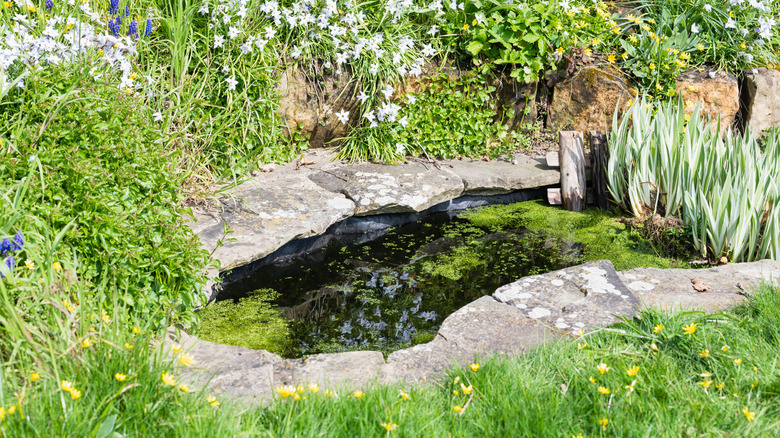
Amphibians are one of the most helpful slug predators. Frogs, toads, and newts all help you control the slug population, but you need to get them in your garden first. Plus, other helpful predators need a reliable source of hydration. And a wildlife pond is the answer. There are many benefits to having a pond in your garden. They're also not that difficult to build and maintain, and they invite a small army of slug munchers who will work round the clock for free.
In a quiet corner, add a small, lined or container-style wildlife pond. It needs shallow, gently sloping sides and at least one escape ramp for mammals, like hedgehogs, who might need a drink, fall in, and find themselves unable to climb out. For it to be an effective wildlife pond, you'll need to add marginal plants for shelter and sustenance. I also keep plenty of leaf litter and a small rock pile to create some cool, damp hiding spots where many amphibians prefer to shelter during the day.
Use parasitic nematodes to specifically target slugs
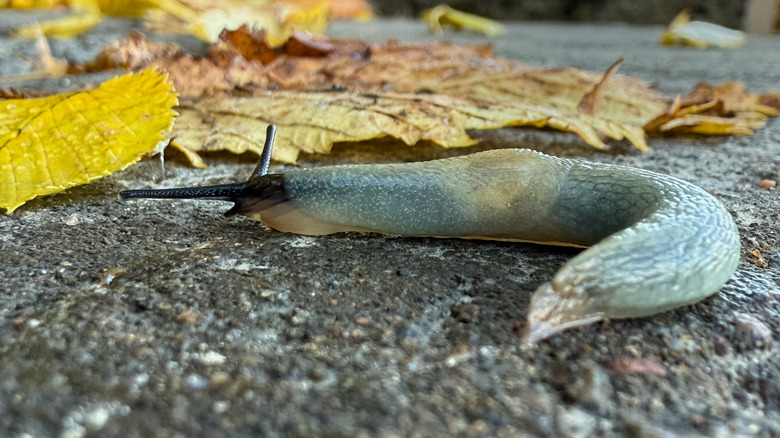
Parasitic nematodes sound like something out of a sci-fi nightmare, but they work. You release a microscopic nematode that specifically targets slugs. That's usually something like Phasmarhabditis, and you'll find it under brand names like Nemaslug. You simply follow the package directions and water the nematodes onto the soil. The nematodes infect slug species below ground and kill them.
Not all nematodes are helpful. And not all slug-targeting nematodes work on all slug species. And I have mixed feeling about them. If the soil conditions are moist enough, but not waterlogged, and you apply the nematodes at the right time, when the temperature is around 41 degrees Fahrenheit, then yes, they can be helpful in areas of high slug populations. I recommend them for helping gain control quickly, but not for long-term use. Repeated application can get costly and by blanket-killing huge numbers of slugs, you can upset the biodiversity balance. For example, if you kill enough slugs in one short period, you take away a key food source for the predators who will then move to someone else's garden, so when the slugs return (and they will), you're then faced with even more slug activity, as the things that normally eat them aren't around. So focus nematodes only on specific beds where you've got major slug issues. Only use them occasionally, and combine them with other methods.