

The Outdoor Lighting Trend That's Taking Over Yards In 2026

We may receive a commission on purchases made from links.
When it comes to outdoor lighting in yards, less is more in 2026. Awareness is growing about how excessive lighting can ruin your garden by changing the behavior of pollinators and confusing birds, bats, and other wildlife. That's where dark-sky compliant lighting comes in. Homeowners who embrace this trend will ditch unnecessary lighting for features accentuating natural elements rather than dousing them in flood lights. These factors combine to make dark-sky compliant lighting a trend that's dominating yard design in 2026. You can expect to see more subtle lighting fixtures that will reduce light pollution and keep the dark sky unobstructed by glare.
Stewards of public lands have already been moving from excessive lighting to the preservation of clear night views. DarkSky, an international organization, has certified a variety of areas as International Dark Sky Places, once new ordinances that preserve dark skies are adopted. Their list of dark-sky compliant places is growing, and new additions are not just wide open rural parks, but also municipalities and parks within cities. It's only natural that more people want to create stargazing havens within their own yards.
Daniel Vasilevski, who owns the Sydney-based company Pro Electrical, notes in Martha Stewart that clients "want to highlight the trees in their yard as well as other architectural features they have installed, but they don't want the light itself to be seen." Landscaping professionals are also predicting a shift toward the use of warm-toned light, which is more dark-sky compliant than harsh, cool light.
Plug into less light pollution with a range of lighting options
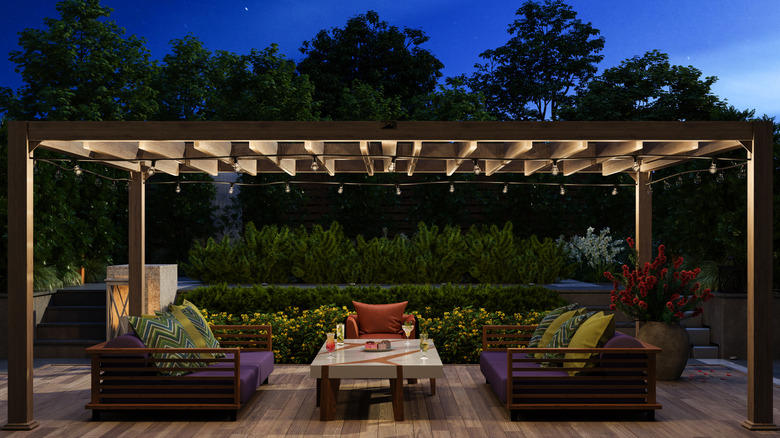
If preserving an expanse of night sky is one of your goals in 2026, mindfulness is key: light the places that need illumination, leaving non-essential spaces alone. There are some ways to quickly increase dark-sky compliance. One simple change is reducing the intensity of existing flood lights (you can go down from 300 watts to 75 watts or its equivalent in LED lighting). You can also reduce light pollution and save energy with motion sensor lights, which have been shown to use 30% to 50% less power than traditional bulbs. Instead of buying a whole new system, swap in motion-sensing light bulbs, which only turn on when their sensors detect nearby heat.
You can also get rid of light fixtures that point the light upward. Use amber lights or 3,000-Kelvin white lights with warm tones that are shielded instead. Shielded lights have a cap that keeps light from spilling out into the sky. For a cheaper upgrade, add shields to lights you already have. The more shielding the light has, the better; fixtures described as "full cut off" don't allow any light to aim up at the sky.
Smart lighting, another trend landscapers predict will get more popular in 2026, can help you eliminate harsh white light in the evening. With smart outdoor lights, a high-tech gardening product typically controlled with a smartphone app, it's easy to change the lights between a variety of colors. Look for adjustable types you can angle downward like Lumary Smart Pathway Lights Pro 700LM. And to make sure you're practicing sustainable energy use, choose LEDs instead of incandescent and compact fluorescent lighting.
Preserve the dark sky in style with solar lights and moon gardens
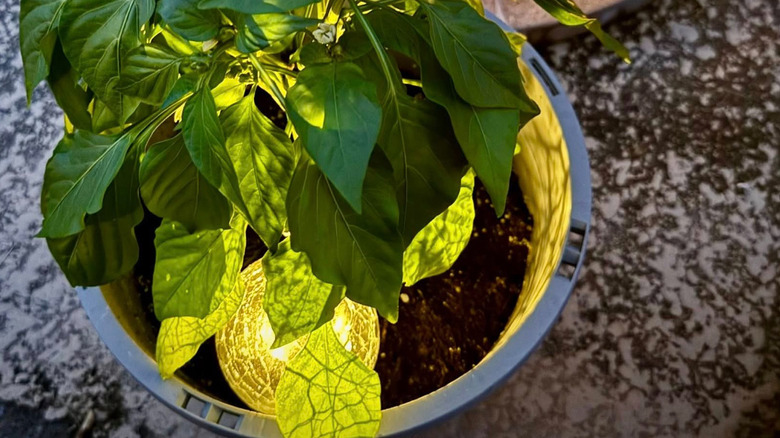
Once you understand the principles of dark-sky compliant lighting, there are many different ways to blend it into your own garden in a way that expresses your unique style, and gardeners have offered inspiration on social media in recent months. Nestling small solar lights in plant pots is one way to light a walkway without a disruptive flood of light, as the leaves provide some natural shielding to fixtures like the Ainostone 4 Pack Solar Pathway Light. Another stylish choice some gardeners make is to use soft pathway lights in the shape of flowers or plants, like Solar Wild Fennel Garden Lights available on Etsy. As these are interspersed within a living garden, they provide a touch of illumination without overly disrupting natural darkness.
Lighting options chosen with a sensitivity to the night sky is a helpful ingredient when you're designing a moon garden, which favors flowers in white or other light colors that naturally reflect moonlight, and often bloom by night. Moon garden enthusiasts choose plants like Artemisia 'Silver Lining' and Leucanthemum 'Spun Silk' which, like a starry sky, are best appreciated in minimal lighting.
Other ways to add soft light to dark-sky compliant yards include using reflective paint on surfaces or plant pots, candles placed in lanterns or floating in bird baths, and soft solar lights. Twinkle lights are another backyard staple. Keep them dark-sky compliant by wrapping them around bushes or plants that are low to the ground rather than stringing them from a height. With these options, you can strategically illuminate the featured plants or the pathway to your home, while keeping the sky the main character of your yard.