

Indoor Plants Thrive With This Watering Tip
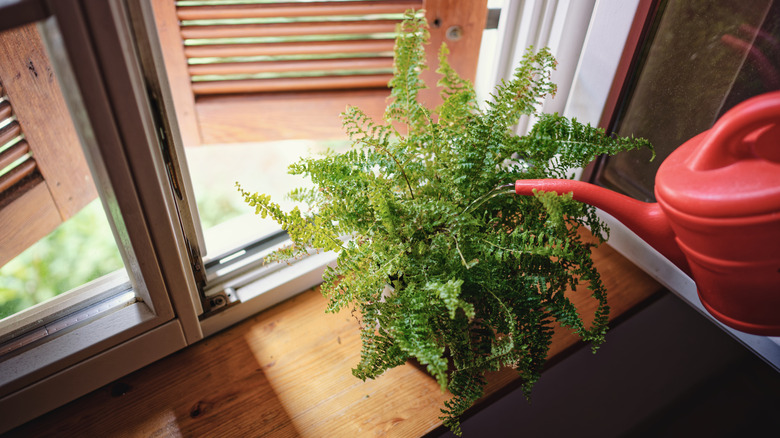
Indoor plant enthusiasts have watered their houseplants with tap water for decades. It's not like anything is seriously wrong with municipal or well water — and it's true that tap water is not terrible for most houseplants. But given the difference between "not terrible" and "beneficial," you may want to consider an alternative type of water that your houseplants will truly thrive on.
Filtered water is actually the best thing you can use to water your plants with when you want to give them the best. But what exactly is wrong with tap water? Municipal water is typically treated with chlorine and fluoride and can have all kinds of contaminants, such as bacteria, arsenic, microplastics, pathogens, and more. Well water doesn't have the added chlorine and fluoride and offers beneficial minerals to plants, but these minerals – as well as salts – can be excessive, potentially causing more harm than good. These substances are often the source of the white residue or crust found on houseplant pots. Effective ways to purify your household water and eliminate harmful toxins all involve filtration.
Use filtered water to help houseplants thrive
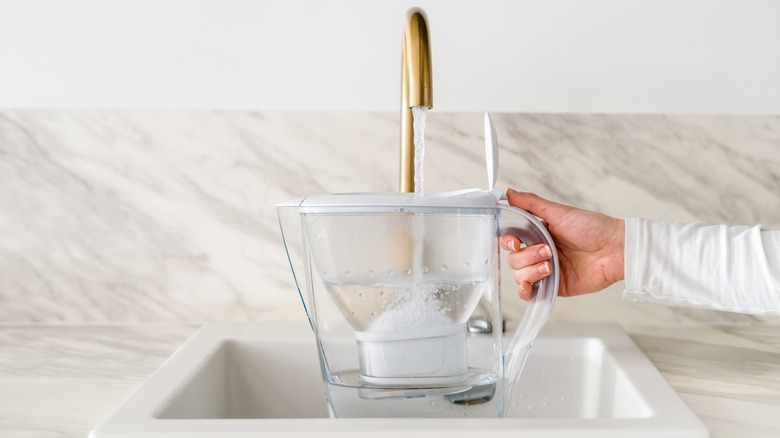
Water filtration is accomplished through various methods — reverse osmosis, ultraviolet treatment, mechanical filtration, ion exchange, or activated carbon — but they all work toward the same goal: removing harmful contaminants. Unlike distillation, which strips away minerals along with impurities, filtration preserves the beneficial minerals naturally present in the water.
Filtration removes chlorine and fluoride, which is especially important for fluoride-sensitive plants like palms, peace lilies, Boston ferns, and bamboo. Using filtered water to hydrate your indoor plants eliminates the chemical build-up on roots that can prevent the plant from taking in nutrients. Simply put, there are many reasons to add using filtered water to the list of genius tips for watering your plants.
You can filter your water using a number of tools, ranging from full-home filtration systems to simpler devices that can be placed on faucets, under the sink, in your refrigerator, or on your countertop. Water-filtering pitchers are also available. Consider choosing from the best water testing kits so you canlearn what contaminants your tap water may have. That way, you can effectively choose a water filtration method that ensures the removal of whichever contaminants you need to get rid of.