

Declutter These Two Problematic Areas To Make A Big Difference In Your Kitchen
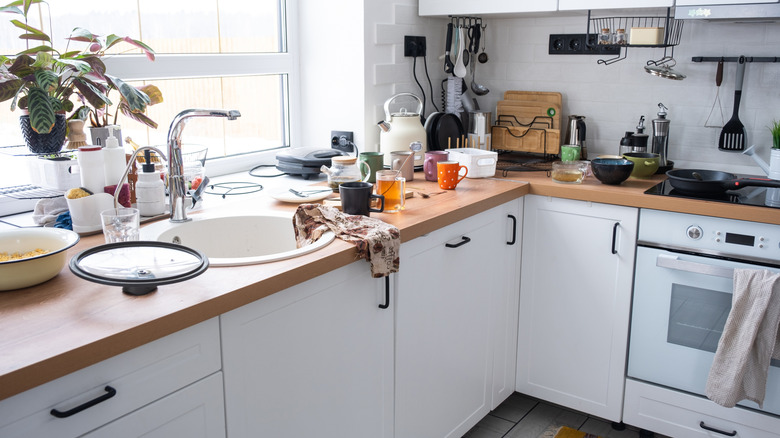
A kitchen often has many nooks and crannies that may hold everything you need to make a meal — and then some. Add a few items, and soon, it doesn't take long before drawers and cabinets are bursting at the seams. Starting the process of decluttering your kitchen can be a bit overwhelming because you might wonder where to begin. Two quick and easy areas where you can start reducing clutter in the kitchen are the plastic storage containers as well as the utensil drawer. Decluttering these small spots can make an effective difference in your kitchen.
Kitchens are often a hub of activity throughout the day, so it's easy to quickly become overwhelmed with their contents. You might have every intention to declutter the entire kitchen, but you could be hindered by a lack the time or motivation to take on such a big project. One of the best rules for decluttering is to start small and then work your way out, so starting with utensils and plastic containers is a great approach. Those typically won't take long to declutter, but doing so will streamline your storage because you will be able to see what you have with ease.
Where to start decluttering with your utensils
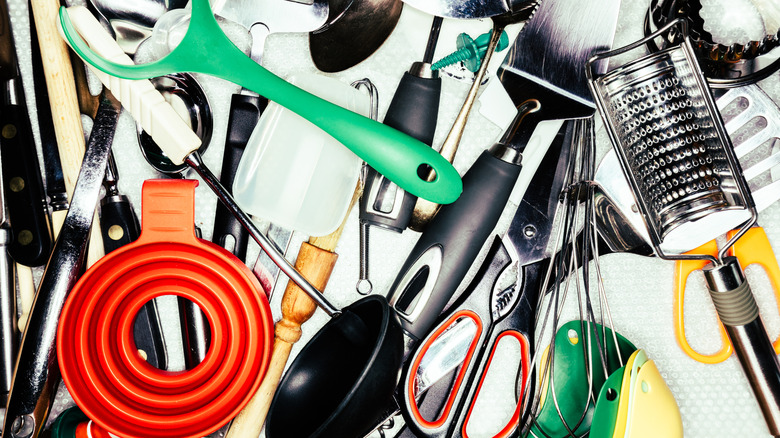
Although you might use it three times a day, the utensil drawer can be woefully neglected when you're decluttering the kitchen. It's easy to just open the drawer, get what you need, and shut it — even when it might be so full that it can barely close. There's probably plenty you can clean out from your cutlery drawer; you just need to start. Think about how many times you've refused to grab that one uncomfortable-to-hold fork in favor of more grip-friendly options, or how often you've ignored that wrapped pair of chopsticks from your favorite Chinese takeout. Go through all of your forks, knives, and spoons inside of your drawer. Remove all of the contents, from the utensils to any organizers holding them. Wipe the drawer of any crumbs or spills, then sort through everything. Remove and set aside anything you don't want or need to donate.
While you're decluttering your utensil drawer, it's also a good time to see if you can trim down duplicate items as well as anything that's chipped, flaking paint, or cracked. Do you really need that many bottle openers? Is it easy to actually see and retrieve large utensils, such as ladles, or are they shoved in the back of your drawer? Consider placing some of your cookware items in a crock or a cup — items like this utensil drawer alternative can help minimize clutter, keeping them ready for your next meal.
Decluttering and organizing your plastic containers
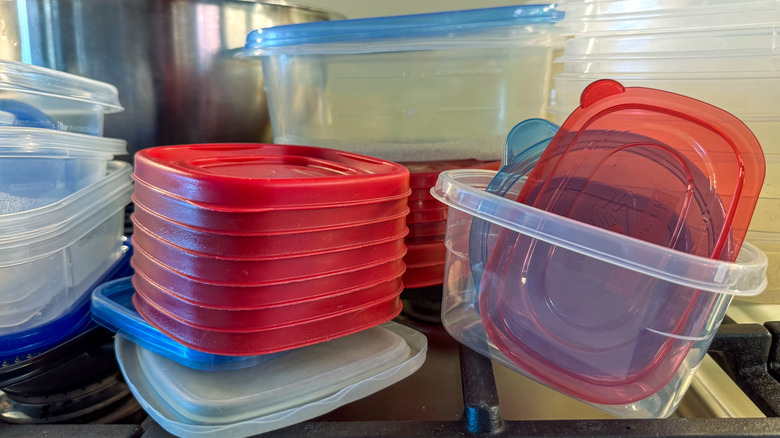
After a job well done with your utensil drawer, it's time to tackle the mountain of storage containers. Pull out and arrange all of your containers on the counter, then begin matching them to the correct lids. If you come across anything that doesn't have a lid, you can either get rid of it, or find ways to repurpose plastic containers in your home or garden. After parsing through your containers, stack them neatly with their lids attached or have them grouped together in a basket or bin for easy retrieval.
Be sure you examine any plastic containers that are melted and get rid of them, as melted plastic can leach microplastics into your food with every use. Do the same for stained or discolored containers. Better yet, if you want a completely healthy kitchen, you can make the switch to glass Tupperware. On top of lacking the ability to shed microplastics, glass containers are microwave-safe and last much longer than plastic alternatives.