

14 Old-School Cleaning Tools Almost No One Uses Anymore

We may receive a commission on purchases made from links.
Cleaning nowadays is done with a whole lot of fancy gadgets and high-tech tools. We have vacuum cleaners, microfiber towels, chemical cleaning solutions, and even Roombas. This is a far cry from the old school tools that were in use decades ago. The limited technology of those times forced people to get creative with their cleaning instruments. These tools didn't have all the new-tangled features of their modern counterparts, but they got the job done. Or, at least, they did until they were abandoned for the new hotness.
Most of these tools were slowly phased off as the years went by, but taking a look at them can tell you a lot about owning a home in earlier times (and probably make you better appreciate the convenient alternatives we have now). So, if you're wondering what people used to clean carpets when there weren't cordless stick vacuums available, you're about to find out. We'll take a stroll down memory lane to revisit some old-school cleaning tools that no one uses anymore.
Brooms with natural bristles were once ubiquitous
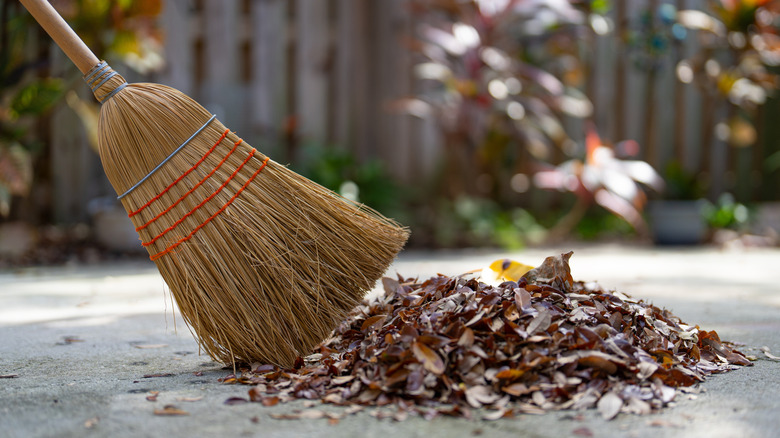
The act of sweeping a house has been around forever really. Bundles of twigs and sticks were used to sweep homes, but the modern broom showed up around 1797. A Massachusetts farmer named Levi Dickinson made a broom for his wife as a gift, and in doing so, stumbled upon a lucrative business making hundreds of brooms each year with his son — and then selling them. These brooms didn't evolve much over the years, being made with natural materials like straw, corn husk, or horsehair. They were cheap, locally-made, and effective at keeping the home clean.
The broom with natural bristles had been in use for over two millennia, but finally lost its place to the vacuum cleaner, microfiber sweepers, and brooms with synthetic bristles. These are either more convenient to use or simply more durable. Steel and synthetic brooms are the types of brooms you're more likely to have in your homes now. Microfiber sweepers or dust mops are also better at trapping dust, thanks to the charge on their material attracting dust particles.
The washboard is now just a musical instrument

Before washing machines, sophisticated cleaning solutions, and detergents, we had the simple washboard. This was a ridged board made of wood or metal that was designed to mimic the manual agitation principle of hand washing, albeit being more convenient and effective. These were used to scrub the dirt off clothes with the aid of a bar of soap, and came into usage in the 18th century, greatly increasing the efficacy of hand washing clothes. All it required was a bit of elbow grease, and most (if not all) the dirt on your laundry would wash away.
Unfortunately, that bit of elbow grease was the cause of the washboard becoming another old school tool that went obsolete. Why spend all day scrubbing away at a washboard, when you could use the new hand-crank washing machine? Newer automatic washers took all the stress out of washing and rose up to dethrone the washboard. Now, the tool is typically only seen when it's being used as a musical instrument or as a piece of vintage decor.
Hand crank washing machines were swept away in time
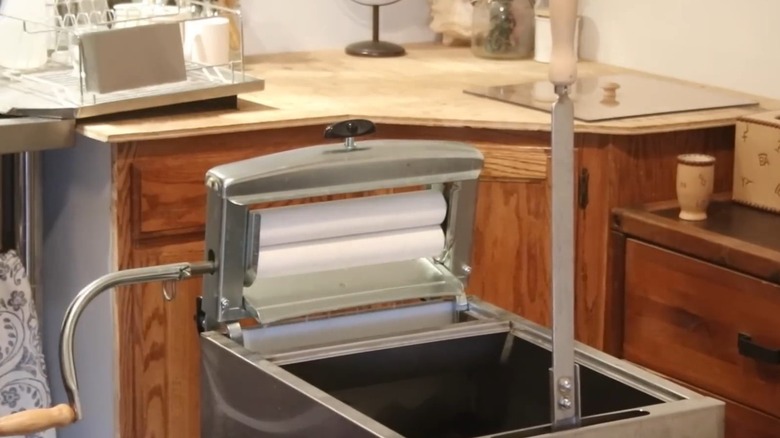
The first washing machines were hand-powered. They worked by turning the handle attached of the machine, which agitated the clothes in a drum, washing them quicker and easier than they would by hand. The first of these hand-crank machines was invented in the 1850s, with subsequent iterations from different manufacturers getting upgrades that made them faster and more effective. This culminated in the invention of the first electric washing machine, the "Thor," in 1908.
The Thor spelled doom for the hand-crank washing machine. It removed the need for hand cranking, replacing it with motor-powered, set-and-forget washing. Once the Thor was done washing the clothes, all you needed to do was remove them and feed through the wringer, then hanging them out to dry. This convenience made the invention spread like wildfire, sweeping away the hand-crank versions. This machine was improved upon till the invention of the first automatic washing machines.
Carpet beaters are nowhere to be found anymore
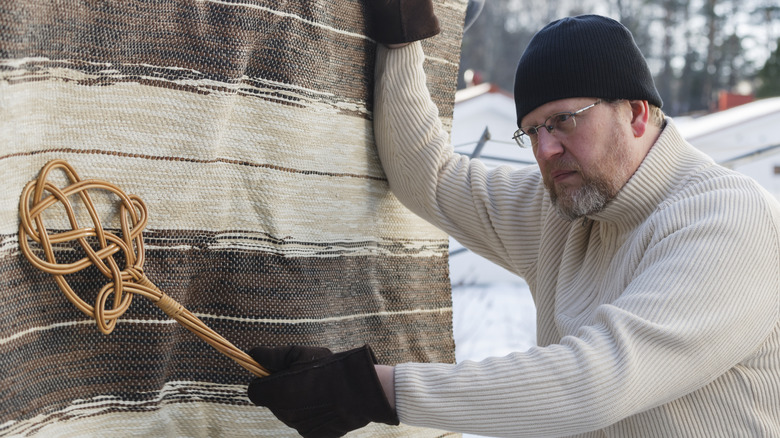
Cleaning carpets and rugs in the 19th century involved taking these floor covers outside, hanging them over railings, and beating the dust out of them with a beater. These beaters were composed of cane, wire, wood, or steel, with intricately-woven loops on the head serving to remove dust without damaging the carpet. They were very effective, physically removing all the dust the carpet had accumulated. However, the process was pretty messy, strenuous, and unpleasant, which was why the carpet beaters had to go.
The first carpet sweeper was invented in 1876. It was a manually-operated tool with rolling brushes that collected dust from carpets into a compartment in the device. That made people realize that carpets could be cleaned without ending up with dust in all their bodily crevices. Soon after, the first electric portable vacuum cleaner was invented by James Spangler in 1908, and that sealed the deal. Carpet beaters would soon become things of the past.
Handheld carpet sweepers are now history
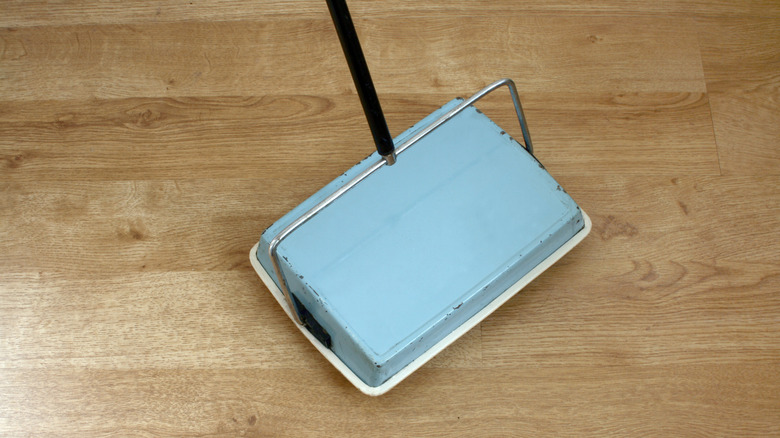
The carpet sweepers replaced the carpet beaters, but even they couldn't withstand the slow grind towards obsolescence. After Melville R. Bissell invented the carpet sweeper in 1876, the device became famous and sought-after both nationally and internationally. The simple effort needed to use the device increased convenience in the home. These devices were portable, quiet, fast, and most importantly, didn't require beating the stuffing out of a carpet.
Unfortunately for carpet sweepers, vacuum cleaners were also very convenient to use. They weren't as portable as handheld carpet sweepers, but they were more effective. Vacuum cleaners took care of the deeper dirt in the carpets, giving it a cleaning on par with the carpet beaters of old, just without the dirt and stress. Carpet cleaners, on the other hand, only succeeded in cleaning the superficial dust on the carpet.
Ostrich feather dusters are now gone with the wind
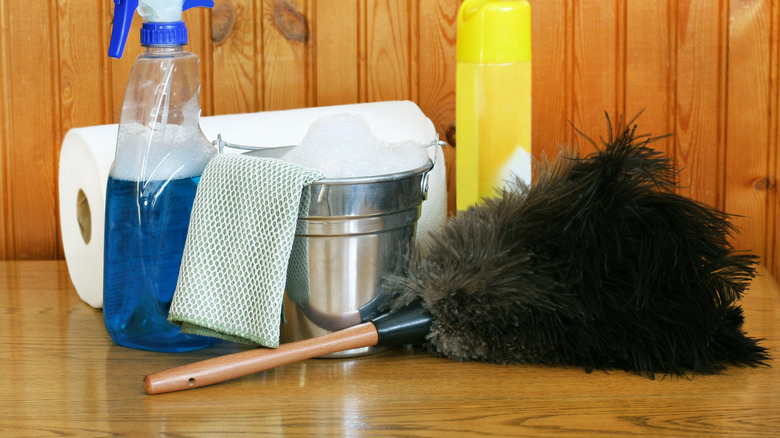
Years ago, feather dusters were used in almost every household for the daily chore of removing dust from surfaces. Although goose, chicken, and ostrich feathers were used in their construction, the best option was ostrich feathers. Some feather dusters are actually a waste of time, because they simply move dust around, but ostrich feathers actually trap it, thanks to static charges and the unique composition of the feathers. These dusters were also light enough to allow homeowners to clean delicate items like vases without scratching them, while being flexible to reach tight spaces where a rag would struggle.
Ostrich feather dusters were replaced by synthetic variants, which were cheaper and more durable. These are easily washable and suitable for people with feather allergies, but they were not as effective at trapping dust. Microfiber dusters soon came onto the scene with their electrostatic dust-trapping mechanism. Now, ostrich feather dusters are rarely seen in residential homes.
Galvanized metal buckets have been abandoned
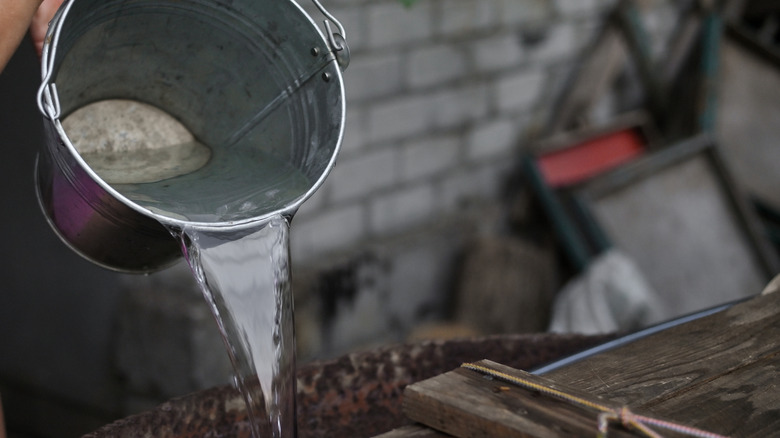
Though they have been in use since the Industrial Revolution, galvanized metal buckets are missing in homes today. These buckets were used for everything from mopping to laundry and carrying water. They were durable enough to withstand hard knocks and stand the test of time. A galvanized metal bucket can last almost forever if well-maintained, and that makes their absence in homes more striking.
After World War II, plastic buckets were cheaper and quicker to make. This translated to being more cost-effective for the average homeowner to buy a plastic bucket, rather than springing for a metal one. These buckets were also lighter than their metal counterparts, making usage easier for housewives at the time. Though galvanized metal buckets were resistant to corrosion, it was still possible. However, plastic buckets simply made that a non-issue.
Wallpaper dough is now Play-Doh
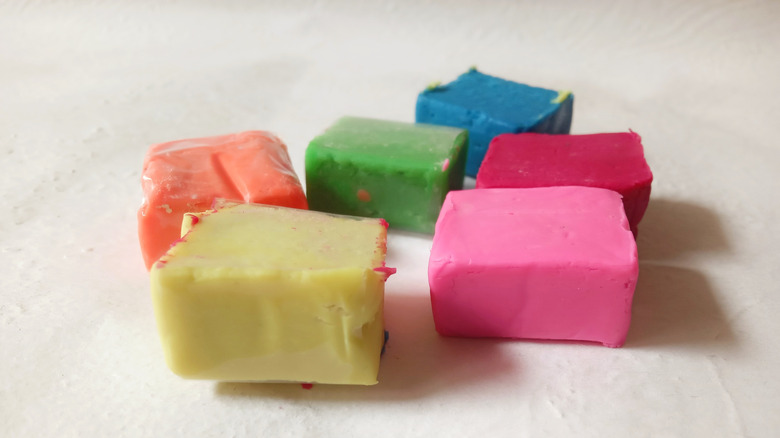
You probably know about Play-Doh, but did you know that it wasn't always a children's toy? It started out as a wallpaper cleaner made by the soap manufacturer, Kutol Products. Back in the 1920s, the putty dough was rolled over wallpaper to clean it by catching the soot deposited on the walls from the coal furnaces in homes at the time. These were usually paper wallpapers that couldn't be washed without damaging them.
Tides turned for the product with the advent of vinyl wallpapers and natural gas heating systems. Vinyl wallpapers could easily be washed with soap and water to get rid of soot, and natural gas heating meant that fewer homes were having the soot problem. Following the suggestion of a nursery school teacher related to the inventors, the company decided to cut its losses and transform the product into a child-friendly sculpting tool. The rest is history.
Cotton strip mops are no longer popular

Mops made from strips of rags or pieces of fabric tied to a stick have existed since the early 19th century. However, it wasn't until Thomas Steward took out a patent for a cleaning tool in 1893 that the traditional mop came to be. The earliest ones were made of yarn, but they soon developed into the cotton strip mops that became ubiquitous at a certain point. These mops absorbed large amounts of water and were, as such, great for spills. They were also flexible enough to reach tight crevices, making them great for deep-cleaning floors.
However, cleaning with these cotton mops could leave streaks of dirt all over your floors, and the stress of hand wringing them was also a disadvantage. Flat microfiber mops replaced cotton strip mops in later years. These were better at actually trapping dirt and even microbes than the cotton strip mops, which were guilty of simply pushing dirt around. While some self-wringing/spin mops still have cotton strip heads, most have been replaced by microfiber versions. Microfiber mops may not be on par with cotton for soaking up spills, but when it comes to actual cleaning, they leave cotton strip mops in the dust.
Soap shakers have shuffled off the stage in recent times
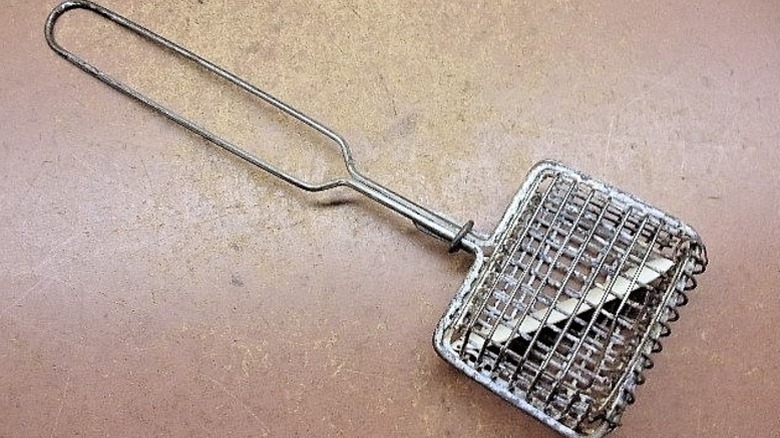
Soap shakers were cleaning tools used in the early to mid 20th century to get a good lather from the soap for all your dish and clothes washing needs. These tools were basically wire mesh boxes with handles. The boxes could be opened to put in pieces of soap or full bars, which were then shaken forcefully in the washing bucket to make it soapy. This method allowed even the smallest pieces of soap that are no longer suitable for hand washing to remain useful, reducing waste of soap, and saving money.
The rise of detergents and liquid soaps made this tool less useful. Detergents and liquid soaps are becoming more popular than bar soaps for many reasons, and the use of soap shakers has taken a hit as well. Bar soaps are perceived to be less hygienic than liquid soap. Though that isn't true, it has affected the sale of soaps, and the absence of soap shakers is an extension of that.
Boot scrapers are now simply door side ornaments

If you come across a house from the Victorian era, you may notice some metal structures around the doorways or porches. These could be intricately designed cast iron structures or simple horizontal bars on the front stoop of an old home, but the function is the same. They are boot scrapers, and are simply there to scrape off the dirt from your feet before you walk into your home. Back in Victorian times, the streets were filled with all kinds of gunk, as street sanitation was not as big as it is now.
These boot scrapers have become simple ornaments these days, as sanitation has improved over the years. Your chances of stepping into horse poop on your way back from your white-collar job are almost nonexistent now, so an entire cast iron installation at your doorstep for the sole purpose of scraping your boots is unnecessary. Simple spiky doormats are now sufficient for ridding yourself of any dirt under your shoes before walking through the front door.
Washing paddles have sailed on past

Similar to washboards, washing paddles were used in the past to aid laundry efforts. They were short paddle-shaped lengths of wood with stout handles that were used to beat wet clothes to clean them. Clothes were boiled in a pot, then laid on flat surfaces or boards and beaten with washing paddles and soap. This was strenuous activity, but the results were worth it at the time.
The washing paddle was overtaken by the washboard, and they both were beaten by the automatic laundry machine in due time. The washing paddle required hours of grueling labor to make clothes clean, while the washboard could take care of your washing in minutes and with less stress. The washing machines took it further and only required simple hand cranking to get them to work. They were way more convenient and, as such, the washing paddle became obsolete in due time.
Hand crank wringers are now antique safety hazards
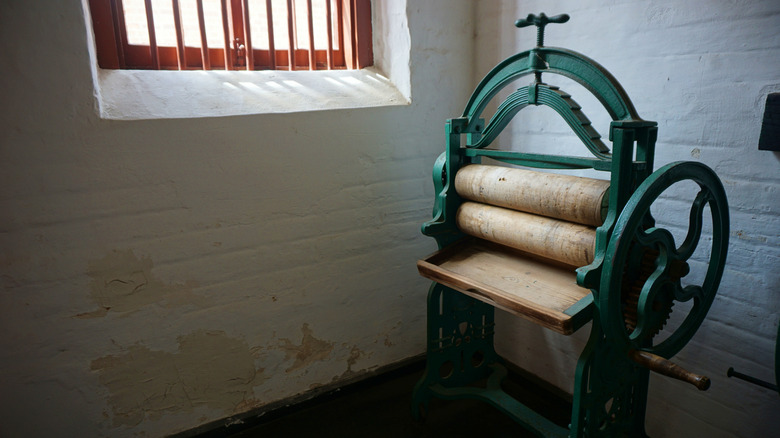
Another laundry innovation that was popular from the 19th century to the mid 20th century is the hand crank wringer. This was a machine that had two rubber rollers in a frame, which could be spun by a hand crank. Clothes were fed into the machine after washing for excess water to be squeezed out, before being hung out on a clothesline to dry. A few primitive washing machines had wringers built into them as a feature. It saved laundresses the stress of wringing the clothes out by hand and ensured that garments kept their shapes for longer.
Wringers were effective, but had serious safety issues. Those rollers could trap fingers, clothes, and even hair, causing terrible injuries. "Wringer arm" became a popular term for the injuries caused by wringers to children's arms. Wringer manufacturers put in emergency release mechanisms to reduce the damage, and that did reduce major incidents. These devices were used by many households for over a century, but once the first automatic washer was released by Bendix Home Appliances in 1937, it started heading out the door. Now the hand crank wringer is simply another decades-old household staple that no one uses anymore.
Laundry possers are now exhibition items
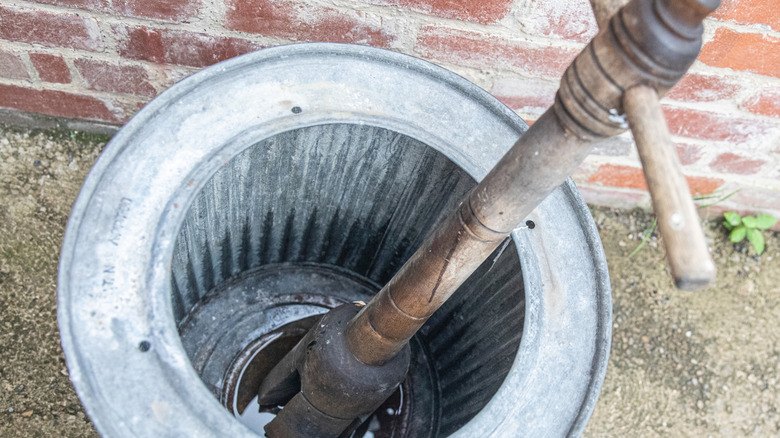
Laundry possers, also known as washing dollies, were tools used to wash or "poss" laundry. The washing would be placed in a large tub, and the posser, which is a vertical pole that has a domed or conical base, would be pumped up and down on the laundry. The aim was not to beat the dirt out of the laundry, but to force water through the holes in the fabric with the suction from the posser's base. These tools were used from the 19th to mid 20th century, and were effective at removing dirt from clothes, albeit with a ton of stress.
The invention of some other laundry equipment on our list marked the decline of the laundry posser. Once the hand crank washing machine became available and affordable, possers began to see less and less use in everyday life. Now, they can be found in museums and exhibitions showing how life was in earlier times.