

Need A Declutter? How To Choose Which DIY Supplies Get The Cut
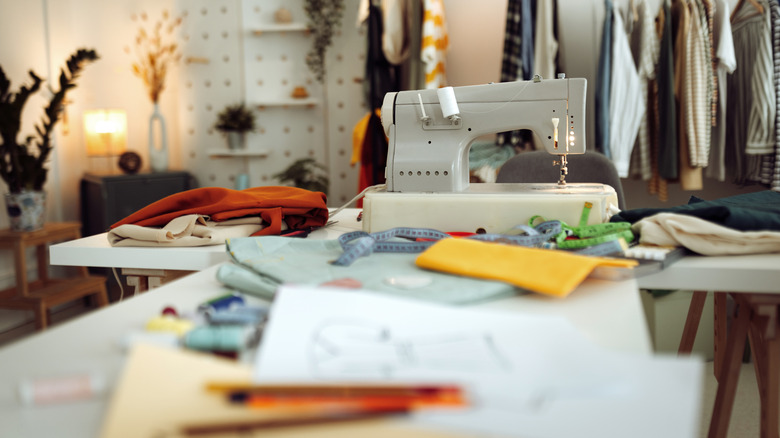
By nature, DIYers see almost everything as potentially useful. That's a useful trait when you're beginning a new project, and you need to be resourceful, but when the clutter starts to pile up, it can turn into an inability to let go, which makes it hard to stay organized. When your hobbies include everything from sewing and crafting to gardening and building, your DIY tools and supplies can start to add up quickly–and so can the clutter. If you need to declutter, and you're wondering how to choose which DIY supplies get the cut, it often boils down to factors like how much room you have, what supplies you're actually using, and what condition they're in.
From paint brushes and hot glue sticks to fabric scraps, beads, vinyl rolls, seed trays, string, ribbon, and leftover lumber, DIY supplies can take over pretty quickly. Choosing whether to keep items or throw them away based on rules like how often they are used, what their condition is, and what's cheap to replace if you need it again in the future can make it easier to get organized. Once you start the process of decluttering, it generally boils down to the same types of filters and questions over and over again, such as "Do I actually use this?" and "Is it cheap to replace this?" You might also consider whether you're even interested in some of your old hobbies anymore or if you'd rather make room for new DIY home projects.
Start decluttering by choosing which items aren't worth keeping
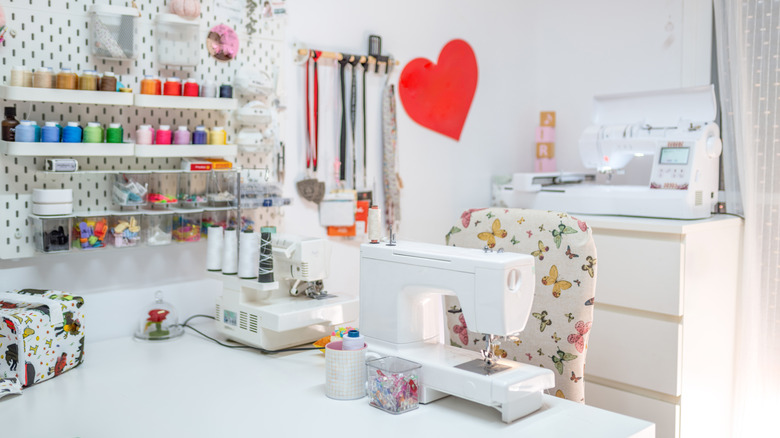
When you're choosing which DIY supplies to throw away, it makes sense to start decluttering by tossing out items that are no longer useful, such as crusty old paint brushes and spare parts for furniture that you don't even have anymore. Some items are easy to throw out, such as broken items, multiples, dried-up bottles of glue, and other items that aren't really worth keeping because they can easily be replaced at minimal cost.
Once the obvious clutter is gone, you will probably still have to make some tough decisions. At this point, choosing which of your DIY items to throw away or keep can be based on rules like sentimentality or an item's versatility. For example, many people choose to get rid of unwanted items that they haven't touched in years, but if you're saving spindles from your child's crib so you can upcycle them into something fun, you might not want to get rid of them. You may also choose to keep things like fabric scraps but throw out those scrapbooking supplies you don't use anymore. Whenever you have to organize your craft supplies, it helps to have a realistic idea about how much storage space you have. Coming to terms with the limits of your storage area is another way to strengthen your resolve and help you make these hard choices.
Finally, finding somewhere to donate your excess supplies can help to make some decisions a little easier. It's common for DIYers to not want to just throw things away, but if you can find a store nearby that sells secondhand craft and DIY supplies, being able to donate some of our own supplies, will help to alleviate your stress of just throwing things in the trash.