

What Is A Sanitation Violation & Reasons Why You Could Receive One
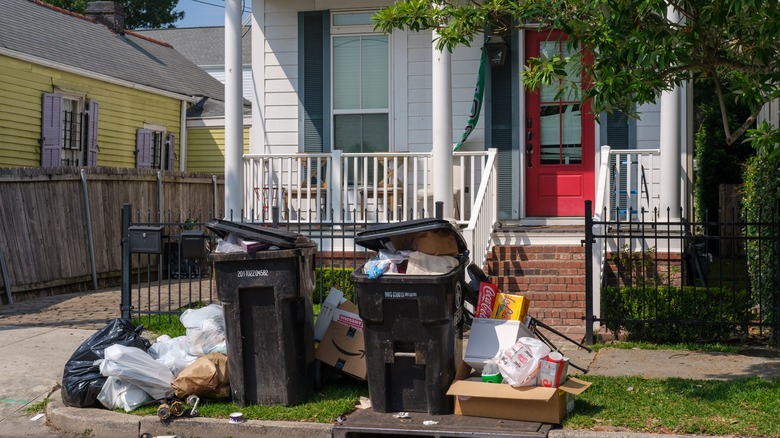
While all of us are guilty of letting our homes get a bit too dirty from time to time, there are situations when the mess can go way too far. And when said mess compromises the safety standards set by local governments, you may find yourself on the receiving end of a sanitation violation. A sanitation violation is just as it sounds; it's a notice of violation from the sanitation department, which indicates non-compliance with local rules and regulations on waste removal or disposal. Oftentimes, the notice is affixed to your front door, and violations can range from simple issues like incorrect trash can placement on the curb to extreme situations like hoarding.
In the case of a Long Island homeowner, for instance, who was caught hoarding up to 500 rats as domesticated pets in their house, the violations outlined an egregious sanitation issue for humans, as well as one of animal welfare. "It's a disaster inside," Strong Island Animal Rescue President Frankie Floridia commented to ABC 7 News. Not all cases are as extreme or obvious as this one for receiving a sanitation violation, of which the homeowner did receive several. But these citations and associated fines indicate that your property is considered a hazard in some way, threatening the health of the occupants inside the building as well as neighbors in the surrounding community.
Common reasons you could receive a sanitation violation
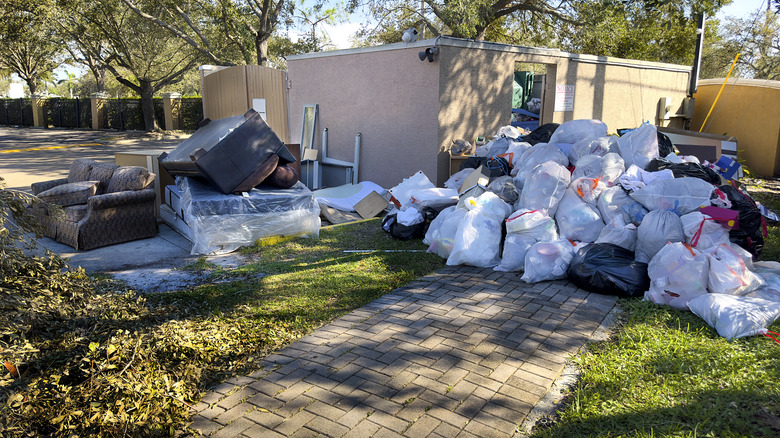
While the case in New York illustrates an extreme situation, most sanitation violations are for much more mundane, though still important, issues that pertain to the overall cleanliness and safety of your property. There are a number of code violations that a homeowner could be fined for. Improper waste disposal, for example, isn't just about illegal dumping or excess garbage; it can include seemingly minor things like putting trash out on the wrong day, failing to use proper bags for particular materials, or mixing waste types. Obstructing sidewalks is another somewhat innocuous-seeming violation, and in some cities like New York City, failure to remove litter or snow can result in a citation. This is for the safety and enjoyment of the area for all, including your neighbors.
Larger pieces of trash or piles of debris get into the more egregious range of violations. Storing old furniture, piles of trash, construction materials, or any other junk in the yard or on the sidewalk can result in a citation. Not only are they eyesores, but these undisturbed messes can lead to a pest infestation, allowing unwanted visitors to nest near your home and your neighbors. Pest infestations may be a bigger problem than you think, and if there are visible signs of rats, mice, or cockroaches in excess, it's a red flag to the sanitation department or local government. In the Long Island case, the sheer volume of rats made the home uninhabitable, and even a smaller-scale infestation can lead to a violation (not to mention health risks) if it isn't managed properly.
What should you do if you receive a sanitation violation?

Receiving a sanitation violation can be stressful when you first see it, but it's not something to ignore. Instead, be sure to carefully read the notice to ensure you can resolve it properly. First, the notice will describe what specific regulation you broke, and it should include the date of the infraction. It may also outline any fines you owe for it, how long you have to fix the problem, who the inspector was, and how to appeal the citation. From there, your first priority should be remediation of the issue, so if it's a pest problem like on Long Island, either hire exterminators or call Animal Control for help. If it's a debris or litter issue, arrange for a legal junk removal service and document your efforts.
There are certain avenues by which you can dispute the issue as well. If you don't own the building, for example, that may be grounds for a challenge. If the debris is not in front of your building, and you can prove this with documentation, then the violation may be dismissed. Other technicalities, like a notice not being posted in or on a building, may also be sufficient for a challenge. Be sure you are diligent about future violations, though, as repeated violations in some areas can cause expensive fines to add up continuously. However, if you consistently stay on top of your home's cleanliness and follow local regulations, a sanitation violation shouldn't be something to stress about.