

The Popular Indoor Plant That Thrives In The Colder Rooms In Your Home
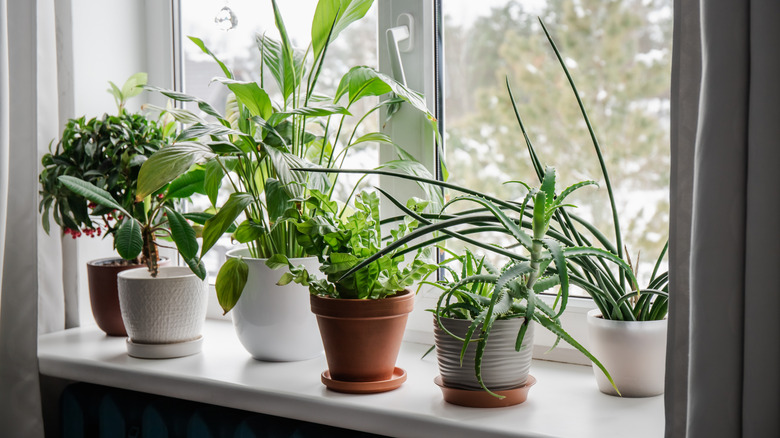
Do some parts of your house get extra chilly when winter rolls around? It may seem like filling those rooms with houseplants is out of the question. After all, most tropical plants commonly grown indoors need daytime temperatures of at least 70 degrees Fahrenheit. Finding a plant that can thrive in the cooler spots of your home can be a challenge. Fortunately, while you may not be able to grow tropical and subtropical houseplants in these frigid spaces, there is one popular low-maintenance vine that will thrive in such environments: English ivy (Hedera helix).
English ivy can be a real problem when grown outdoors. It grows aggressively and is considered invasive in many parts of the U.S. However, when grown as a houseplant, it's versatile and eye-catching. There is a range of cultivars to choose between, each with different foliage color combinations, sizes, or forms. Consider the merits of each to find the perfect plant for your space. But the best part? English ivy is incredibly hardy. It thrives in temperatures as low as 65 degrees Fahrenheit, and will survive into the negatives — although this likely won't be a concern when it's grown indoors. Although English ivy is widely considered one of the best plants to grow for beginner gardeners with an indoor plant collection, it still has a few special care requirements. Day-to-day care is, however, typically minimal, even in cold rooms.
How to grow English ivy in your house's chillest rooms
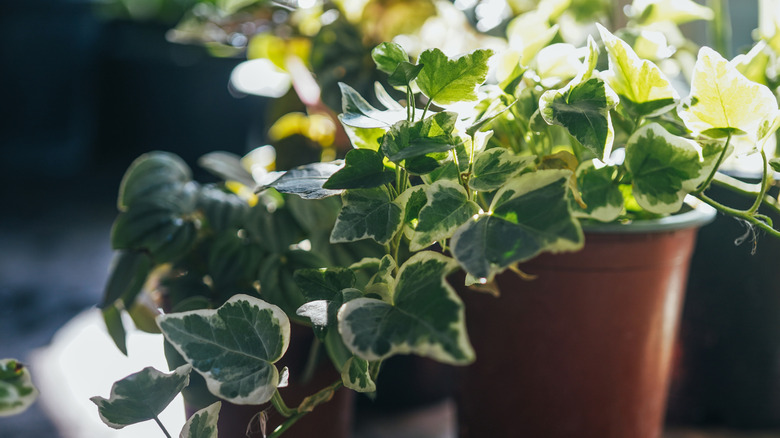
One of the hardest parts of growing any houseplant is mimicking their natural growing conditions — and this includes sunlight exposure. On the bright side, English ivy isn't too picky about how much light it receives each day. This eye-catching plant can handle lower light conditions, from deep shade to dappled sunlight, and full sun. However, while it tolerates a wide range of light exposures, it will thrive in a spot with bright, indirect light. South-facing windows receive bright, direct light all day long, while those facing north see the least light. For partial sunlight, east- or west-facing windows are best. The coldest rooms in a home are often north-facing. If that's where your potted English ivy is, counter the lack of sunlight with grow lights.
It's also important to pay attention to your vine's hydration. These plants are drought-tolerant; they grow better in soil that's on the drier side. If their soil is oversaturated or waterlogged for long periods — a watering mistake everyone makes with their indoor English ivy, honestly — you may begin to notice poor growth or brown, dry edges on the leaves. Instead of pouring your energy into keeping the soil damp, use the finger test. Push a finger into the soil at least 1 inch. If it feels dry, water your plant. Focus, too, on humidity. English ivy thrives in higher humidity. In a cold room, this may be harder to achieve, since cold air tends to hold less moisture. But there are plenty of ways to increase humidity for your plant: use a humidifier, sit the plant on a pebble tray, group plants together, or house the plant under a cloche.