

How To Keep Amaryllis As A Houseplant After It's Done Blooming
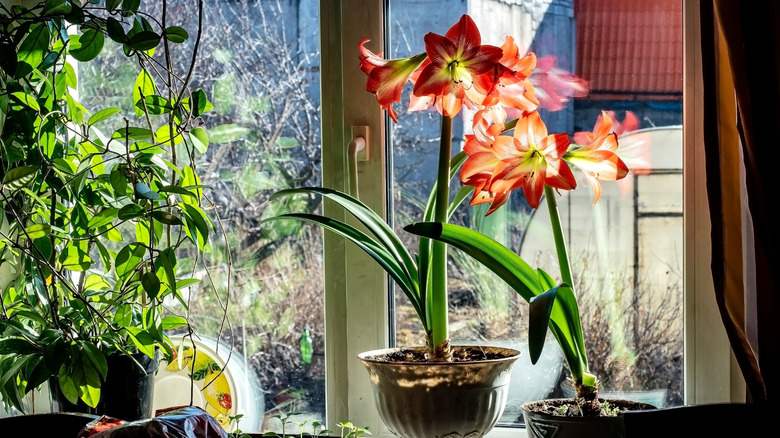
The beautiful, trumpet-shaped flowers of an amaryllis (Hippeastrum spp.) cultivar can light up a room during the darkest months of winter. But many people mistakenly treat these plants as temporary holiday decorations rather than long-term greenery for the home. Tossing a bulb onto the compost pile after the last flower withers is a missed opportunity for recurring blooms indoors. These perennials are actually quite resilient and can thrive for decades when given the right care. Learning how to force amaryllis flowers to bloom in the winter is undeniably a clever trick. Keeping these pretty plants alive long-term requires knowledge of essential care requirements, like fertilizing and watering a green-leaved yet flowerless amaryllis and encouraging and maintaining dormancy.
While the true, original amaryllis (Amaryllis belladonna) is native to South Africa and grows outdoors in USDA Hardiness Zones 8 through 11, the plants commonly grown indoors hail from Central and South America. They're herbaceous perennial bulbs in frost-free environments — namely USDA Hardiness Zones 7 to 10. But they are also perfectly content to live on your windowsill indoors long-term. However, keeping them healthy as a houseplant involves a shift in thinking. You'll need to start treating them as a houseplant that needs care to recharge its batteries instead of a temporary living floral arrangement for the festive season.
Care for the green leaves of amaryllis to rebuild the bulb's energy
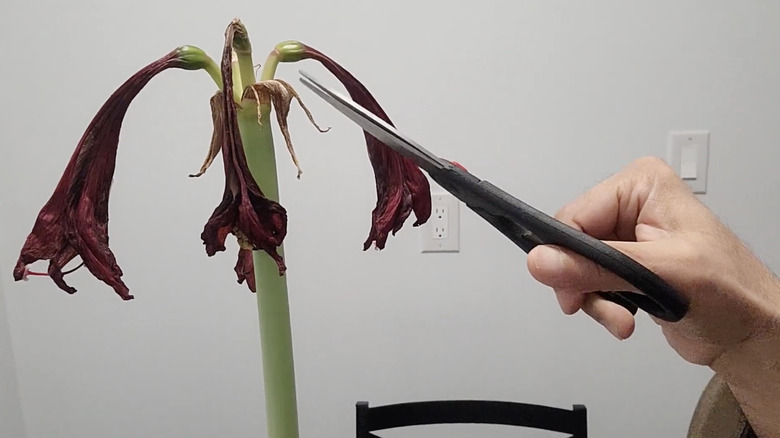
Once the blooms of your potted indoor amaryllis fade, the plant will begin an important phase: rebuilding the store of energy it spent on flowering. Start by removing the spent blooms to prevent the perennial bulb from wasting further energy on seed production. Keep the foliage intact because these leaves are the primary way the plant makes food (through photosynthesis). Leave the green flower stalk untouched, too — at least until it turns yellow or brown. It will continue to photosynthesize right up to this point, just as the leaves do.
Position your green-leafed potted amaryllis on the brightest windowsill in your home, preferably a south- or west-facing window, to provide it the most light exposure possible. Maintain a regular watering schedule that keeps the soil consistently moist but never waterlogged. Make sure the pot and soil allow for good drainage to avoid root rot. Regular feeding is also needed while the plant still has green foliage. Use a 10-10-10 slow-release or liquid fertilizer once or twice a month to provide the nutrients the plant needs for bulb expansion. It will also help it prepare for the next flowering cycle.
How to manage indoor amaryllis dormancy for year-on-year flowering
To keep your indoor amaryllis reblooming season after season, it will need to go through a period of dormancy. This mimics the dry season of the plant's tropical native home. In late summer or early fall, stop fertilizing your plant and gradually reduce watering to zero. Move the potted perennial bulb to a dark location with low humidity, like a closet or finished basement. It's vital that the temperature stays between 50 and 60 degrees Fahrenheit, so an unheated garage or garden shed won't work. Your amaryllis should pick up on these signals, which indicate that it's time to rest. Eventually, the green leaves and stem will shrivel and turn brown, at which point you can trim them off.
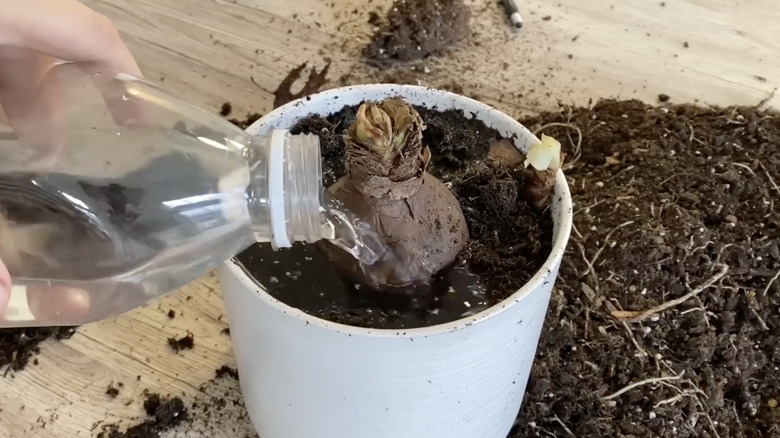
Keep your indoor amaryllis in this dormant phase for at least eight to 12 weeks. This will ensure the bulb is well-rested and refreshed. When you're ready to wake the plant up, bring it back into a warm, sunny room and give the soil a good soak — tepid tap water works just fine. Because it's one of the fastest growing flower bulbs, expect to wait four to six weeks for new growth to appear. Then your plant will enter its flowering cycle all over again. A word of warning: If you have children or pets in your home, you may want to think twice before growing amaryllis. You need to keep the entire plant safely out of reach of paws and little hands, since the flowers, bulbs, stems, and leaves are toxic when ingested.