

Save Some Kitchen Space: How Much Cast Iron Cookware You Actually Need
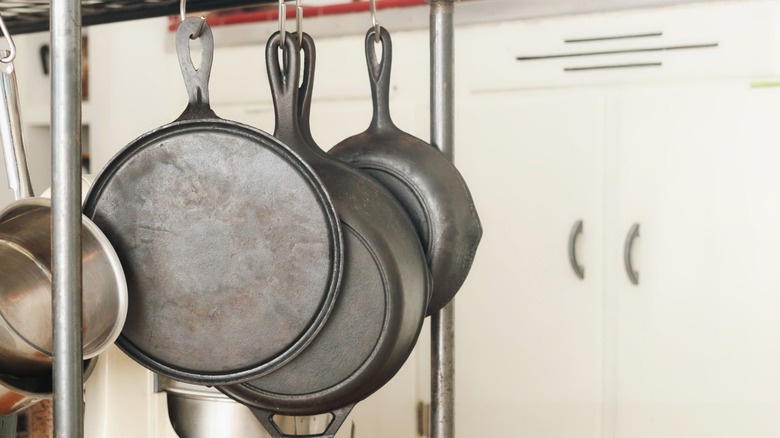
How many cast iron pots and pans should you really have? "All you can afford, plus one!" we hear the enthusiasts and collectors cry, but for all the satisfaction we get from owning, using, and maintaining well-seasoned cookware, the practical considerations of storage and convenience could put a hard limit on it in anyone's kitchen. Not to mention, cast iron's versatility from stovetop to oven means you're able to do more with less. Starting your collection with a 10-inch pan will already cover a wide array of dishes, and if you maintain a modest meal plan, it may be all you need!
Your cooking habits are the best starting point for deciding how much cast iron cookware makes sense for you. If you do a lot of stovetop searing, sauteing, and frying, one or two cast iron skillets may be sufficient. A 10-inch pan is great for a variety of foods for one or two people, but when you have to supply a family or a crowd, you could jump up to at least a 12-inch skillet to get everything done in one pan and save you some storage space. Even if you love using cast iron, keeping pots and pans of different materials may make sense for efficiency. You have to take extra steps to stop cast iron from rusting or getting damaged in storage, and you can't just toss it in the dishwasher after each use, unlike many non-stick or stainless steel alternatives. Considering the extra heft cast iron packs on compared to other types of cookware, you also have to be cautious about hanging multiple pieces, ensuring the rack you're using is supported well enough to manage the weight.
Maintain a set of well-used cast iron essentials
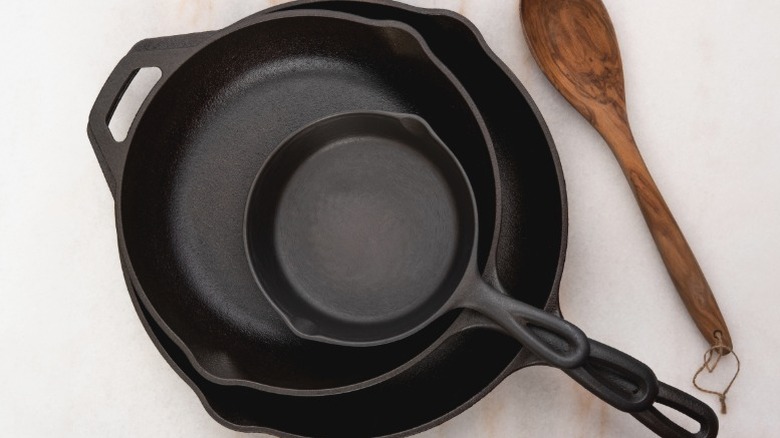
Generally, starting with one quality cast iron pan sized to suit the number of people in the house is a smart way of determining how much cast iron cookware you actually need. As you expand your cooking horizons, you can consider items like a Dutch oven for braising and baking or a griddle to handle breakfast foods, grilled cheeses, and more. Before leaning into too much cast iron, though, think about whether it's reasonable for your situation. Not only is this one of several cookware materials that could damage your glass cooktop, but the storage difficulties could make it tricky to organize several pieces.
Your cookware will last a lifetime and even longer if you know how to care for cast iron pans, including the best way to put them away. With a sturdy wall rack, a few hanging cast iron skillets and pots can add a rustic touch to the kitchen, but if you have to stack them, you'll want to do it neatly with a towel or piece of paper between each as a protective layer. Ideally, you'll have a small collection that will stack together to take up little room and make maintenance easy. Some cast iron sets also nest tidily, with Dutch ovens, skillets, and griddles that fit into one another to minimize their footprint in storage. The only concern there is ensuring you'll actually use everything that comes in the set. After all, cast iron is at its best when you can cook with it often, so stick to pieces you know will get plenty of frequent use.