

How To Determine The Best Size Bench For Your Shower
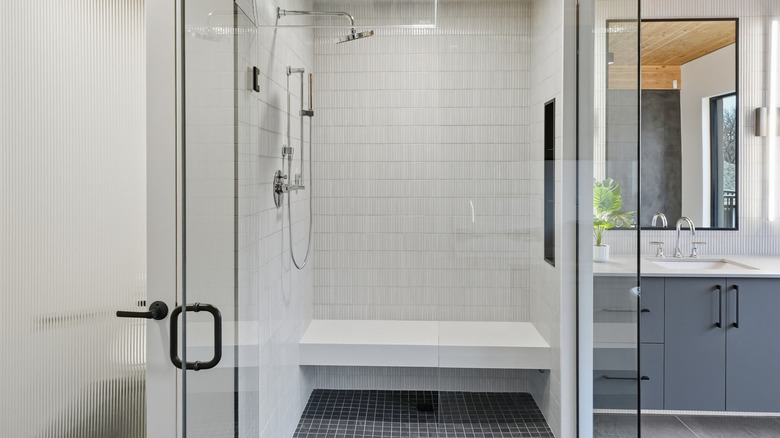
Part of the joy derived from taking a nice hot shower comes from the wonderful features and ambience of the space. There are many modifications you can make in your shower that will not only create that relaxed shower experience, but also add functionality and accessibility for anyone with a disability or mobility issues. A bench is one such bathroom shower upgrade. Selecting a style for your bathroom bench can be a challenge, considering the various types available from freestanding and folding benches to corner seats, though built-in benches are a popular choice for many. But sizing is also a critical factor to consider. To have the ideal size bench for your shower, consider the square footage of the shower stall, where you will place your shower bench, and how you will easily get into the stall and use the bench while taking a shower.
As expected, there isn't one size that fits all bathrooms, so it's dependent on the size of your space. If you're going for a universally accessible bench, using the Americans with Disabilities Act (ADA) requirements as a reference point is a good idea, as it gives you the minimum recommended size range. In that case, the height of the bench ought to be 17 to 19 inches above the finished floor surface, the depth (i.e., the sitting area distance from the front edge of the bench to the back) should be at least 20 inches, and the width of the seat from side to side should be at least 15 inches.
What to consider when choosing the size of your shower bench
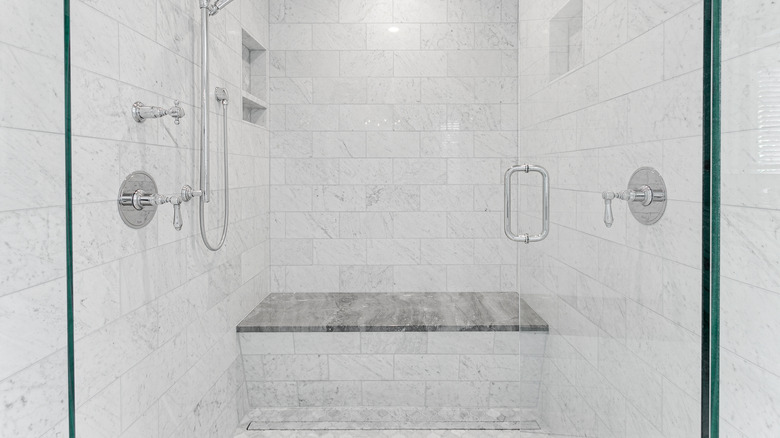
We've addressed the minimum recommended sizing of a shower bench; however, when it comes to your specific shower, these dimensions can vary. First, your height and that of other users matter. Determine the bench height by measuring your lower leg height from the heel to the back of the knee. This is a good starting point. You can then subtract one inch of this height for the taller user of the shower. If present during the bench installation, do an actual test by sitting on the bench. You should be able to comfortably sit with both your feet placed firmly on the floor and your knees bent at a comfortable angle.
When it comes to the width and depth of the seat, the stall size and ergonomics matter the most. Once you get inside the shower stall, are you able to easily close the door (at least while standing)? And once the door is shut, is there enough room left in the stall for comfortable showering, whether one is sitting on the bench or not? If you answer yes to both questions, you're good to go.
Even after all these considerations, remember to also factor in personal preference and style. For example, if you're looking for a luxury shower accessory that will elevate your bathroom experience, a much larger bench will do the trick. On the flip side, if your goal is to have a simple footrest that also adds character to a small shower stall, a small corner shower bench may suffice. All in all, comfort, aesthetics, and safety should be considered.