

The Easy-To-Grow Legume You Can Plant In Pots For A Nutritious Harvest
We may receive a commission on purchases made from links.
Your bean growing game is good to go, and your plans for spring peas are perfect, so you're probably ready to expand your legume gardening repertoire with another nutritious crop. You might know lentils (Vicia lens) as the nutrient-rich ingredient in one of your favorite soups but you can also cultivate this food staple as a potted plant if you're feeling adventurous. These are one of many types of legume plants that are easy to grow and lend themselves well to container gardening.
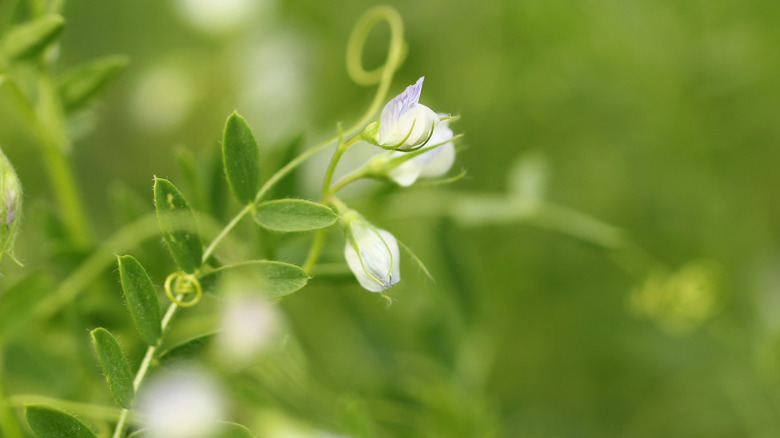
Maybe you take this nutritious food's place on your pantry shelf for granted without ever having considered that it might also deserve a spot in your garden. In fact, lentils were one of the earliest domesticated crops. The fact that our distant ancestors were able to transform these fiber-packed seeds into a successful annual harvest might inspire some of us to give it a try too. These bushy legume plants are covered with delicate leaflets and reach no more than 30 inches tall, meaning the plants may only need small trellises to produce a delicious harvest.
Grow lentils in containers for a trouble-free crop
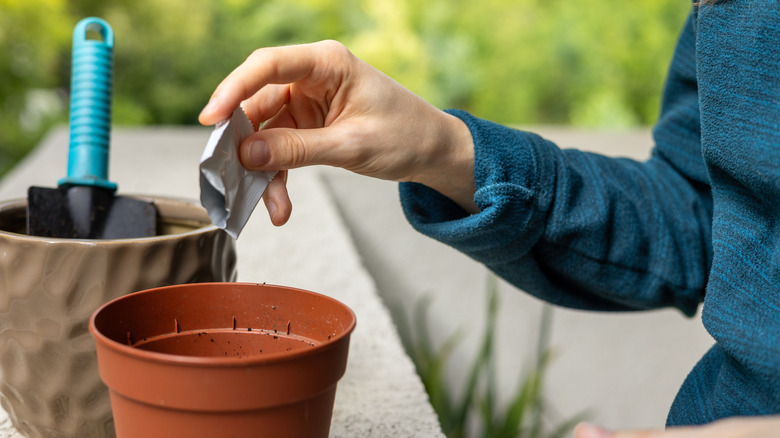
If you're ready to give this simple gardening project a try, you can purchase seed packs . Or, for a cost-efficient hack, buy lentils from your grocery store and use those for growing. Just make sure to choose lentils that aren't broken or split. Do a quick germination test on a grocery store sample to verify that you should sow them. If the seeds are viable, they'll sprout within 10 days.
Plant this nutritious, cool season legume in early spring — the seedlings won't be harmed by light frost. Apply a rhizobium inoculant when you sow, such as inoculant from Mountain Valley Seed. Space the seeds at least 2 inches apart and poke them into holes 1 inch deep. Lentils are adaptable to different soil types as long as the mix drains well. In addition to the right soil, you'll want to select the best planters for your container garden for a healthy harvest. It's essential that the pots you choose have drainage holes.
Keep the pots in full sun, and move them around as needed on your patio vegetable garden to make sure they don't get too much shade during the day. Since this high-protein crop is self-pollinating, you could even grow it indoors if you have enough light. Keep the plants watered regularly until the pods begin to mature. These legume pods will be ready to pick as early as 80 days after sowing — expect the small, flat pods to contain up to 3 seeds each. It'll be easy to know when to harvest since the crop naturally dries on the plant.