

29 Hydrangea Types That Can Thrive In Cold Winter Temperatures
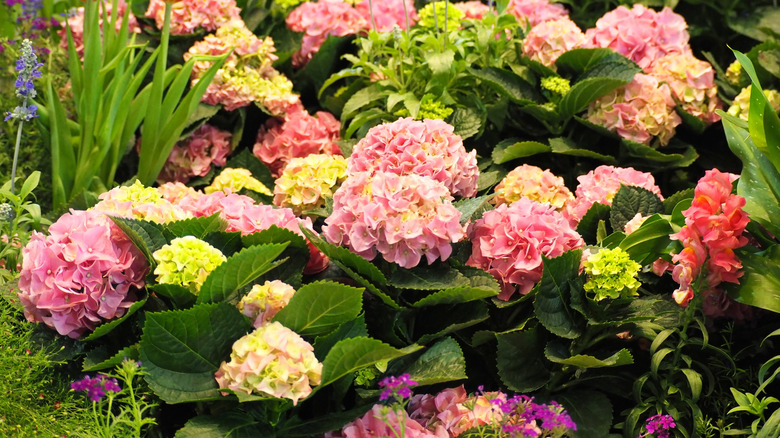
Like roses, hydrangeas are classics that gardeners love to plant in their shaded areas for a dash of bold color and beauty. Unfortunately, not all varieties thrive in cold areas, or when they do, they perform poorly because they lose their buds to frost and snow. This is most common to hydrangeas budding on old wood, thus leading to a no-show.
Luckily for us, breeders have developed several hydrangea varieties, such as Limelight, Annabelle, Quick Fire, Bobo, Tardiva, Strawberry Sundae, and many more, that can tolerate extreme cold, snow, and frost in zones 3 and 4. For the most part, these varieties spring from H. arborescens and H. paniculata, which are known to tolerate up to -40 degrees Fahrenheit without any additional protection. It also helps that they either grow buds on new wood, or both on old and new wood, which enables them to reliably flower after spring. However, in the event of a cold snap, it does help to loosely burlap them and lay mulch around their base for insulation. While H. macrophylla struggles to grow beyond zone 6, newer cultivars like Blue Enchantress and Seaside Serenade Newport may survive cold winters when placed in a sheltered spot with mulch for added protection.
Limelight hydrangea
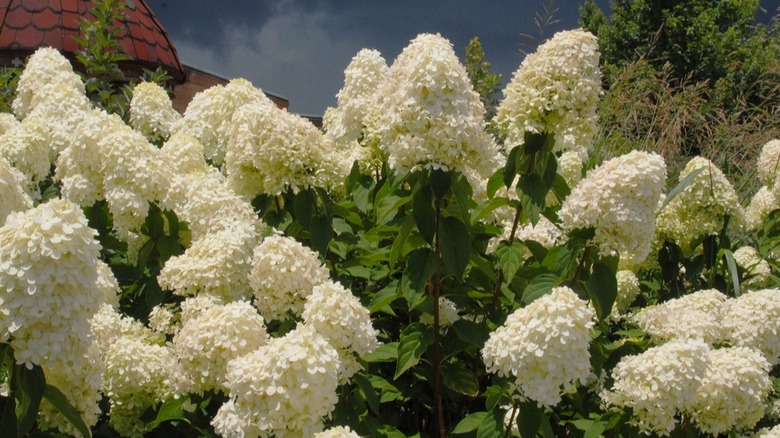
Whether planted as a specimen or grouped into a flowering hedge, Limelight hydrangea (Hydrangea paniculata 'Limelight') is sure to turn heads with its massive blooms. Around mid-summer, it starts pushing out white flowers that transform into deep pink, creating a unique multi-colored display through frost. Despite growing over 6 feet tall, these shrubs don't flop over under their own weight or after heavy rains because of the exceptionally strong stems. Cherry on top, of course, is their cold hardiness. From zones 3 to 9, you can grow them successfully in loamy soils with morning sun exposure.
Wild hydrangea 'Haas' Halo'
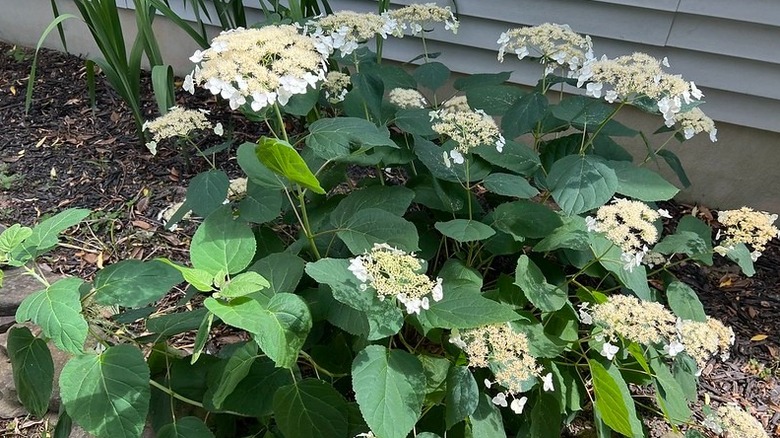
One of the top performers in Mt. Cuba Trials and a pollinator magnet to boot, Wild hydrangea 'Haas' Halo' (Hydrangea arborescens 'Haas' Halo') sure deserves a spot in your garden. It grows exceptionally fast, tolerates humidity, and blooms just as well, whether planted in full sun or heavy shade. Although white lace-cap blooms make a short appearance from mid-June to July, the shrub continues to catch the eye into the winter because of its dried flowerheads. To encourage it to produce bigger blooms, cut back its foliage in spring. It grows well in zones 3 through 9.
Incrediball Blush hydrangea
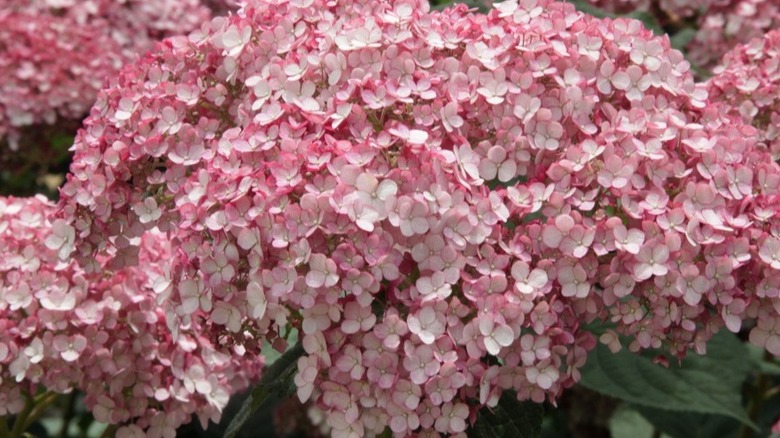
Maturing to about 4 feet but a foot wider, Incrediball Blush hydrangea (Hydrangea arborescens Incrediball Blush 'NCHA4') is an attractive cold-hardy variety for small yards. In mid-June, rosy-pink mopheads bloom with deeper pink florets that bees, butterflies, and birds can't skip. By fall, they transform into chartreuse green, providing ample color in zones 3 through 8. The best part, though? These beautiful plants thrive in clay soils that have been improved with organic matter and show tolerance for wet conditions. Since they tolerate salt, you can plant them along walkways or in borders to defend against deer and rabbits.
Pinky Winky hydrangea
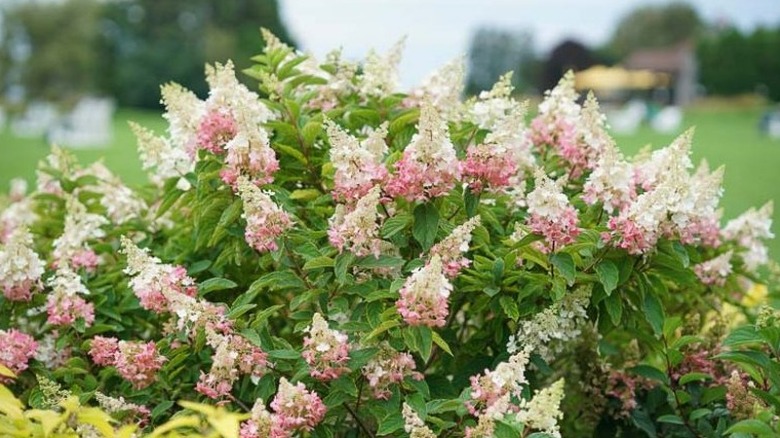
You might enjoy Pinky Winky hydrangeas (Hydrangea paniculata 'Pinky Winky') for their two-tone effect. Initial summer blooms are white, which mature into rich pinks, while the shrub continues to push out white blooms at the base. This beautiful contrast, playing out against dark green foliage, lasts through the fall — without much effort from the gardener. That's because Pinky Winky is highly adaptable and remains non-plussed about sun and soil conditions. It can even handle dry spells and cold snaps in zones 3 through 8. You may prune it short without affecting flowering.
Invincibelle Spirit II hydrangea
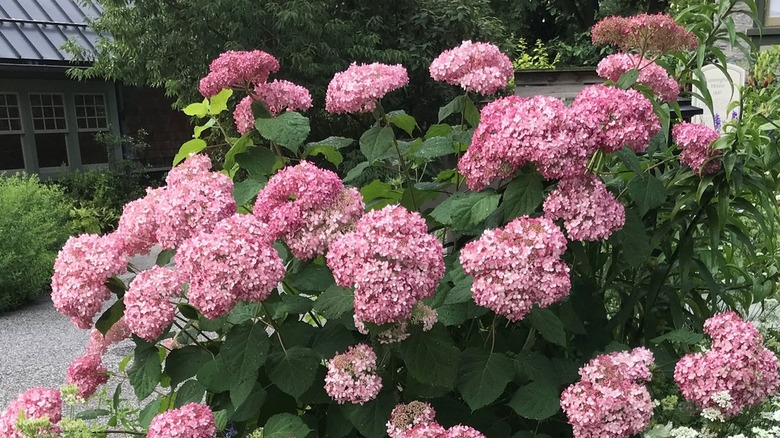
Invincibelle Spirit II hydrangea (Hydrangea arborescens Invincibelle Spirit II 'NCHA2') poses a multi-colored display, with the blooms being pink initially but aging later into yellowish-green. You can trust this plant to exhibit a non-stop display from summer through frost. Although hardy in zones 3 through 8, you must mulch the roots in winter; in extreme temperatures, the foliage may be frost-killed. This pink-bloomer can be massed in pollinator gardens or on slopes to check soil erosion. Give it at least four hours of direct sunlight, or flowering will be poor.
Peegee hydrangea
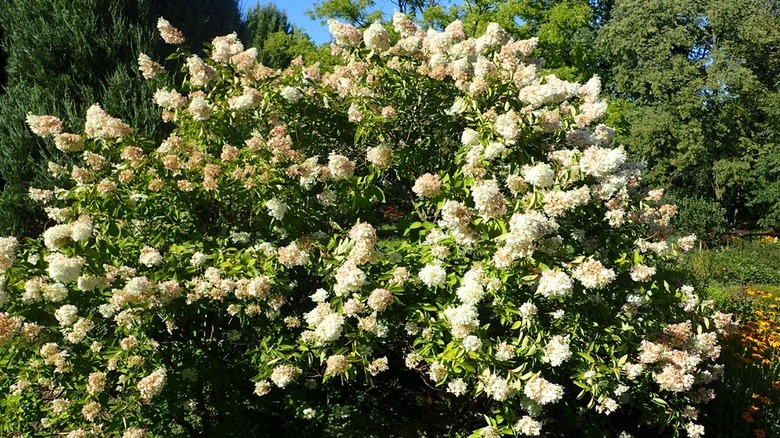
Peegee hydrangeas (Hydrangea paniculata 'Grandiflora') are beautiful flowering shrubs that grow best in morning sun and afternoon shade in zones 3 to 8. These winter-hardy shrubs have a long blooming season, with pinkish-white flowerheads decking their green foliage throughout summer. In the fall, their leaves turn a brilliant yellow until they're shed. 'Grandiflora' can grow over 10 feet tall and wide, but can be pruned to a more manageable size in spring. You must mulch their shallow roots for winter protection. Also, plant them in a sheltered spot, as their branches split from wind action.
Quick Fire hydrangea
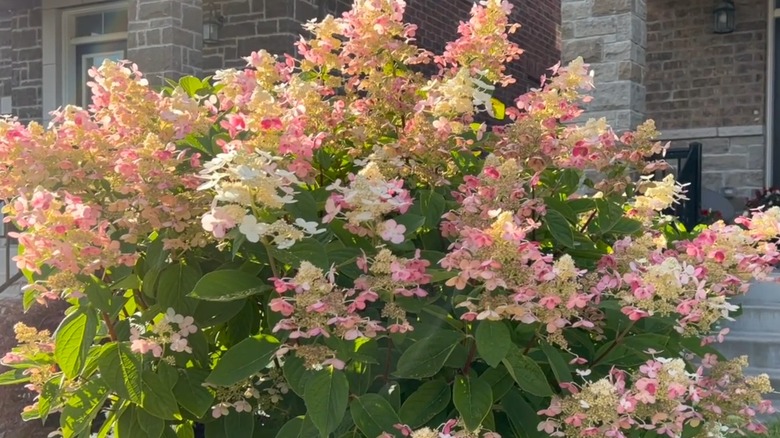
Want a hydrangea that could brighten your garden on 4th of July? Quick Fire (Hydrangea paniculata 'Quick Fire') may just hit the mark. The blooms on this award-winning variety start out white, growing increasingly pink, until they're a blaze of pinkish-red in the fall. Since they bloom on new wood, they're sure to return and flower reliably come new year, no matter how cold the winter. They're excellent as flowering hedges, given they can grow about 8 feet high. Plant them in full sun in zones 3 through 9. But if the sun is too intense, shade them in the afternoon.
Bobo hydrangea
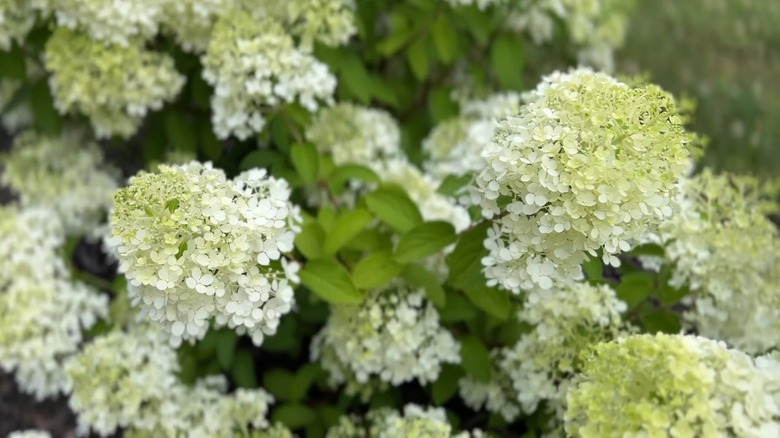
Where space is premium but love for hydrangeas runs strong, Bobo hydrangeas (Hydrangea paniculata 'Bobo') will hit the sweet spot. A dwarf variety, 'Bobo' forms a cute mound that's around 2 ½ to 3 feet high and wide. Yet, when in flower, you can barely spot the leaves, as they're covered in creamy green heads that progressively turn a blush pink. Give them excellent drainage and water them well, or the flowers may turn a muddy brown instead. 'Bobo' prefers full-to-part sun and handles spring frosts well. Zones 3 to 9 cover its adaptive range.
Vanilla Strawberry hydrangea
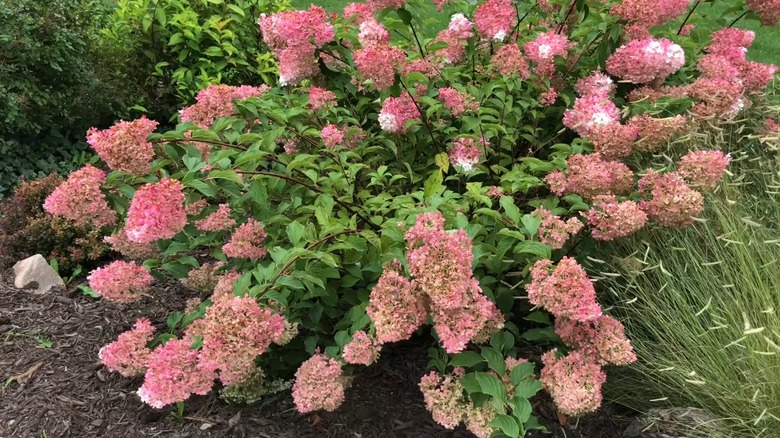
Vanilla Strawberry hydrangea (Hydrangea paniculata 'Renhy') is a highly popular variety that thrives in cold winter temperatures right through zone 3. Mid-summer, blooms appear pristine white but turn pink when they've lived through sufficient cool nights. By fall, they bleed into beautiful reds, striking up a gorgeous display. Cut the blooms to deck your indoor arrangements; they're just as striking after drying. You may grow them as privacy hedges, lawn specimens, or accents in mixed borders.
Little Lime hydrangea
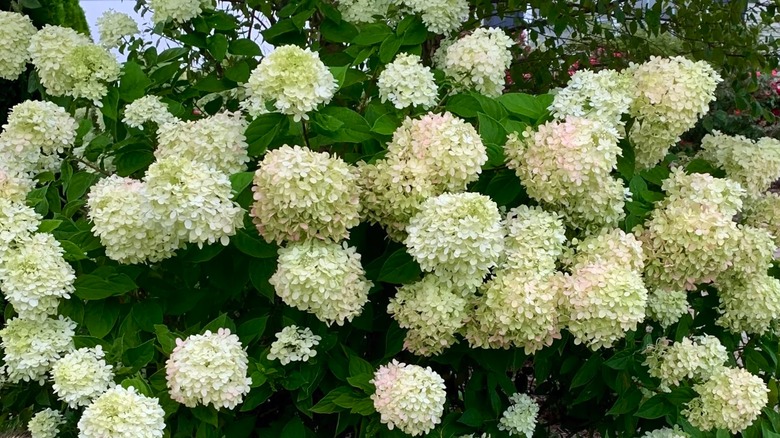
If you like Limelight hydrangeas but cannot plant them because of their massive size, consider Little Lime hydrangea (Hydrangea paniculata 'Jane') instead. They offer similar attributes: lime green flowers that age into pink, but only grow about 3 feet tall. Their spectacular show runs undeterred by wind or rain throughout summer and fall thanks to sturdy stems. Give them a home in your foundation beds or mass them in mixed borders. They thrive in zones 3 through 9 and benefit from early spring pruning. Give them partial or full sun exposure.
Annabelle hydrangea
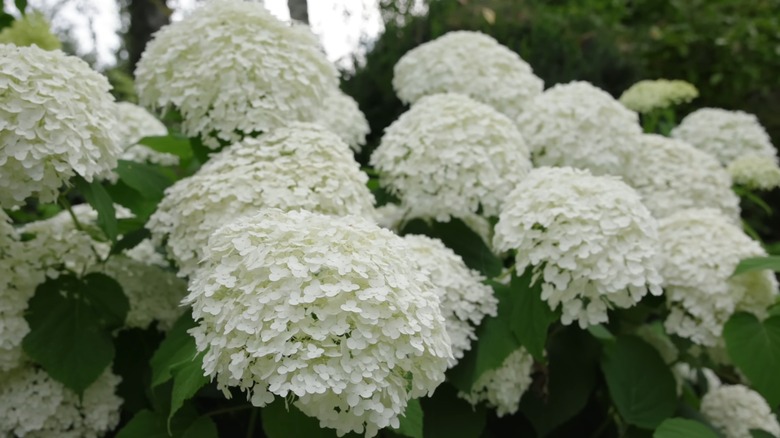
Annabelle hydrangea (Hydrangea arborescens 'Annabelle') stands out from the crowd due to its massive blooms that can be up to 1 foot wide. The blooms start out as lime green and fade into pristine white during the hot summer. By fall, they turn a showy tan, often persisting through the winter. This hydrangea variety loves a massive pruning and cutting back its foliage to about 12 inches helps direct resources into flower production, ensuring you get even bigger blooms. 'Annabelle' requires at least six hours of direct sunlight and can be planted in zones 3 through 9.
Seaside Serenade Bar Harbor hydrangea
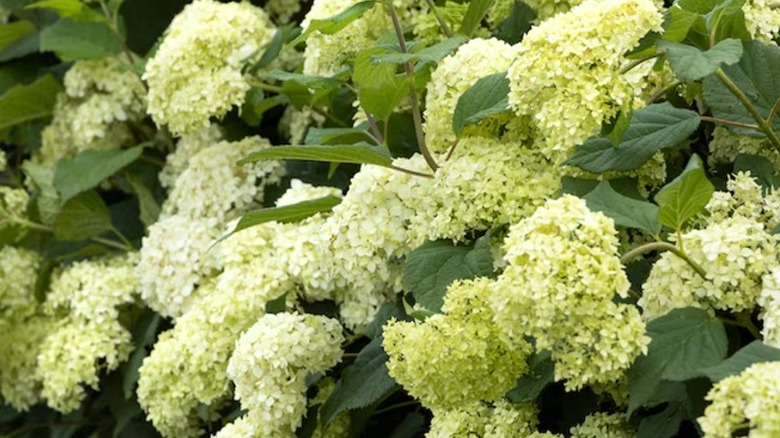
Seaside Serenade Bar Harbor hydrangea (Hydrangea arborescens 'SMHAMWM') is an Annabelle, albeit on a smaller scale — 4 feet to be precise. Snowball blooms, waving atop sturdy stems, whip up a striking display all summer, even if rained on. Rabbits have no care for their foliage, making them a brilliant option for borders. Or, you may pop them in shaded containers; coral bells and astilbe will make great companions. Don't forget to mulch their roots before winter sets in. They require moist, fertile soils to bloom well. They're cold-hardy in zones 3 to 8.
Little Quick Fire hardy hydrangea
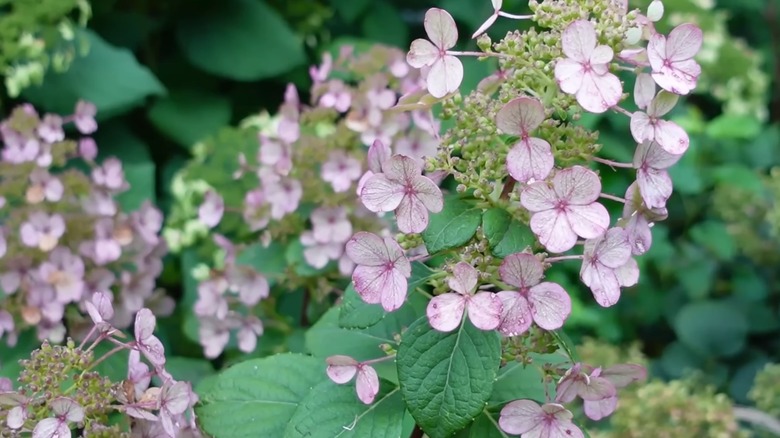
At 3 feet, Little Quick Fire hardy hydrangea (Hydrangea paniculata 'SMHPLQF') is a compact cultivar you can fit into the smallest foundation beds and borders. Frontrunning the official hydrangea season, Little Quick Fire has a slow start of white flowers in the summer, which soon turns into a flash of pinkish-red by the time fall arrives. They adapt to most soil conditions, but prefer slightly acidic, moist, and rich soils. You may plant them in dappled light or full sun in zones 3 to 9.
Tardiva hydrangea
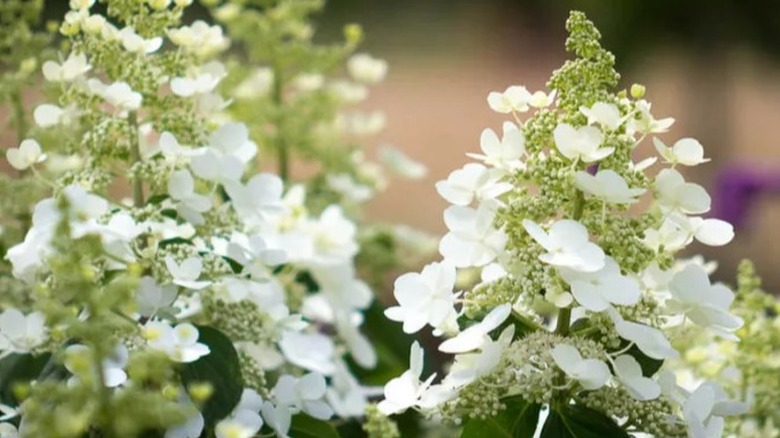
Use Tardiva hydrangea (Hydrangea paniculata 'Tardiva') to brighten your garden in late summer when most other plants have faded. White blossoms gradually change into purplish pink, while the green foliage takes on yellow-purple tinges in time for fall. Since it droops down in full bloom, consider planting it against tall trees, walls, or fences where it would find support. Tardiva can thrive in cold winter temperatures of zones 3 through 8. Prune the plant in late winter to maintain vigor — the hardwood cuttings may be used to propagate new plants.
Torch hardy hydrangea
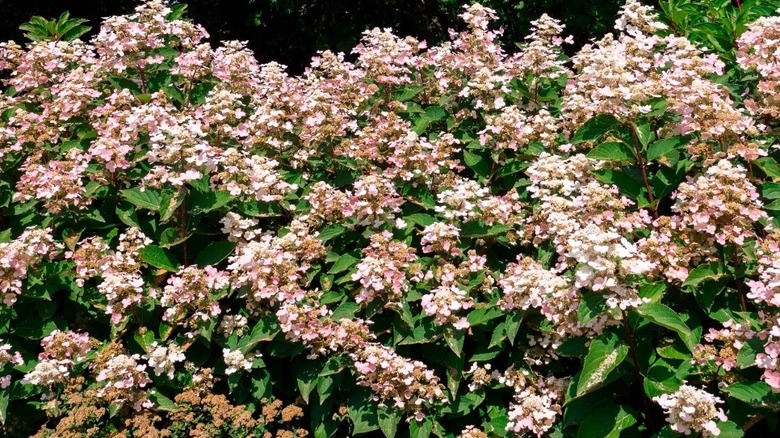
Torch hardy hydrangea (Hydrangea paniculata 'HPOPR018') is a pollinator-friendly variety that handles both heat and cold really well in zones 3 to 8. Mass it in beds that receive between 3 and 6 hours of direct sunlight, for creamy white hues in late spring. If the plant is healthy, these blooms will turn a lovely pink during the summer and fall. Torch can grow about 4 feet wide and tall, and makes a nice privacy hedge. It may offer winter interest through its red-tinged stems if it isn't buried under the snow.
Invincibelle Limetta smooth hydrangea
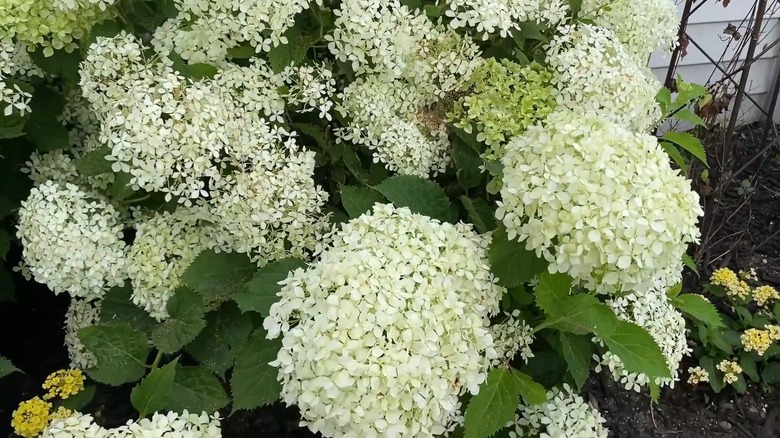
Invincibelle Limetta smooth hydrangea (Hydrangea arborescens 'NCHA8') brings a new touch to summer gardens with its "Annabelle but better" blooms. Over the hot months, the mass of blooms is a mix of lime green, creamy green, and jade green, depending on where they're at in the blooming cycle. Since the mound remains compact at about 3 feet, the stems can easily support the big blooms, providing a gorgeous color pop. They may even rebloom if the foliage isn't frost-killed — without any deadheading! Foliage will reliably return in zones 3 through 8.
Berry white hydrangea
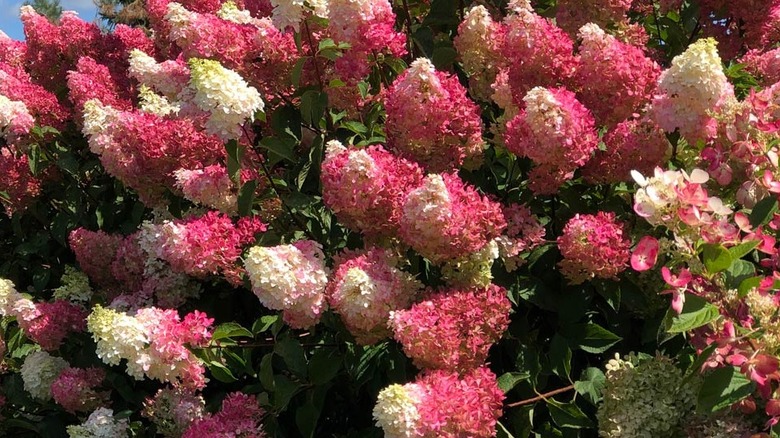
Berry white hydrangea (Hydrangea paniculata 'Renba') has the potential to be the showstopper of your summer garden if you live in zones 3 to 8. Although white initially, the big blooms turn a gorgeous pink, from bottom to top, as the temperatures cool in the fall. Plus, the branches are robust enough to keep the blooms afloat through nature's vagaries as well as backdrops in indoor flower arrangements. As the buds appear on new wood, you can expect this shrub to unfailingly flower even if some branches are frost-killed.
Fire Light Tidbit hydrangea
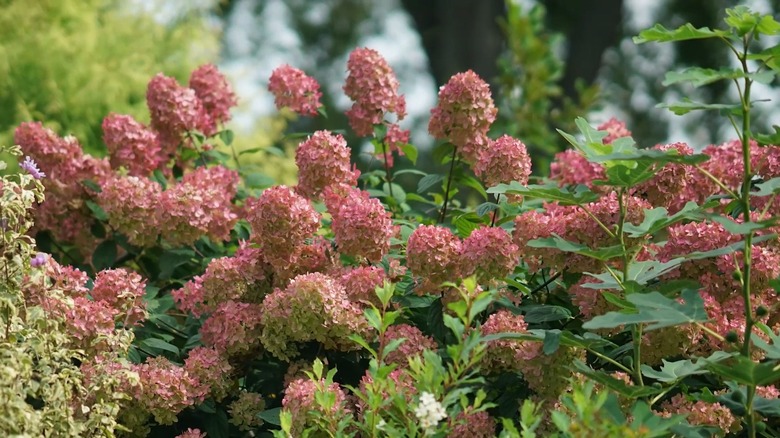
Front your borders with the visual treat of Fire Light Tidbit hydrangea (Hydrangea paniculata 'SMNHPK'). This tiny shrub, which grows about 3 feet across, can bloom for over three months, with white flowers developing pink tints as the weather cools for fall. Up north, you may plant it in full or partial sun in well-draining soil. It tolerates the cold temperatures and heat of zones 3 through 8. To ensure a fuller habit and more flowers, trim its foliage by ⅓ before it greens up in early spring.
Little Lime Punch hydrangea
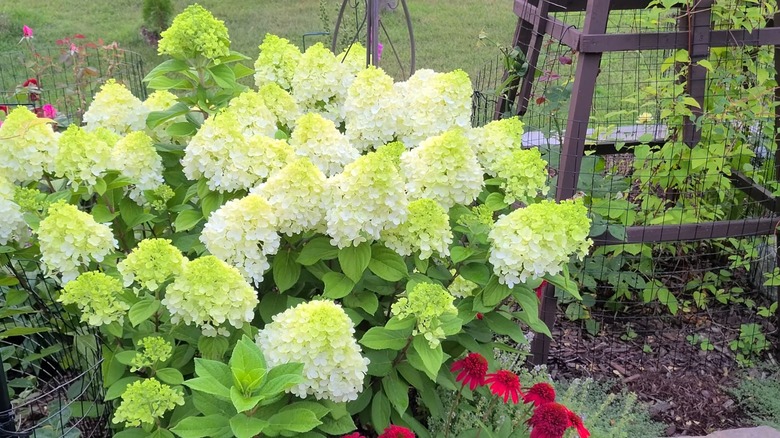
Bred by Megan Mathey at Proven Winners, Little Lime Punch hydrangea (Hydrangea paniculata 'SMNHPH') is another compact variety that reliably grows in the frosty weather of zones 3 and south (through zone 8). Smothered in massive blooms that are a spectrum of lime green, pink, and red, these shrubs pack a vibrant color punch in border edges and flower gardens during summer and fall. Better yet, if the ground is workable, you can plant them even in September in cold regions. However, prune it annually so the new buds emerge at the base, ensuring a fuller appearance.
Invincibelle Lace smooth hydrangea
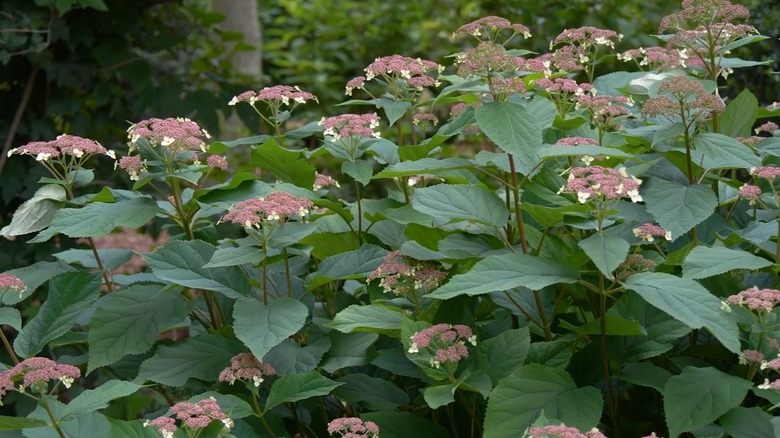
Invincibelle Lace smooth hydrangea (Hydrangea arborescens subsp. radiata 'SMNHRLL') adds a unique touch to landscapes and beds with its ruby-hued stems, atop which dance plum-colored blooms. The best part, though? Despite the inbreeding of such gorgeous features, they hold plenty of nectar and pollen to keep the local pollinators, including hummingbirds, bees, and butterflies, fed through the summer. Give them at least six hours of direct sun, or the stems won't be strong enough to bear the blooms. Cold-hardy through zone 3, you must lay down a 2-inch-thick layer of shredded bark around their base during winter.
Puffer Fish panicle hydrangea
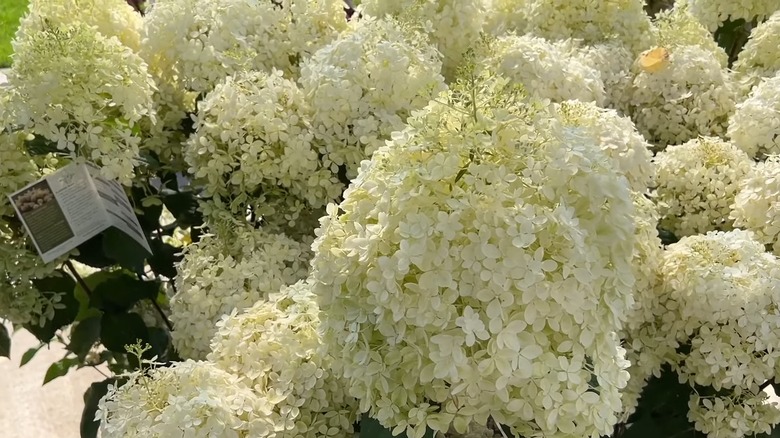
Puffer Fish panicle hydrangea (Hydrangea paniculata 'NCHP1') adds an airy touch to gardens not because of its habit, but the shape of its blooms. Unlike the tightly woven nature of most hydrangea varieties, its flowers poof up like squishy balls. But because it forms a tight mound, these pristine white blooms, with hints of lime green in autumn, are held in shape. Puffer Fish thrives in full-to-part sun in zones 3 to 9. To ensure the best performance, grow it in moist, loamy soil and fertilize every spring.
Strawberry Sundae hydrangea
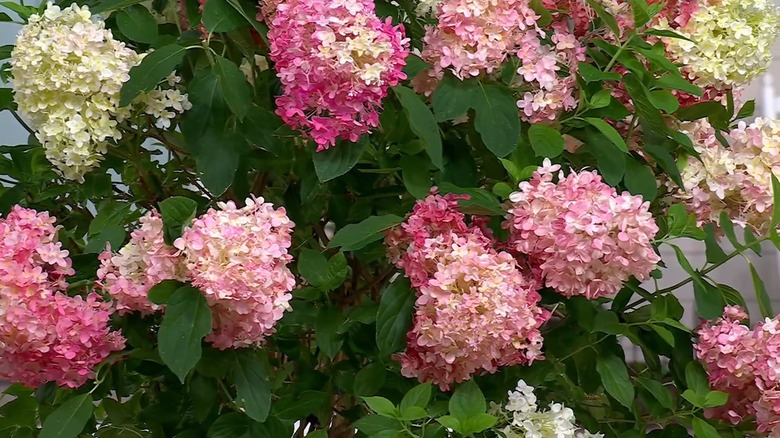
Strawberry Sundae hydrangea (Hydrangea paniculata 'Rensun') is sure to impress with its conical blooms that flush throughout summer and fall. Waves of white blooms flush into blushed pinks, and eventually strawberry reds, marking their own spin on autumn. These shrubs remain compact at 4 feet and may be massed around edges and walkways, as they can handle salt. Alternatively, you may plonk them in containers, as long as they're exposed to sunlight for at least six hours. They can tolerate the cold of zones 3 through 8 and also exhibit drought tolerance.
Endless Summer hydrangea
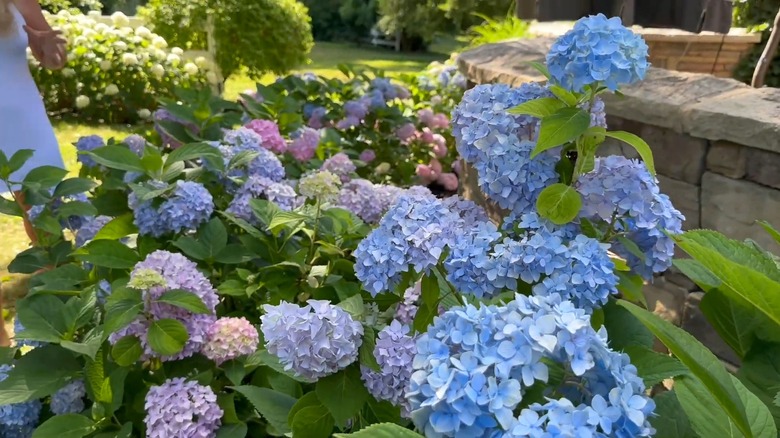
With offerings like 'Summer Crush,' 'Pop Star,' and 'Twist-n-Shout,' which rebloom during spring and summer, The Endless Summer collection of hydrangeas has won over plenty of gardeners. Although up north you aren't assured of a second bloom if winters kill the buds on old growth, you'll still enjoy a summer bloom when buds develop on spring growth. This collection can tolerate about 6 hours of direct sunlight in zones 4 to 5b but will need partial or dappled shade, at least in the afternoon, in areas inching closer to the south (zones 9).
'Early Sensation' hydrangea
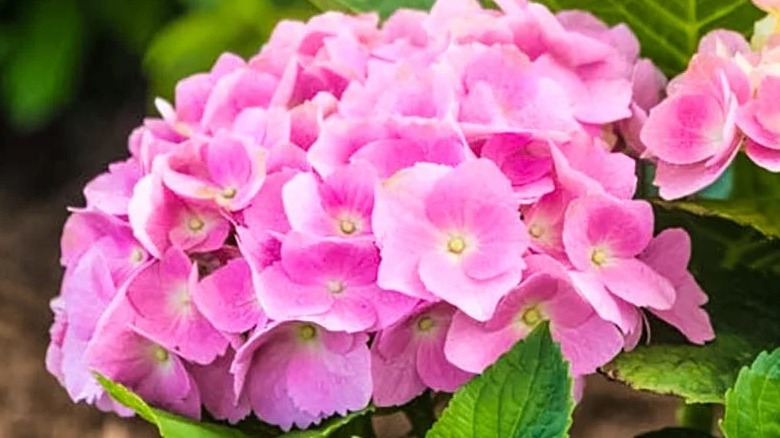
If you'd love to plant a fast-growing, color-changing hydrangea with blooms that appear pink or blue, according to the soil's pH, consider 'Early Sensation' hydrangea. It's hardy in zones 4 through 9 and benefits from mulch during winter. With constant deadheading, it will produce a fresh flush of blooms from summer through frost, even in northern climes. Save for removing any dead and diseased wood, you don't really have to prune it, though cutting back foliage after the five-year mark should rejuvenate it. Plant it where it receives morning sun.
Angel's Blush hydrangea
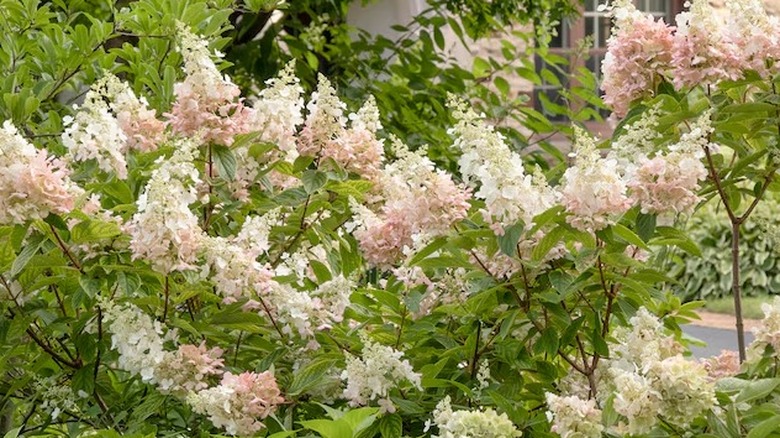
Angel's Blush hydrangea (Hydrangea paniculata 'Ruby') is the perfect fit for areas with dappled sunlight, as is the case when trees like dogwoods and viburnums filter out sunlight. At the start of the summer, their 8-foot-tall physique is decked in big white blooms, which darken into pinks as the season winds down. Since Angel's Blush has a more open habit, you're sure to catch plenty of pollinators, especially bees, buzzing through its foliage. Being fast growers, they offer quick coverage and reliable color for years on end in zones 4 through 8.
Strawberry Shake hydrangea
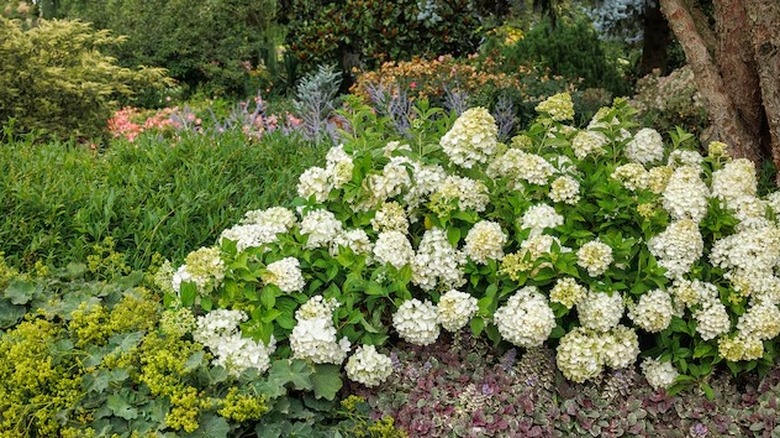
Aptly named, Strawberry Shake hydrangea (Hydrangea paniculata 'SMHPCW') is an easy-care variety that adds a pop of white and pink to summer gardens. Since the stems are robust, you may also snip off the flowers for your floral arrangements — they'll make a spectacular background for the times you show off your cocktail tricks. This shrub grows surprisingly fast, reaching over 4 feet in height and across. Site in your foundation beds or porch containers to create an outsized impact. While hardy in zones 4 through 8, you must mulch their beds to prevent winter damage.
Early Evolution hydrangea
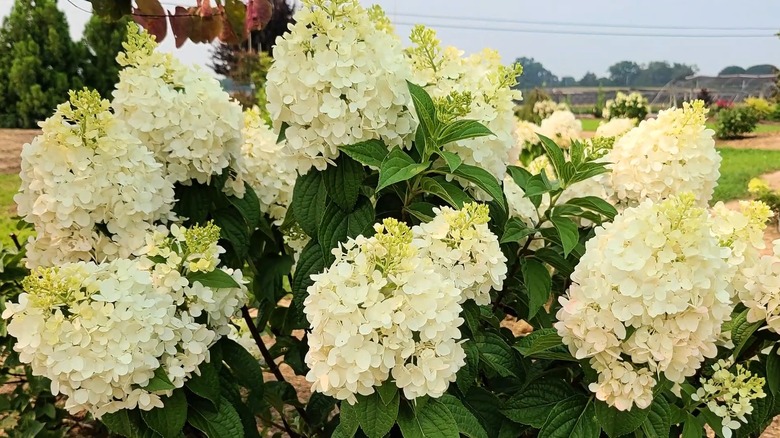
Keeping with its name, Early Evolution hydrangea (Hydrangea paniculata 'AJ14') experiences an evolution with flowers appearing anywhere on the white and pink spectrum, depending on the season. Another feather in their crown is their long blooming season that can last nearly five months. Early Evolution is great for coastal gardens, as it can tolerate salt sprays. You can plant it in a wide variety of soils, provided they drain well. Hardy in zones 4 through 9, it grows only 2 feet wide and across, and can be conveniently tucked into beds to fill in gaps.
Blue Enchantress hydrangea
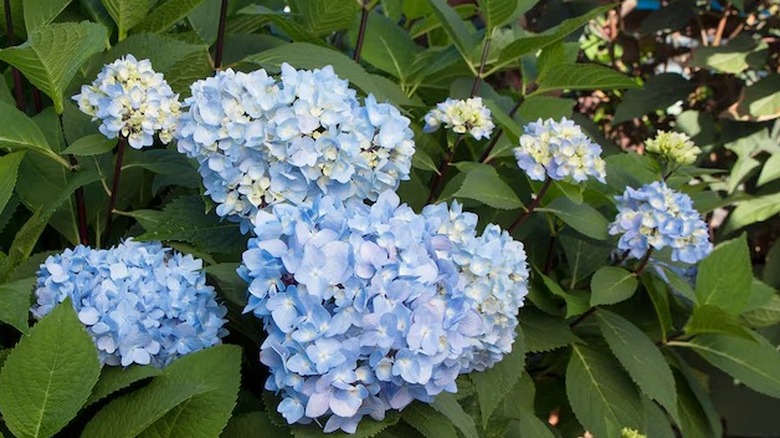
Another fast-growing hydrangea variety you should consider growing is Blue Enchantress (Hydrangea macrophylla 'Monmar'). This beauty develops ruby-black stems that support sprays of blue flowers in spring, which fade into creamy green. However, they appear pink in alkaline soils. Removing spent flowers can promote reblooms in summer. Blue Enchantress grows successfully in zones 4 through 9 with filtered or partial shade. Use them in shrub borders or foundation beds as backdrops for other ornamentals. Do note that this plant is protected under a patent and shouldn't be propagated.
Seaside Serenade Newport hydrangea
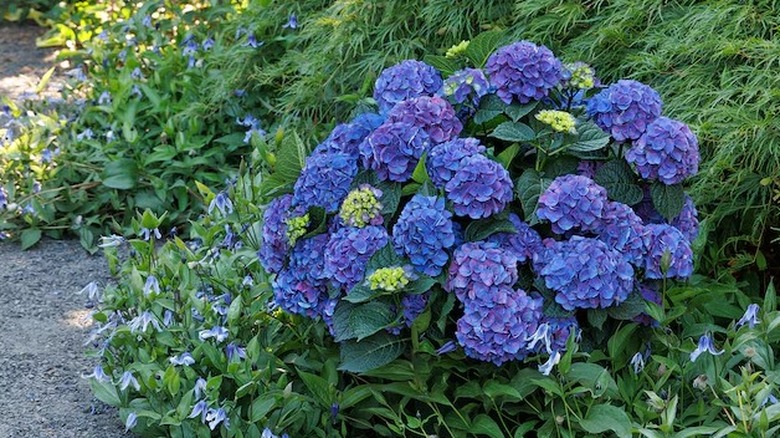
Utilize Seaside Serenade Newport hydrangea (Hydrangea macrophylla 'HORTMANI') to create focal points across your garden beds or mass it for a solid hedge. By maturity, they'll be around 4 feet high and wide. This shrub is especially valuable under shade trees with acidic soils underneath. In spring, they feature bluish-violet blooms, though they'll be pinker in alkaline mediums. You may grow them in zones 4 through 9. But don't forget to apply mulch to their beds in winter.