

Why Mold Keeps Coming Back In The Same Spot And What You Can Do
We may receive a commission on purchases made from links.
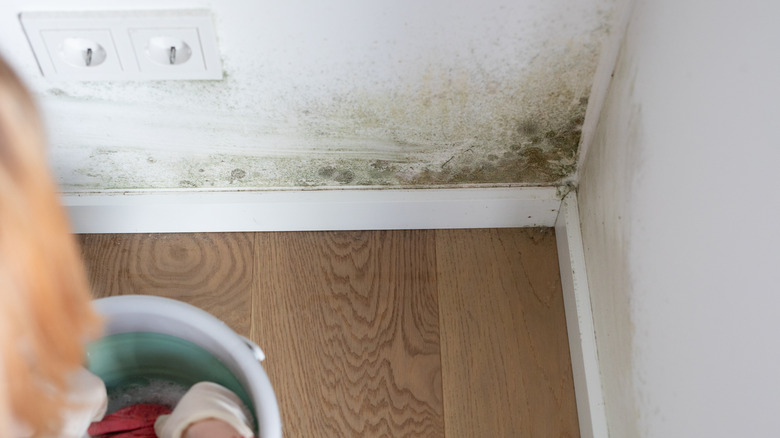
Seeing speckles of mold on your ceiling or wall can feel quite alarming. Even worse is when you've scrubbed it off the surface only to see it reappear a week later. According to the Environmental Protection Agency (EPA), it's safe to remove mold yourself as long as it occupies less than 10 square feet. But if you clean it up only for it to come back, it's time for some deeper investigating. In this case, you likely have moisture or ventilation issues that need to be addressed.
For mold to appear, the conditions have to be just right. It needs an organic, porous material to feed on (like drywall or carpet) as well as moisture to fuel its growth, which may come from excess humidity or an unidentified water leak. In some cases, it can come back simply because you didn't do a good job of killing the mold spores during your initial cleanup.
Identify moisture issues
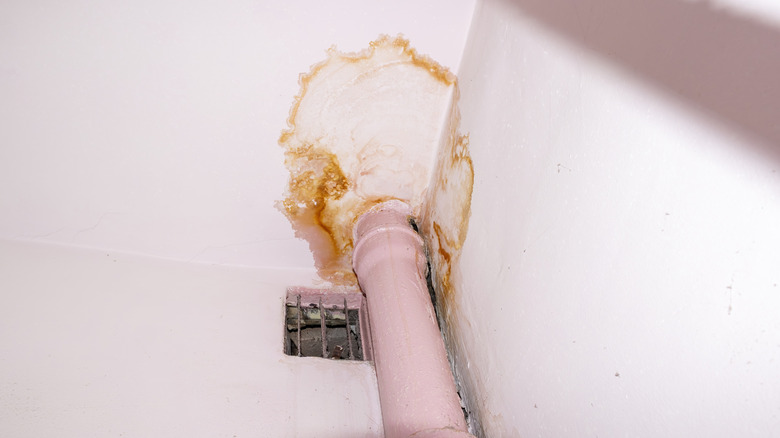
There are many reasons why water leaks in your home shouldn't be ignored, and mold is one of them. Common signs of a water leak include water spots in the form of brown stains on walls or ceilings, musty odors, peeling paint, and recurring mold or mildew. To test for a leak, turn off all water to the house, then go outside and check your water meter. If the meter spins, you have a leak. If the meter doesn't move but you still suspect a leak, check your roof and around windows or doors for possible water entry points.
If the recurrent mold is in the basement or bathroom, and you've determined there are no leaks present, high humidity might be the problem. You can purchase an inexpensive hygrometer from Amazon to check the humidity levels in the moldy room, which should ideally be between 30 and 50 percent. If the humidity is above 60 percent, it's likely to be the mold-causing culprit.
Running a dehumidifier will reduce excess moisture, as can ensuring proper ventilation in the room and practicing humidity-lowering habits, such as running the exhaust fan in the bathrooms when taking a shower. It's also important to note that keeping your home too warm could cause a major unwanted problem in the form of mold, especially if there's excess humidity in the air.
Clean up mold the right way
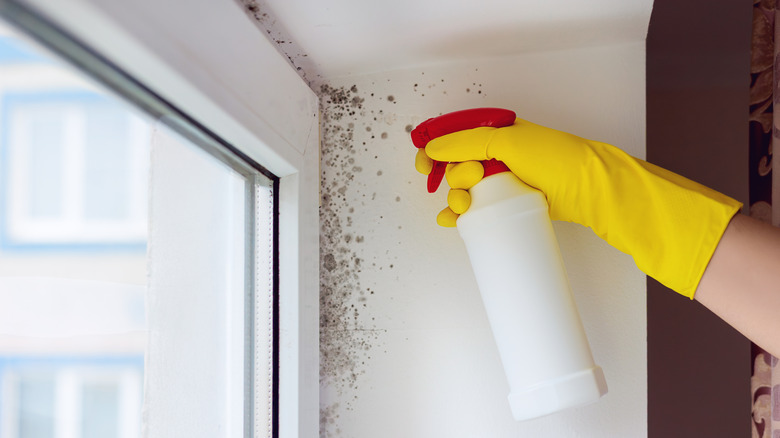
One of the best and easiest ways to clean mold is with white distilled vinegar, thanks to its high acidity that can break down and kill mold spores. Before you tackle this job, put on protective gear. Then fill a clean, empty spray bottle with white distilled vinegar, spray the moldy area, and allow it to sit for one hour. Use a scrub brush, or a bit of baking soda paste (baking soda mixed with water) to scrub mold off the surface. Rinse the area with warm water and dry it with a towel. Finally, lightly respray the vinegar onto the problem area and allow it to air dry.
Identifying moisture sources and ensuring a proper cleanup that kills mold spores can go a long way in getting rid of it for good. But in some cases, especially for large swatches that keep recurring even after your best efforts, it might be time to call in the professionals. A mold remediation company can assess the extent of the damage and develop a plan to address it so the mold doesn't continue to spread.