

What To Do If You Spot A Rattlesnake In Your Yard
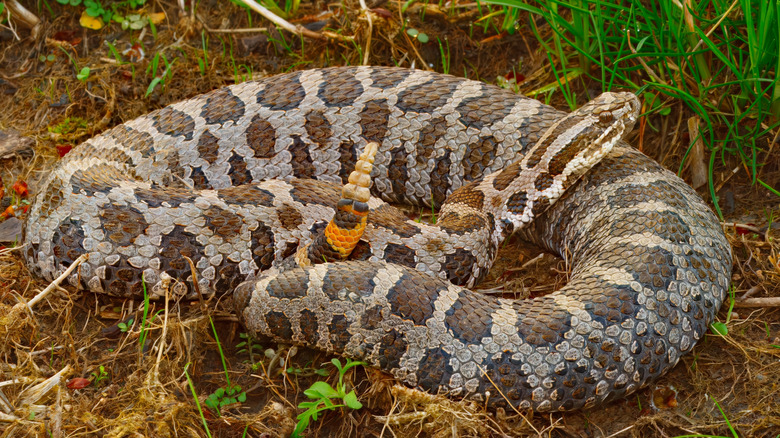
Around nine out of 10 snakes found in the U.S. are completely harmless. In fact, there are several of these scary garden pests you might want to keep around because they eat mice, termites, and the grubs and slugs that attack your lovingly tended vegetables. However, it's unlikely that many people would include rattlesnakes on that list. They are extremely venomous; a bite can kill you if you don't seek medical care promptly. Since they can be found pretty much everywhere except Alaska and Hawaii, knowing what to do if you spot a rattlesnake in your yard is vital. The best course of action is to leave them alone. They don't want to be around you any more than you do around them. If you must remove them for the safety of your family, do not try to do so yourself. Call a professional.
There are a number of simple but effective ways to deter snakes from your yard, but no tactic is foolproof. Rattlesnakes are shy by nature and would rather wriggle away than attack you. However, they will absolutely defend themselves if necessary. The rattle is their warning signal. If you encounter a rattlesnake or hear their rattle, don't make any sudden movements and back away slowly. Don't worry, the snake won't chase you. If you can do so without risk, snap a photo of the snake with your phone to help professionals identify it. Next, make sure pets and children are indoors, and then call your local animal control department or a professional humane snake removal service. You should never attempt to trap a rattlesnake yourself or try to kill it.
Reasons not to try to catch or kill a rattlesnake in your yard
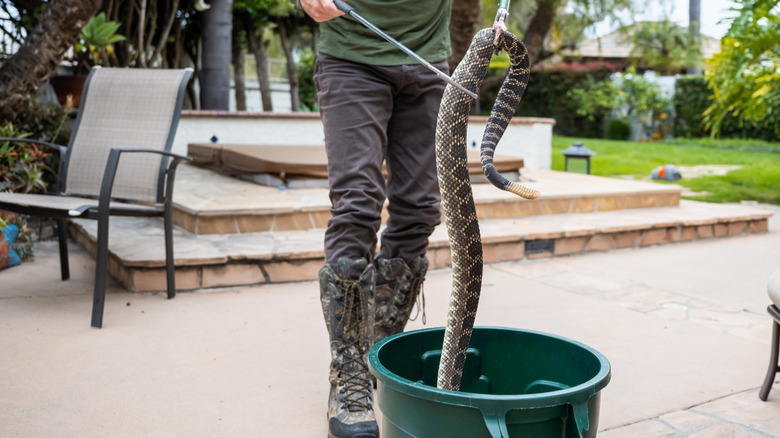
According to the Natural History Museum of Los Angeles County, you are more likely to die falling from a ladder or being struck by lightning than you are from getting bitten by a rattlesnake. Nevertheless, it's perfectly understandable that these are among the half-dozen snakes you do not want to see in your yard. When a rattlesnake strikes, it accelerates extremely quickly. If you're too close to the snake, it can hit you quite literally faster than you can blink. The minimum safe distance from a rattlesnake is 10 feet. You may see suggestions to try to trap the snake yourself in a large bag or bucket, but attempting to do so will invariably bring you within that dangerous strike range.
At least three of the more than 30 rattlesnake species in the U.S. are in decline and protected by law, making killing one a criminal offense. In addition, rattlesnakes are a vital part of their local ecosystems. They help control vermin populations and are an important food source for hawks, roadrunners, coyotes, and many other animals. Some services operate humane catch and release programs, whereby after securing and removing the rattlesnake from your property, they relocate it to a safer area. You can ask about a professional's process when you call them for help. Avoid sticky snake traps. They are cruel and indiscriminate — animals other than the rattlesnake you're trying to get rid of can get stuck on the glue.