

The Smart Tip That Makes Layering Patterns In Your Home Decor Easier Every Time
We may receive a commission on purchases made from links.
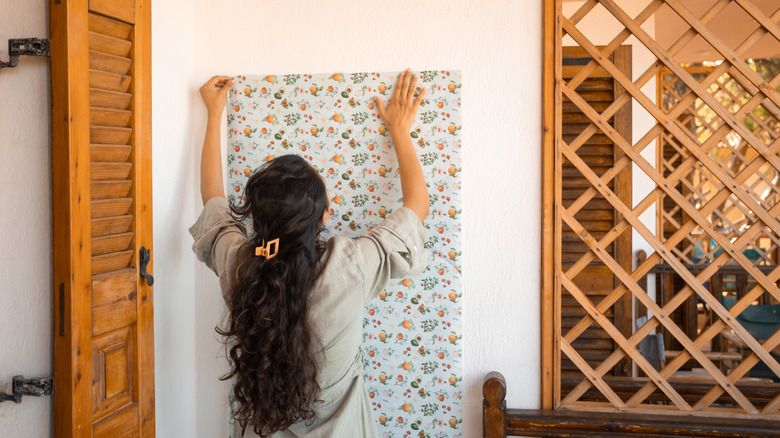
Does the idea of pattern drenching, the new modern twist on vintage, appeal to your quirky side? Think of the Mad Hatter's tea party in "Alice in Wonderland." There is, however, an art to mixing and matching patterns in interior décor. Done right, all those stripes, diagonals, polka dots, and blooming florals you plaster on your home's walls and furniture look magical. Done wrong, you're in for a dizzying visual experience — quite literally. The question is, how are you supposed to know which patterns will look stunning together and which will leave you feeling ill? There are a lot of approaches to solving this dilemma, but one of the easiest is to hold up patterned wallpaper — and even upholstery fabric — samples in the room you're decorating before investing in any other fixtures and finishes.
Big box retailers like Home Depot and Lowe's carry tons of wallpaper samples. There's usually a small charge for each sample, though it's typically around $5. Likewise, Amazon abounds with fabric swatches, like this Twopages Freya Series Jacquard Sheer Curtain Fabric Sample Book for about $7. Scour the individual patterns until you settle on a few that you like. Avoid the temptation to stop looking after you've found your favorite pattern. Instead, hunt around for patterns that are similar to, but not exactly the same as, your top choice. You never know what will work with your existing furniture, fixtures, walls, or floors until you see everything together. That's why you're getting samples in the first place: to play.
How to start the pattern sample comparison process
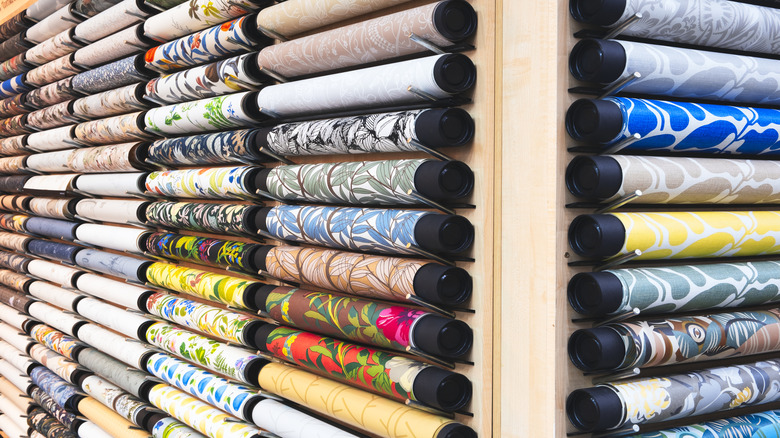
Before you start leafing through patterned wallpaper samples or upholstery fabric swatches in store or online, make an action plan. It'll help you narrow down key patterns and secondary options. Let's say you're leaning toward a big, bold pink-and-black-striped wallpaper for your living room. This would be a key pattern. Grab a sample of the hottest pink and deepest black version you can find. At the same time, select a bold striped pattern in just black or just pink — not both. Get, too, a trendy Old World wallpaper pattern, like black ticking stripes on a soft pink background. For the secondary patterns, pick up some pretty floral or complex paisley samples in a range of colors. Bundle them up to take home, where you can examine them in situ.
Hold your key samples up in the room you're decorating. Choose just one sample as the primary pattern — it will adorn your walls, possibly a large piece of furniture, like the couch, and perhaps some accessories, such as a floor rug. Now, hold the secondary samples up one at a time next to your primary pattern sample. You're looking for one or two samples that look good with both the primary pattern you've chosen and any existing furnishings and accents. Three patterns total is widely considered both a golden rule and a maximum. Play around with comparisons: Is there a more subtle pattern that would look good next to a big, bold one? Do you prefer a matching color scheme or similar patterns in different configurations? Finding some common ground among the different patterns helps to unify everything and prevents a visual riot.
Give your eyes a rest: contrast pattern with a lack of it
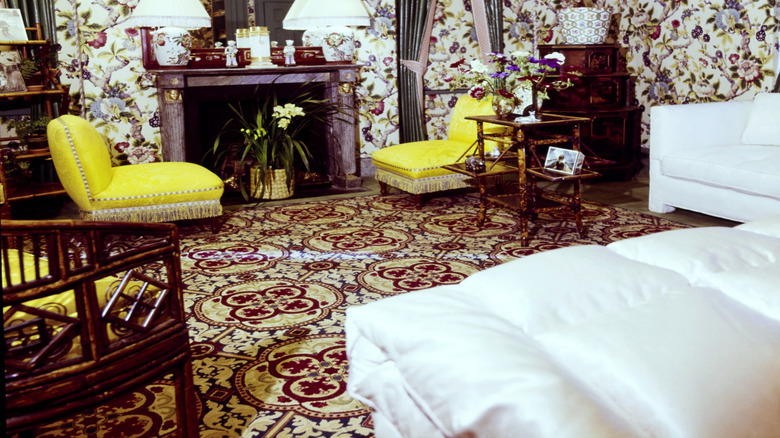
With your patterns selected, you can move onto matching them with patternless monochromatic hues. If you're trying to create a pattern-drenched aesthetic, selecting wallpaper or upholstery fabric samples with no patterns whatsoever may seem counter-intuitive. In fact, blocks of single color on furniture or accessories give the eyes a rest. Your peepers have someplace to sit, so to speak, after taking in all the patterns in the room. Choose a few dominant colors from among your chosen patterns to play with or focus the design around a predetermined color scheme.
If you really can't stand the thought of plain, flat color, look for single-hue wallpaper samples with embossing or texture. For example, ornate wooden chairs upholstered in a muted maroon velvet would fit beautifully in a dining room with dramatic chinoiserie wallpaper. Or consider how grasscloth- or linen-look Haimin Pink Textured Self-Adhesive Wallpaper might look on, say, a renovated sideboard next to the aforementioned hot pink and deep black striped walls. There are, however, a few things you need to know before putting up textured wallpaper. As much as it can hide imperfections on a wall and is typically more durable, it can also be harder to install and collects more dust.