

15 Indoor Plants You'll Rarely Have To Worry About Repotting
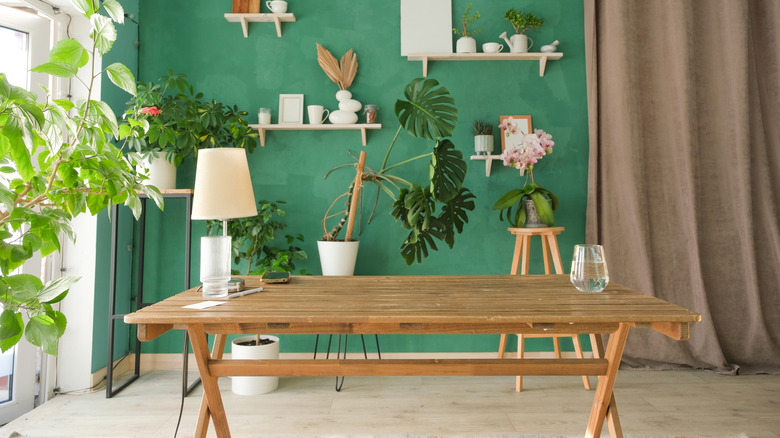
Houseplants can change the whole vibe of a room for the better. However, unlike other pieces of home décor, you can't leave them to their own devices once you arrange them on, say, a bookshelf. Instead, indoor plants require regular care and attention. The problem is, though, that between watering, fertilizing, pruning, and repotting, the responsibility of taking care of a houseplant ramps up fast. Repotting, in particular, can become overwhelming for even the most green-thumbed people. Tangled roots, dirty hands, soil everywhere ... The list of problems goes on and on. Having plants that you don't have to worry about repotting every year — or more often in some cases — can be a big relief. Examples of indoor plants that do just fine without regular repotting include dumb canes, snake plants, parlor palms, cast iron plants, panda plants, ZZ plants, and jade plants.
What's the best part about growing plants that are happy to stay put in their pots? Beyond the convenience of simply not having to repot, in certain cases, it's also beneficial for some houseplants. In fact, a root-bound plant can sometimes be positive. Take, for instance, the Christmas cactus or the wax plant, also known as a hoya. Both species often flower better when grown in snug conditions; they like being a little root-bound. You should only repot these specially adapted indoor plants when they show signs of severe stress. Check for stunted growth, yellowing leaves, and reduced new growth despite getting everything else right with their care. If these warning signs are not there, it is usually okay to let your houseplant sit tight in the pot it's acclimated to.
Dumb cane
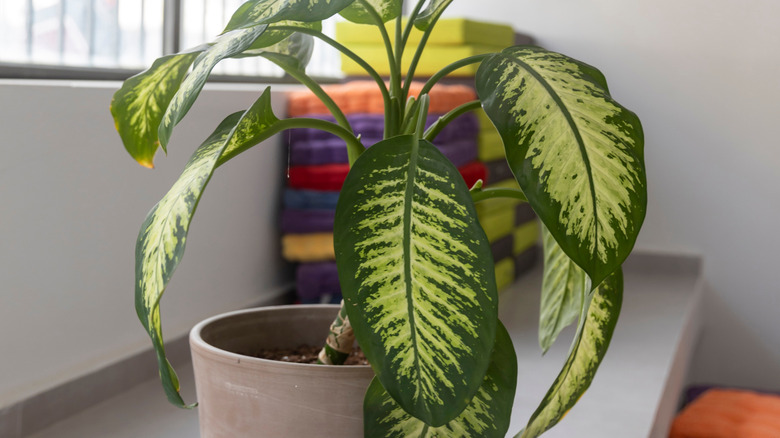
Dumb canes (Dieffenbachia spp.) are popular houseplants, admired for their easy-going nature and eye-catching patterned foliage. The best part? Indoors, they rarely develop diseases and perform particularly well in normal household temperatures. They like being a little pot-bound — you won't have to worry about repotting them until the roots have completely filled the pot and pushed out much of the soil. When repotting becomes necessary, do it in the spring. Keep in mind that dumb cane gets its name from its numbing and paralyzing sap. Choose a different houseplant if you have kids or pets.
Snake plant
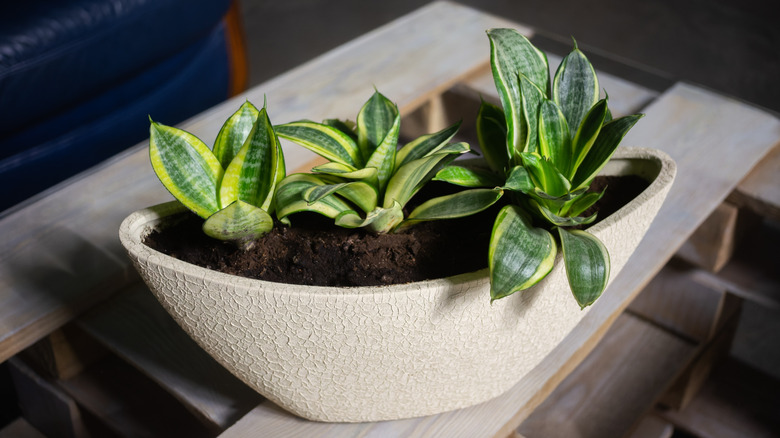
If you are looking for an indoor plant that anyone can grow, the snake plant (Sansevieria trifasciata) is probably the one you should go with. It is one of the most forgiving, low-maintenance, and beginner-friendly houseplants out there. Plus, it only grows 2 to 4 feet high and 1 to 2 feet wide, so it is perfect for people who want to add a plant to their home but have limited space. Importantly, when it comes to repotting, snake plants are slow growers and can survive for years — perhaps even a decade or more — without being repotted.
Parlor palm
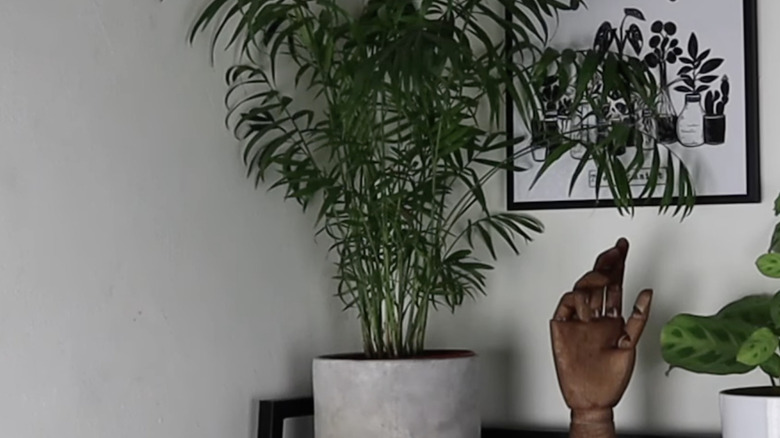
Not everyone is a fan of small indoor plants like a snake plant. Some people want something larger that makes a real visual impact. That's where the parlor palm (Chamaedorea elegans) comes in. It can grow up to 7 feet tall and 3 feet wide with good care. However, just because it's big, it doesn't mean it needs repotting often. Like all palms, parlor palms do best with confined roots. Plus, they don't handle the stress of repotting well. You should only repot them when the root ball completely outgrows the existing planter.
Cast iron plant
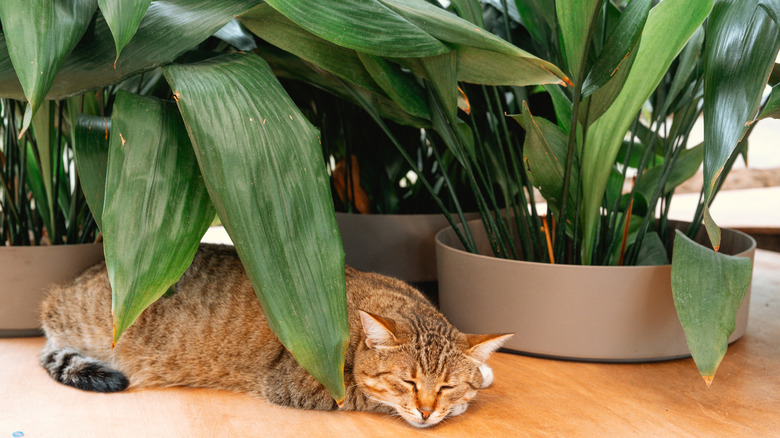
Cast iron plant (Aspidistra elatior) is another indestructible indoor plant. It's the perfect choice for people who don't know anything about gardening or plants. The plant is adored for its glossy deep-green leaves and its ability to grow even in deep shade. It also makes a wonderful addition to floral arrangements as the leaves last for up to a month in a vase. You can even find variegated cultivars at local nurseries and online. As for the repotting, it loves, not just likes, being root-bound. It will thrive in the same planter for five years or so.
Panda plant
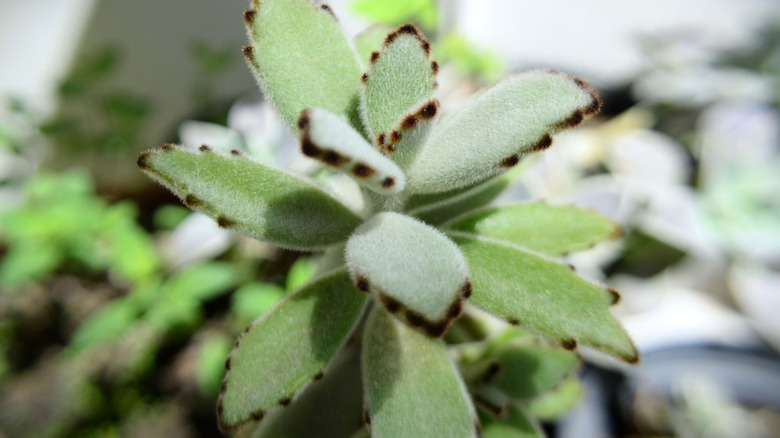
Teddy bear cactus, teddy bear cactus, and cocoon plant — the panda plant (Kalanchoe tomentosa) has plenty of cute names, and honestly, they are all well-deserved. People grow this succulent for its fuzzy leaves that look, arguably, like rabbit ears. The foliage even has black-brown marking along the edges. The best part? The panda plant is relatively easy to grow; it doesn't need much maintenance, including repotting. You only need to rehome it every few years or so to accommodate new growth. Even then, the pot should be just a tiny bit larger — succulents like it snug.
ZZ plant
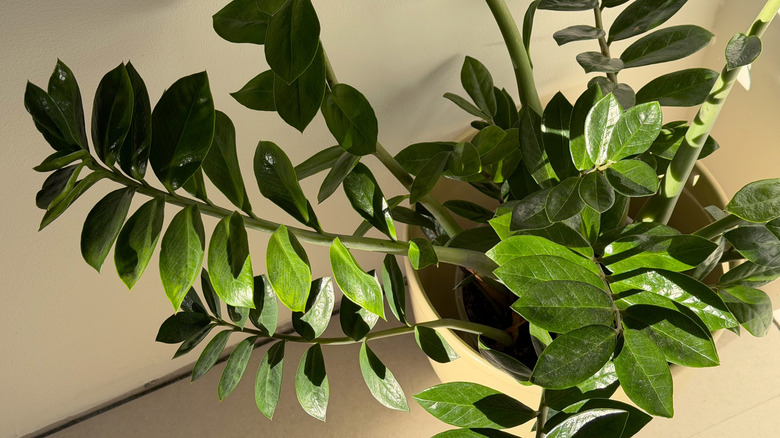
If you are looking for a tough plant to brighten your home in winter, consider a ZZ plant (Zamioculcas zamiifolia). It has few disease or insect problems and survives in low light. The plant is known for its unique leaves that are so shiny they could have been polished like your silverware. What makes it appealing for indoor gardeners who don't want to repot their plants often is that it grows slowly. A ZZ plant won't get taller than 4 feet. As such, you'll rarely need to repot your ZZ plant like a garden expert.
Jade plant
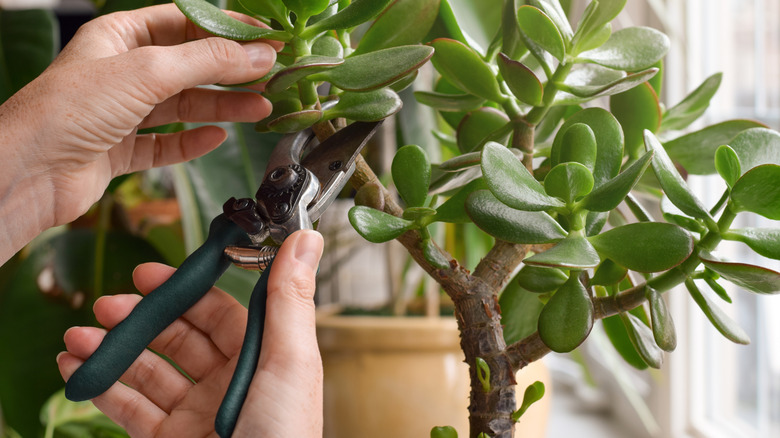
The jade plant (Crassula ovata) is another solid pick for this list. It grows comfortably in tight pots, and you don't have to think about repotting it for up to six years. In fact, even when it's root-bound, you can keep growing it in the same pot for several years before it needs another. However, what makes the jade plant really special is that it can live about 100 years when properly cared for. With its tough, easy-to-grow nature, caring for the jade plant should be pretty straightforward, even for those who tend to neglect their plants.
Christmas cactus
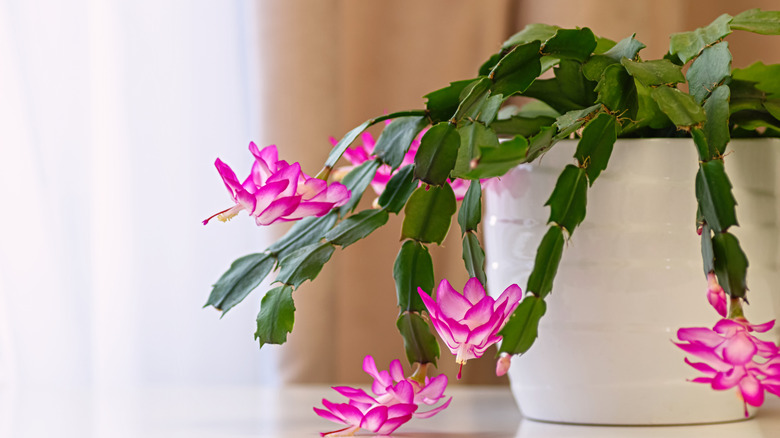
The Christmas cactus (Schlumbergera spp.) is a truly lovely houseplant. It is perfect for anyone looking for indoor plants that recreate the cozy Christmas look year-round. Its flowers come in pink, yellow, orange, red, or purple, bringing a pop of color to even the dullest indoor spaces. The Christmas cactus actually grows best when it is pot-bound. If you upgrade its container too often, it may stop flowering. Repot this houseplant only once every three years or so, when the nutrients in the soil are depleted.
Wax plant
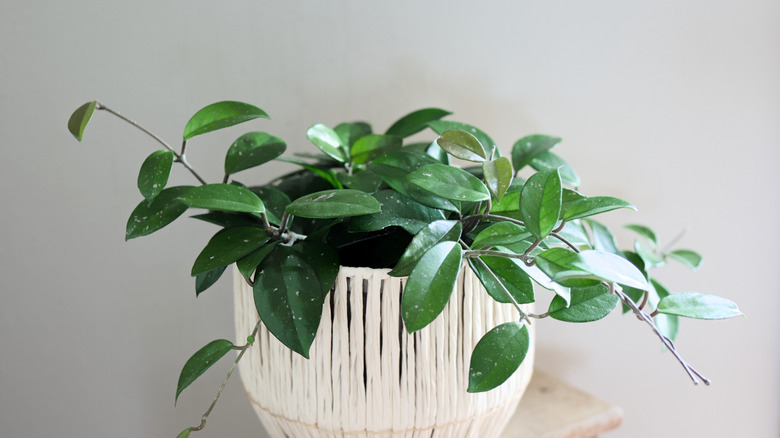
With its scented blooms, waxy foliage, and easy-going personality, the wax plant (Hoya carnosa) is a recent favorite of houseplant collectors. The plant suits busy people perfectly — especially those who love indoor plants but do not want to deal with repotting them. You can keep a wax plant in the same pots for several years. They hate having their roots disturbed, so you should only repot your plant when it is absolutely necessary for health. Even then, ensure that the new pot is no more than 2 inches larger than the current one.
Blue star fern
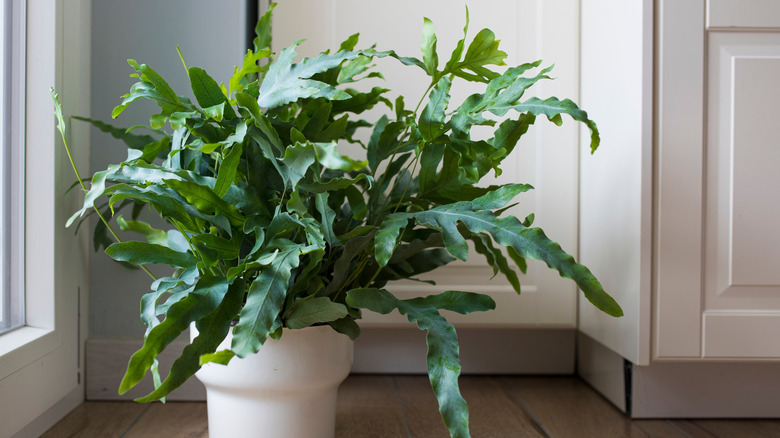
If you're looking for an indoor plant with tropical vibes that does not need to be repotted frequently, blue star fern (Phlebodium aureum) is an ideal choice. The plant has bluish-green fronds with wavy lobes that can grow up to 50 inches in length. You only need to repot it when it looks stressed in spite of proper care or when its rhizomes look overly crowded. Even though the blue star fern is forgiving about repotting, it won't tolerate dry conditions. You must keep its soil moist.
Rex begonia
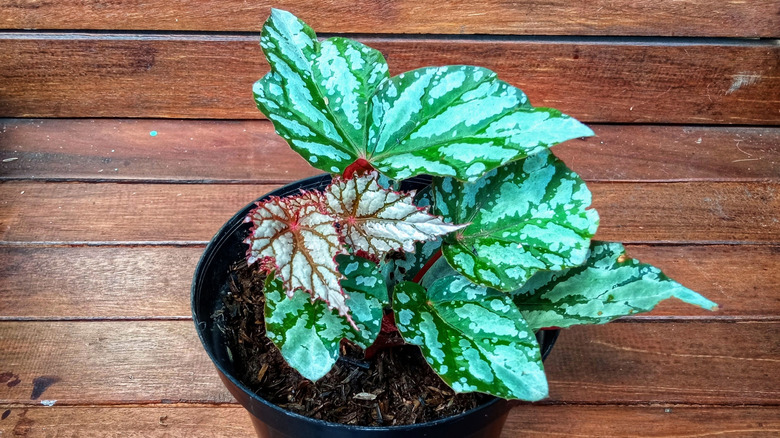
Rex begonias (Begonia rex-cultorum) hold a special place among easy-to-grow begonias for your home. Why? Because of their showy foliage with bold patterns and punchy colors. You can grow them from seed and leaf cuttings, as long as you give them the moist conditions they crave. If humidity levels drop below 75 percent, a rex begonia will decline fast. Repotting, however, is one thing they rarely demand. They like being slightly root-bound and only need to be repotted every two or three years or when they grow too big for their existing planter.
Devil's ivy
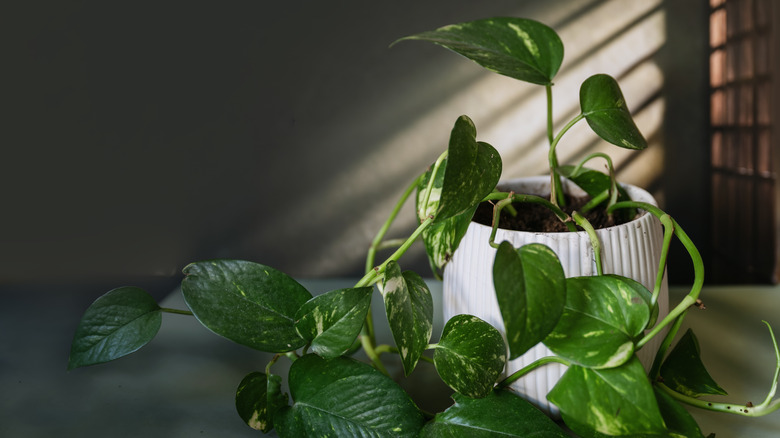
Devil's ivy or golden pothos (Epipremnum aureum) is another beginner-friendly indoor plant you rarely have to repot. In fact, it will do just fine in the same container for three to six years. However, the real charm of this houseplant lies in its stunning foliage. Devil's ivy has glossy, heart-shaped leaves and a trailing growth habit that looks beautiful in any indoor space. This vine is easy to grow and can survive for long periods in low-light conditions. If you have a variegated variety, the leaves may turn entirely green if the plant doesn't get much light.
Chinese money plant
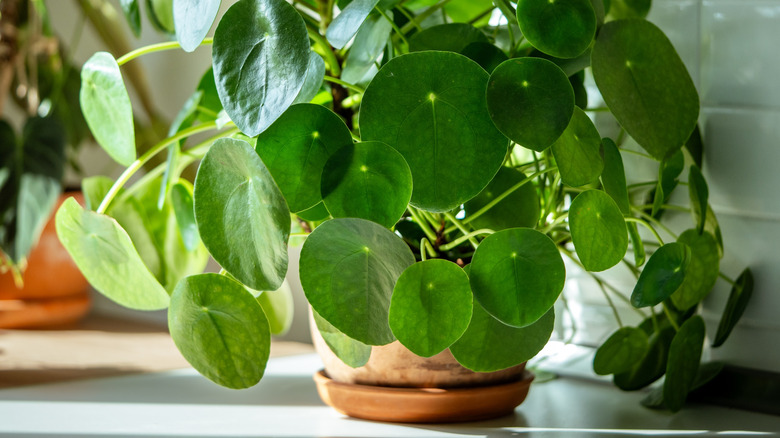
If you use Instagram, chances are you have seen a Chinese money plant (Pilea peperomioides). The plant is a social media star and for good reason. It has polished, round leaves that are float daintily above its pot, giving the plant a rather unique look. Another plus? The Chinese money plant is relatively easy to take care of — in particular, it doesn't require repotting every year. Instead, aim for every two years. In fact, Chinese money plants prefer being slightly root-bound, so don't pop them into an overly deep pot.
Candelabra cactus
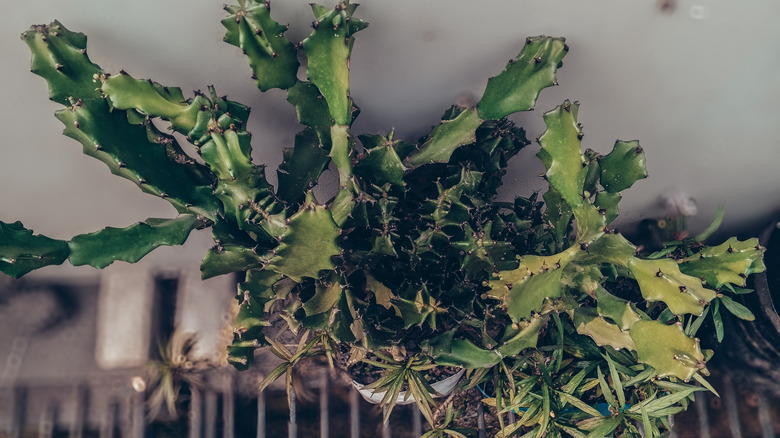
The candelabra cactus (Euphorbia lactea) is a perfect plant for homeowners looking for quirky greenery. It produces tiny leaves in summer, but they fall quickly as the weather cools, leaving the plant leafless and odd-looking for the rest of the year. The candelabra cactus looks more like a piece of coral than a houseplant! Bear in mind that the candelabra cactus is toxic: Its sap can cause skin burns, blisters, and rashes. Wear gloves when repotting this plant — every three to four years, and even then, only when it is necessary for good health.
Spider plant
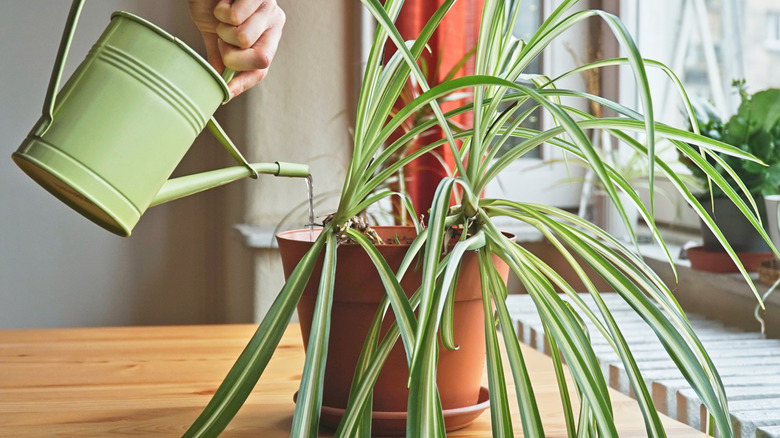
Last but not least, we have the ever-popular spider plant (Chlorophytum comosum). It's one of the most familiar houseplants, and remains a favorite among beginner indoor gardeners. This gangly plant is easy to grow; it requires very little attention. And yes, that relaxed attitude extends to repotting. Spider plants grow best and produce the most plantlets when they're slightly crowded in their pots. You need to repot — and divide — your plant once every two or three years. There are quite a few cultivars to choose from, including variegated plants. There's even a spider plant with curly leaves!