

Clear Signs It's Time To Repot Your Parlor Palm Plant
We may receive a commission on purchases made from links.
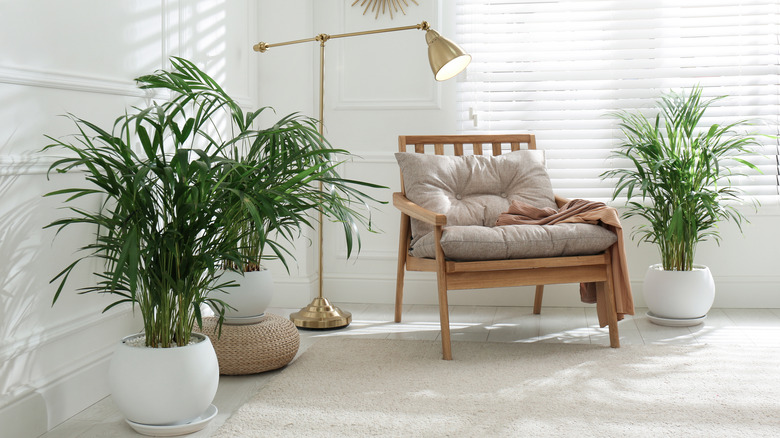
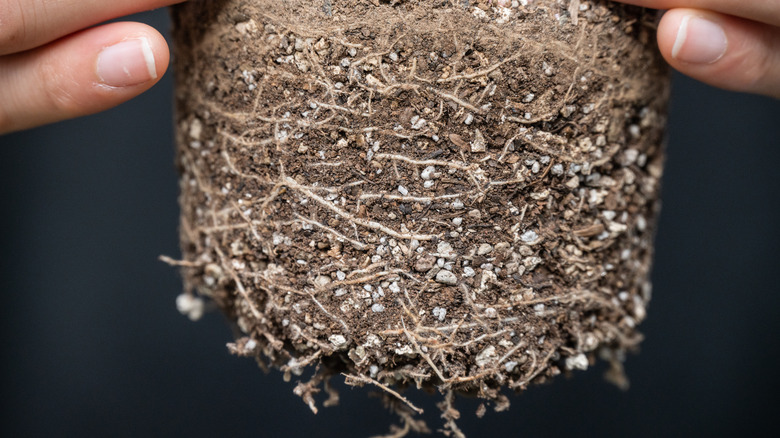
The name "parlor palm" is so elegant, isn't it? It conjures up images of exotic tropical plants flanking a tufted feinting couch where one might enjoy some tea and a book. For those of us living in a home without a devoted parlor, we can still enjoy this gorgeous greenery. Parlor palms (Chamaedorea elegans) are native to warm, humid rainforests in Mexico and Central America, so they are mainly suitable as houseplants, meaning you'll need to ensure their planter is the right size. As a master gardener who's obsessed with houseplants, I know what signs to look for when it's time for a parlor palm to be repotted. Like repotting a spider plant, if you see roots coming out of the drainage holes, it's time for a new container. And if you notice that new growth looks stunted, or if there is a lack of new fronds during spring and summer, check those roots to see if it's time to pot it up. Other reasons to repot parlor palms would include signs of soggy soil or mineral build-up on the surface.
In spite of their fancy appearance, parlor palms are actually quite hardy and fairly slow-growing, so you should only need to repot them every two to three years, depending on the environment they're growing in. If they are in bright, indirect light, they will grow more quickly and need repotting more frequently than in lower light conditions or if they're stressed (like by naughty felines chomping at their leaves). Unfortunately, my cats are particularly fond of them, too, so the lowest leaves are always a bit scraggly — a small price to pay for a plant that's safe to have around pets.
Repotting parlor palms: How to know if the time is right
With at least six hours of indirect sun daily and around 40% humidity, parlor palms can grow up to 6 feet tall indoors. Typically, the plants you will find at your local garden center or nursery are about 3 feet tall, so they're mature, but they still have time and room to grow. In fact, a parlor palm can live for decades! During that time, it'll need repotting to allow room for growth and ensure the plant is gets the nutrients it needs.
When grown as houseplants in most regions, these tropicals can go into a state of semidormancy. This means their growth slows during the cooler, shorter days of late fall through winter. They should break that dormancy in spring, producing healthy new growth. If that isn't happening, check the drainage holes of your pot to see if the roots are looking for room to expand. You may also notice yellowing or browning on the tips of existing fronds. This happens when the plant is too root-bound to absorb water and nutrients, and a larger pot will be needed.
Because parlor palms do not require frequent repotting, there may be other reasons to repot them. If you notice you have accidentally overwatered or there is a lack of drainage in the planter, repot your plant to avoid dealing with root rot. If you notice mold, fungus gnats, or mineral buildup on the soil's surface, your parlor palm will benefit from a clean, sanitized planter and fresh soil.
How to repot your parlor palm for a long, happy life
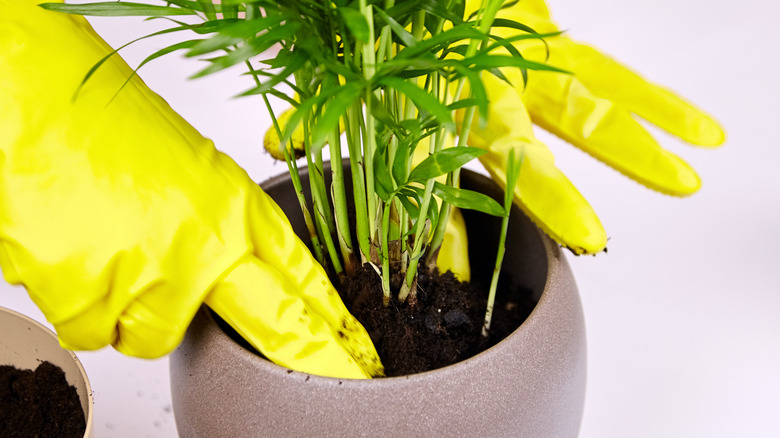
Because spring and summer are the parlor palm's active growing seasons, this is the best time to repot it. However, if the plant needs to be repotted due to soil issues, it's better to do it any time of year than to wait until it's too late. If it's time to give your plant's roots more room, select a pot that's just one size up. This standard planting rule keeps houseplants from diverting energy from growing fresh foliage to producing more roots. So, if your parlor palm is in an 8-inch planter now, move up to a 10-inch pot. And always buy the right planter by selecting one with several drainage holes. If you are repotting due to soil issues, inspect the roots, remove any black or soggy pieces, and rinse off the old soil before repotting.
As tropical plants, parlor palms like rich, loamy soil that drains well. The roots need consistent moisture to avoid browning at the tips, so a peat- or coco coir-based planting medium is perfect. You can use blends developed for tropical plants or even a specialty option like Soil Sunrise All Purpose Palm Tree Potting Mix from Walmart. Put enough soil in the bottom of the planter so the top of the root ball is even with the soil line about 1 inch below the edge of the pot. Gently cover the roots and tamp down the soil so it's firm but not solid. Water your parlor palm thoroughly — until water runs out of the drainage holes to completely hydrate the soil. Place your freshly planted beauty in a spot free of drafts with good light to give it the best conditions to grow and thrive.