

Use This Fertilizer In Your Garden Beds To Give Spring Bulbs A Growth Boost
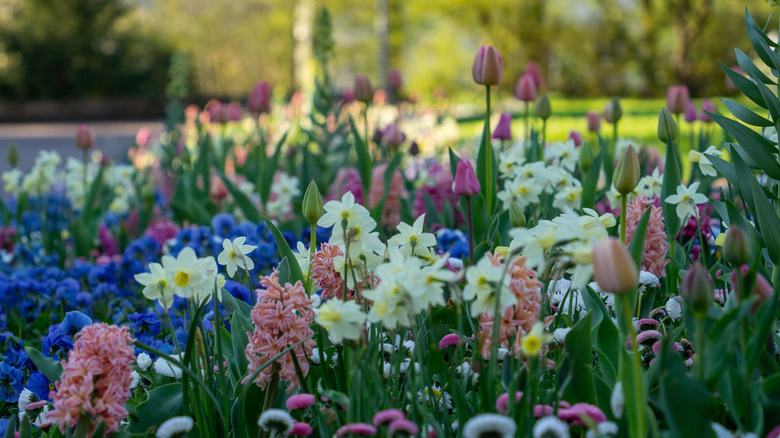
If your flower bulbs are already in the ground (and they should be), you may think your work is done until spring. But it's still possible to nourish those bulbs between now and early spring to give them fuller growth when they emerge. Healthier plants can gather the sun's energy more efficiently and send it back to their bulbs so they can offer continued pleasure in subsequent years. The bigger the flowers and leaves, the more sunshine absorbed, and the bigger bulbs by fall. If you've accumulated wood ash in your fireplace, you can disperse that ash any time in the winter where you've planted bulbs. As the ground thaws closer to springtime, the ash will work its way into the soil to the plants' roots and fertilize your bulbs when they start growing. This way, you're avoiding one of the gardening mistakes many people make with their bulbs, fertilizing when you plant them instead of when they need the food.
The reason fertilizing plants is among the many uses for wood ash is that you've essentially burned the carbon, hydrogen, and oxygen gasses out of the wood and left behind the solid minerals that plants need, especially potassium, magnesium, phosphorus, and calcium. Potassium and magnesium are important for photosynthesis and other processes, phosphorus is important for flower development, and calcium stimulates root growth. While wood ash isn't a complete diet of nutrients that your spring bulbs need, it's a good start to boost growth.
Steps to fertilizing your spring bulbs with wood ash
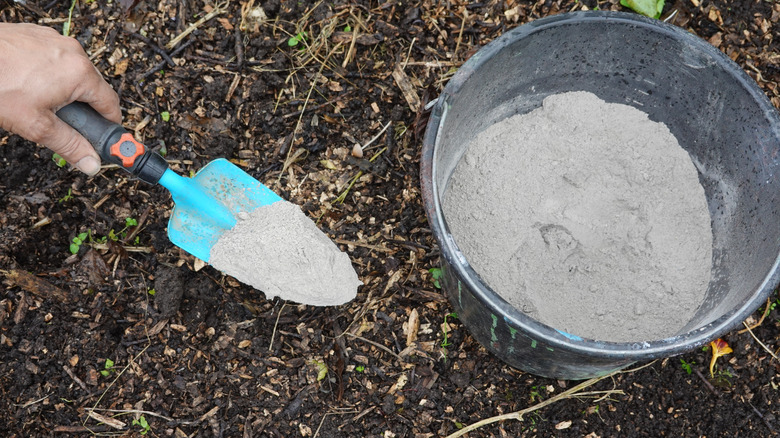
Before you start collecting wood ash from your fireplace or fire pit, make sure you haven't burned any pressure-treated wood, which can be a health risk and certainly not something you want to add to your soil. You will also want to test your soil's pH levels to make sure it needs wood ash. Too much phosphorus can lead to poor soil health, while calcium, one of the most abundant elements in wood ash, neutralizes acids, as anyone who has taken a chalky antacid might know. "Sweetening" the soil by adding calcium can be useful if your soil is too acidic, but spring bulbs such as daffodils, tulips, and hyacinths prefer soil that is neutral to mildly acidic, from 6 to 7 on the pH scale (where 7 is neutral and anything higher is a base, not an acid). Most garden soils already contain adequate amounts of calcium, so adding too much can have a negative effect on your bulbs.
Once you know that you won't contaminate your soil with pressure-treated wood and that the soil will actually benefit from wood ash, put on some safety gear, like gloves, long sleeves, eye protection, and a breathing mask, as wood ash can be caustic. Collect your fireplace ash once it has cooled, remove large pieces of charcoal, and then sprinkle moderate amounts on your soil in the places where you've planted bulbs. Water the ash lightly to make sure it doesn't blow away and wait for spring to see its magic work.