

What To Do If Your Favorite Cookware Gets Recalled
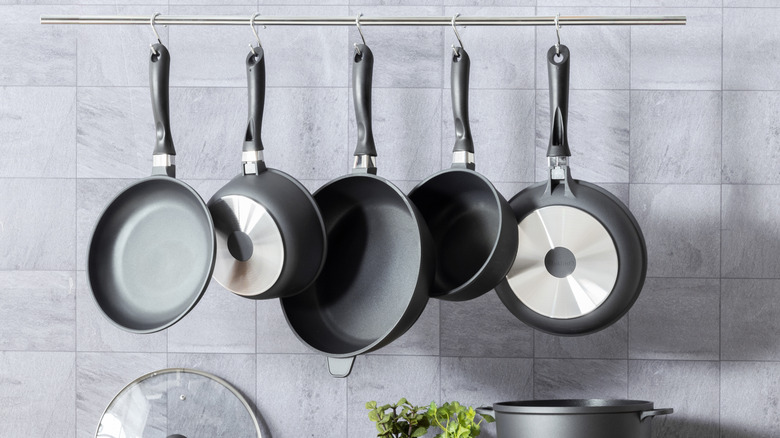
You may have hundreds of products in your home, but it takes only one recall to stop you in your tracks. If your favorite cookware gets recalled, then you are to stop using it immediately and follow any other instructions from the manufacturer, such as throwing it out or returning it to the store. Continued use could lead to bodily harm, adverse health effects, or death, depending on the circumstances. For instance, some recent recalls include pots leaching lead, screws or washers popping off from pan handles and into food, and glass lids shattering. Because of this, recalled products are things you should never donate to a thrift store either.
Companies issue recalls when their products violate U.S. manufacturing or labeling laws, have a defect, or pose a safety risk to consumers. Sometimes the Food and Drug Administration (FDA) or the Consumer Product Safety Commission (CPSC) orders recalls. Other times, the manufacturer may issue a voluntary recall after an internal investigation or when prompted by consumer complaints regarding their product. Large or particularly worrisome recalls are oftentimes mentioned in the news, but you can also periodically check the CPSC or FDA websites.
If you read about a recall of your favorite kitchenware, you should look into the specific details. Sometimes a recall is only for models sold within a certain date period, or those bought at certain stores within a region. The notice might also apply to a specific model, such as a cookware set versus a single pan. One example is the 2015 recall of the Martha Stewart Collection 10-piece Stainless Steel Cookware Set, in which only the set's two frying pans were part of the recall. Before completely tossing out your cookware, double-check the affected model numbers to determine if you need to, because your product may be outside the recall notice. In case it isn't, move on to the next steps.
Check for manufacturer refund options

After you determine that, yes, your cookware is officially recalled, you should check for refunds, repair offers, or the ability to switch for a replacement part to fix the issue. In many cases, the recall notice will give consumers further directions, including submitting proof of purchase or a photo of the product. They might also direct consumers to return the item to the store for a full refund, as Macy's customers could do with the Martha Stewart brand stainless steel frying pans in 2015.
Refunds are not always guaranteed, but they are a common customer remedy often offered by larger brands and retailers, as shown by past offers from Le Creuset, Macy's, and H-E-B. The CPSC also notes that recalls don't have a specific deadline; customers who learn of the notice much later should still stop using the product and contact the manufacturer or retailer at the number listed.
Some recalls begin with imported products, which can make it harder to get further information beyond ceasing product use immediately. For example, the 2025 recall of various imported cookware containing heavy amounts of lead was expanded over the course of a few months. Here, the FDA noted that distributor information wasn't available. With these products, consumers can only throw them away and replace them with reliable brands.