

8 Practices To Avoid When Removing Rusty Bolts
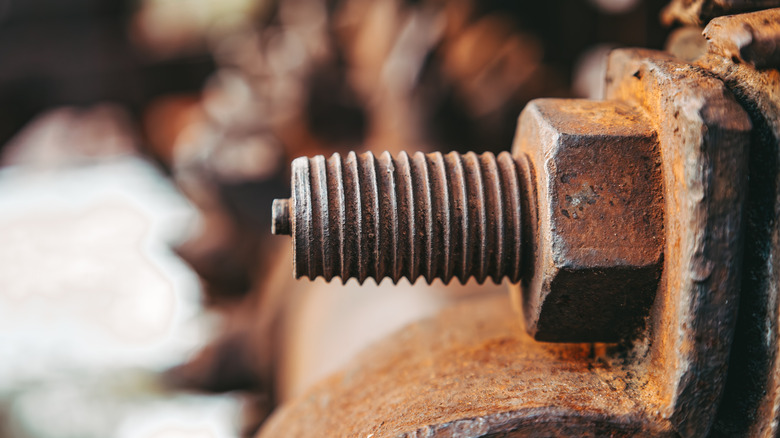
Few things can slow down your next home project like a rusty bolt. Think about it — one second you're progressing through the steps, the end just in sight. The next, you're left scratching your head and trying to figure out the best solution to get your project back into motion. Whether you're trying to unclog your sink pipes or repair a piece of patio furniture, you'll want to be sure you have all the necessary information before encountering this home improvement nuisance.
Bolts can rust as a result of being left unprotected against their environment, specifically any moisture and even oxygen. On the surface, a rusty bolt is just a mild inconvenience, something tedious and time-consuming to remove. However, depending on the severity, as well as the importance of that one bolt, it could lead to bigger problems, like structural failure.
However, just as there are steps to take when removing stubborn, rusted bolts, there are also practices to avoid. This can include everything from forgetting your protective gear, to even more dangerous errors like using heat near unsafe surfaces. To avoid having unexpected problems crop up during your projects, take heed of these potential pitfalls when it comes to handling rusted bolts.
Skipping out on personal protective equipment
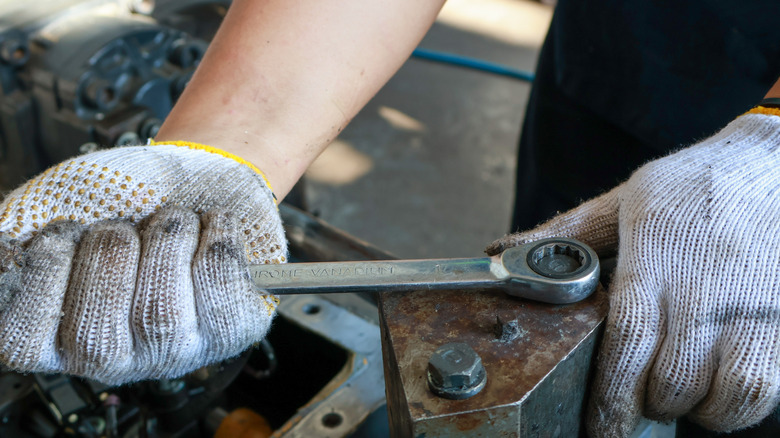
This isn't just a practice to avoid when removing a rusted bolt: it's a practice to avoid any time you do a project around your home. Personal protective equipment is the bread and butter of DIY safety, and even when you're handling something as seemingly minor as a rusty bolt, you'll want to remember your safety glasses and protective gloves. Glasses will protect you from any metal flakes that may fly up during the removal process, while gloves protect you from minor nicks and cuts that you wouldn't want to expose to rust.
Using penetrating oil incorrectly
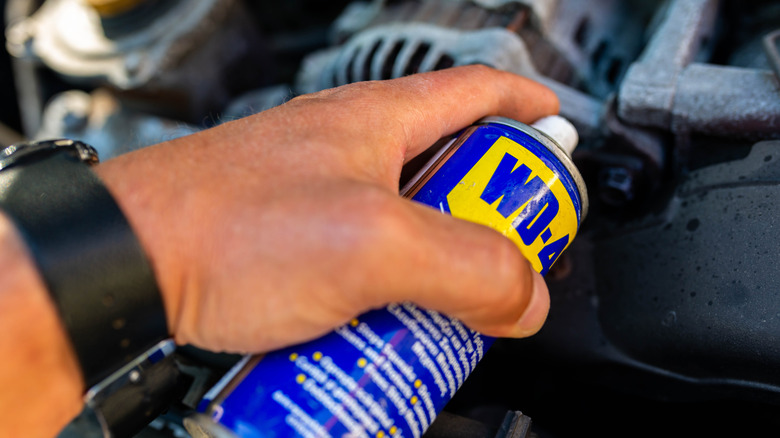
Penetrating oil, also known as a liquid thread-loosener, can help target the bond formed by the rust and your bolt. However, to get the most out of this handy tool, it's important to use it correctly. This means giving it ample time to sit and sink into the threads of your bolt. Otherwise, it may not have enough active time to truly impact the rust causing your stuck bolt, causing you to need more elbow grease during the removal process. Always refer to the included manufacturer's instructions for the best results.
Applying heat to or near unsafe surfaces
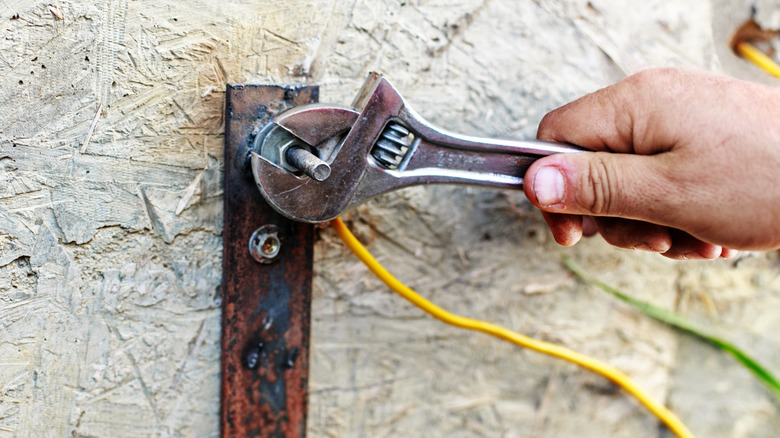
When metal heats up, it expands. As a result, if your rusted bolt isn't budging, using heat can give you more wiggle room, as well as begin to loosen the rust bond that's keeping the bolt in place. However, this option isn't always safe. Heat should only be applied to heat-safe surfaces, which means that if your rusted bolt is near anything plastic or any wiring, or if it's a part of an appliance, then you'll likely want to skip this method.
Forgetting that cold can be helpful
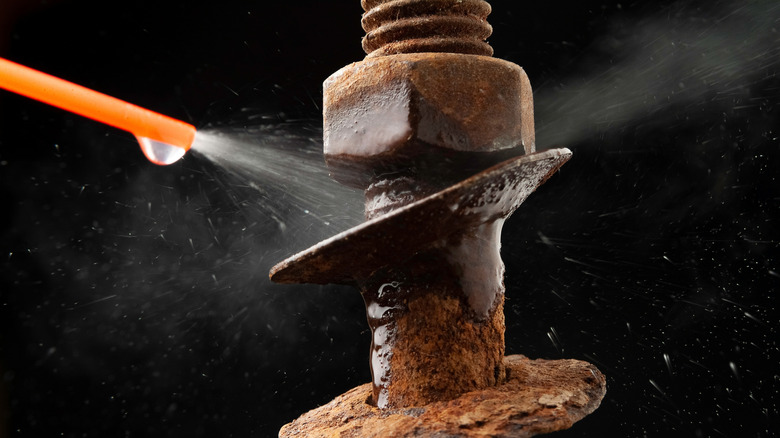
When trying to remove a rusted bolt, don't forget about alternative methods available for you — like swapping your heat source for cold. Some penetrating oils are designed to lower the temperature of the metal rapidly. While cold doesn't cause metal to expand the same way heat does, this quick fluctuation in temperature can help loosen those rusty bolts, making for an easier removal with less work on your end.
Starting off with too much force
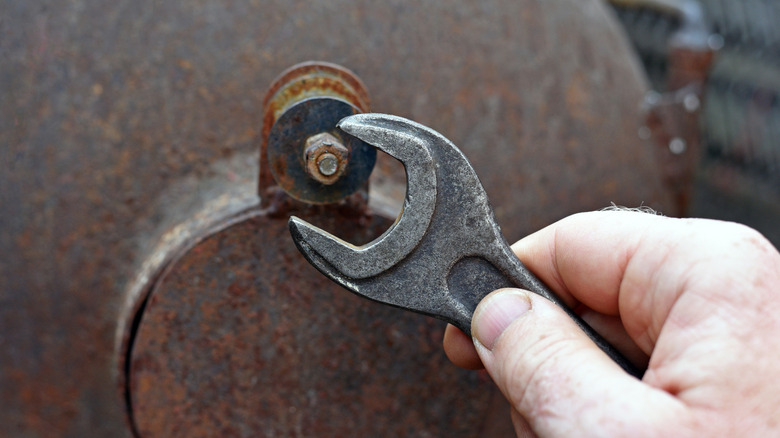
When you're dealing with a particularly stubborn rusty bolt, applying as much force as possible from the get-go can seem like a good strategy for getting things moving. However, this practice is actually counterproductive. If too much force is applied too quickly, including the immediate use of power tools, it can damage the bolt, making the removal process even more complicated. As a result, start by tapping the bolt and slowly increase turning pressure and force for a successful removal.
Using the wrong tools for the job
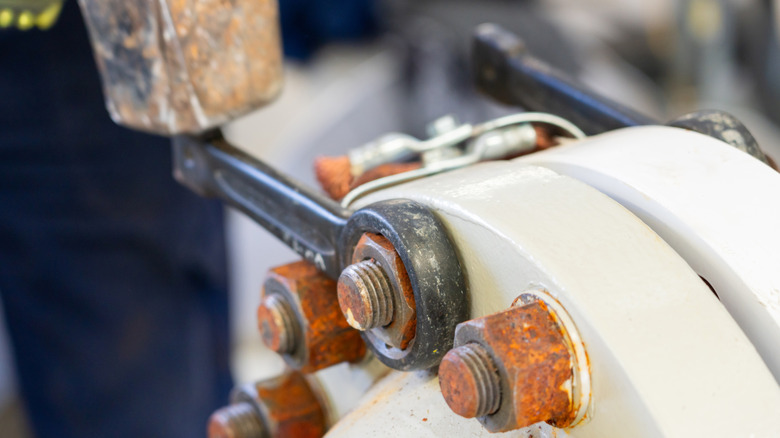
iWhen dealing with a rusted bolt, be wary of is using the wrong tools overall. During this process, you'll want to have the right grip and the ability to provide the needed force. As a result, avoid any tools that tend to slip or have the potential to further damage your bolt. It's also important to avoid choosing a tool that isn't sized specifically to your bolt. Bolt extractors are one tool kit essential that can help remove rusting bolts.
Not inspecting the bolt beforehand
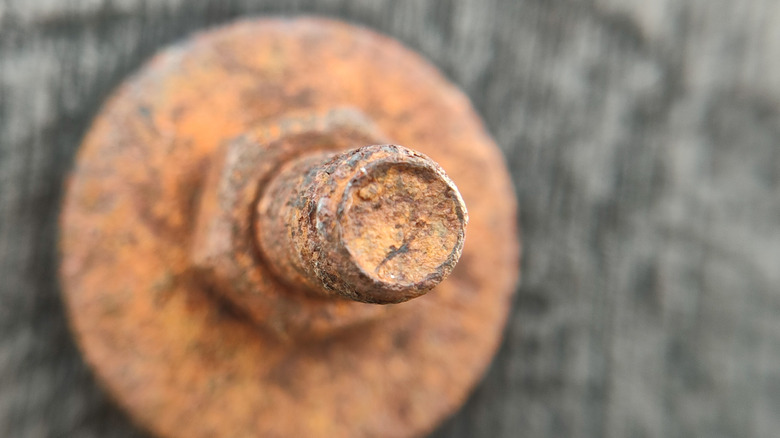
Before you ever take a tool to that rusted bolt, you'll need to inspect it first. This can give you a better idea of the bolt's current state, as well as what tools will be most useful. In severe cases of rust or corrosion, the integrity of the bolt itself may be compromised. As a result, when you go to unscrew it, the entire bolt could break. This can create an entirely new challenge within itself, as you're faced with removing a bolt that is now both rusted and broken.
Jumping into removal without cleaning first
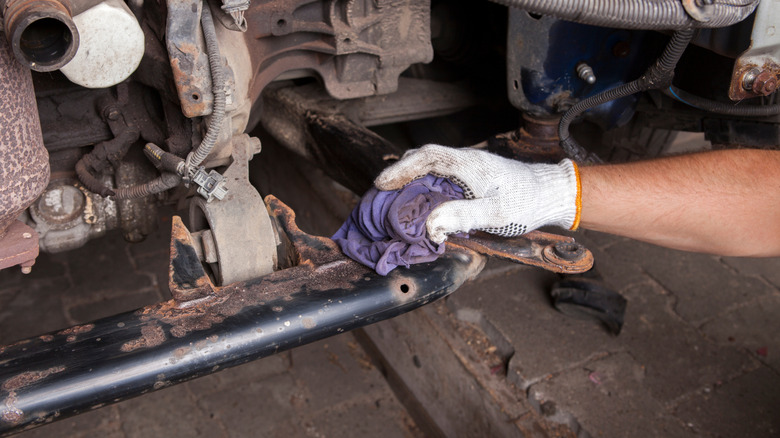
If rust is holding you up, a little bit of cleanup can go a long way. While removing the rust on the surface of a bolt may not be enough to completely loosen it, especially in severe cases, it can be a helpful technique. A wire brush can aid in cleaning, and you can also make removing rusty bolts easier with kitchen essentials like club soda. Just make sure to keep surrounding surfaces in mind to avoid damaging them with your cleaning agent of choice.