

How To Spot Natural Fabrics In The Thrift Store Like A Pro
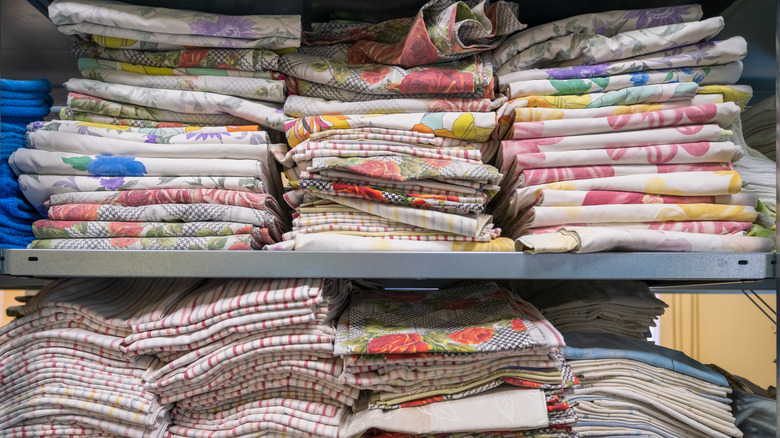
The secret's out: The thrift store is the place to find vintage home textiles, like tablecloths, napkins, and curtains, and you can even thrift unique bedding. But anyone who has stood at the edge of the thrift store's textile section knows trying to sort through the racks to find those made with natural fabrics — like cotton, linen, or wool — is overwhelming, to say the least. Don't let the racks get you down; with a few easy tests, you can easily spot natural fabrics at the thrift store, even if they don't have a care tag. There are four different tests you can use to pick out natural fabrics from a sea of synthetics. Even better, three of the methods you can try right in the thrift store. The crush and heat tests both involve gripping the fabric in your hand, the water test involves wetting the fabric to see how quickly the moisture disappears, and the burn test entails lighting a piece of fabric.
Natural fabrics are seeing a surge in popularity recently, and for good reason: They're sustainable, permeable, and made to last. Plus, they are some of our favorite materials to give your home the perfect cozy look and feel. These fabrics tend to have a stiff, almost dry feel to them, but if you aren't familiar with them, sniffing these fabrics out among racks and racks of blankets, quilts, and more by touch alone isn't easy. But, thankfully, touch and care tags aren't the only ways to spot cotton, linen, and wool.
Three ways to check for natural fabrics right in the thrift store

Whether you're looking to make a decorative curtain with linen, which is the vintage thrift store item that's on trend for 2026, or to pick up a new-to-you throw for the couch, try the simple crush test. Gather a handful of the fabric, squeeze until the fabric heats in your grip (around five to 10 seconds), then release. Natural fabrics like cotton or linen will have medium to deep wrinkles, while, thanks to their plastic fibers, synthetic materials will only have a few.
The heat test is similar to the crush test, except you hold onto the fabric for around 30 seconds. This time, pay attention to how the material feels in your hand. Natural textiles will warm to feel comfortable, almost invisible, against your palm. Synthetics, on the other hand, may make your hand feel sweaty and you will feel more aware of the fabric. They also take longer to warm in your hand.
If you can't get a handful of the fabric or don't want to risk crumpling it, try the water test. Synthetic fibers easily repel water (take your favorite workout leggings as an example) while natural fibers soak it up. To do the test, dribble a little water — a few drops at most — on an inconspicuous corner of the fabric. If the water disappears quickly, the material is likely made of natural fibers.
Still not sure if your fabric is natural? Try the burn test
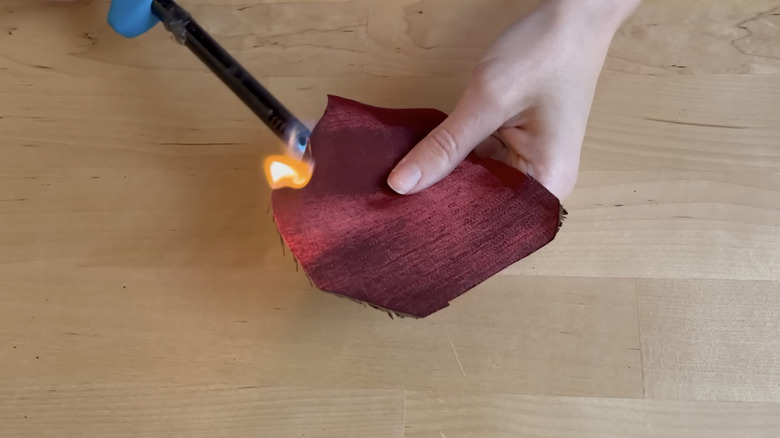
While the burn test — lighting a piece of the fabric on fire to see how it behaves — is considered the easiest method at uncovering your fabric's true nature, it's also not one you can do in the store. Once you get home, clip a small piece of fabric from a hidden corner, then gather everything else you'll need: tweezers or a small pair of metal tongs, a lighter, a heat-safe plate or tray, and a bowl of water. Make sure to do this test in a fire-safe place, like your backyard patio, for an extra safety measure.
Put the fabric in the tongs and hold over your lighter's flame until it catches. Pay attention to how easily the material catches fire and how it acts as it burns. The odor and remaining sediment (ash or otherwise) are also key indicators. Natural fibers will ignite and burn easily, giving off a burning hair or paper odor. The resulting ash will be soft and fluffy. Synthetics tend to melt away from the flame at a slower rate instead of igniting, emitting chemical or acidic scents. Most synthetic materials will leave behind a solid, hardened ball instead of ash, with the exception of Spandex, which leaves behind a gluey residue.