

How To Care For Your Lawn After Removing Your Old Tree Stump
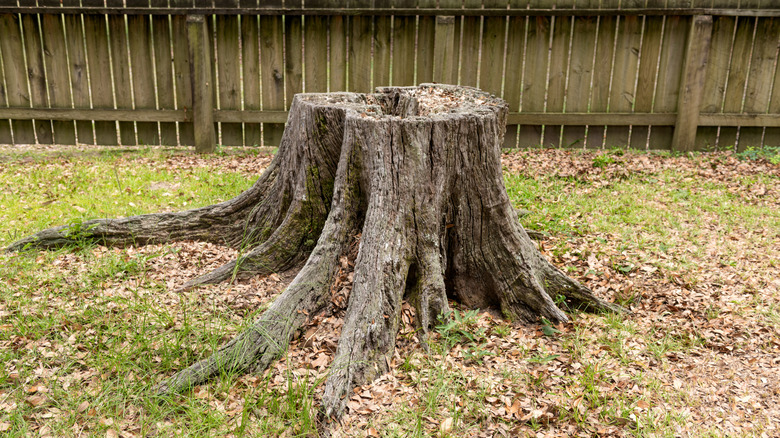
You might find yourself with an unexpected or unsightly old tree stump on your lawn for any number of reasons. Whether a storm knocked the tree down or it succumbed to natural causes, like old age or an insect infestation, a lingering stump can stand in the way of future landscaping projects. More importantly, a stump that's been left to decay of its own volition could become structurally unsound — or even a trip or fall hazard, if holes start cracking deep into the tree's large root ball. A stump can be removed before this becomes a problem through physical uprooting, grinding the leftover wood until it's below ground level, or even promoting natural decay in a controlled environment. Once the stump is gone, your lawn care work has just begun.
These aforementioned methods of stump removal are going to leave a hole in your yard. This is also the case with alternate (and not always safe) methods, like burning a tree stump to try and remove it — though this isn't recommended, given that flammable fuels can leech into the soil and potentially keep burning uncontrollably. You have a number of options to address the leftover gap in ways that will benefit the local ecosystem, your family's backyard quality of life, or both. On one hand, you could plant a layer of grass, a colorful garden, or a new tree. On the other hand, there's room for a new patio space or water features, like birdbaths, if you prefer.
Fixing your lawn's soil balance after tree stump removal
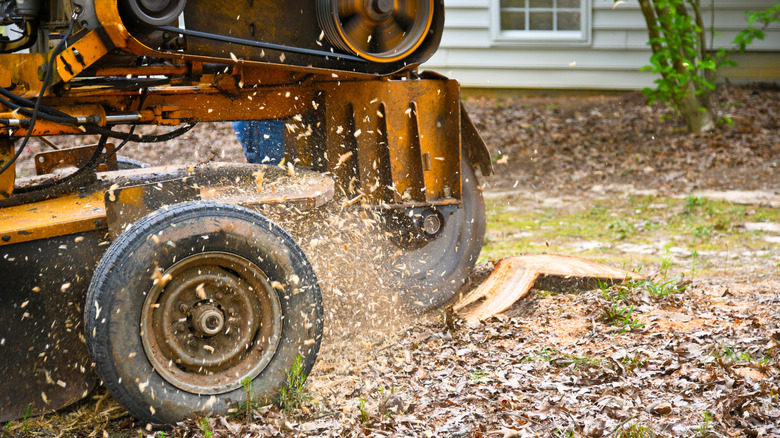
If you grind down the tree stump in your lawn (grinding is considered the easiest, safest, and quickest option), there are other considerations to make before you can potentially replant the area. Professional grinding machines will typically dig down 8 to 12 inches, leaving a pile of wood shavings behind. You'll want to get those shavings removed before filling the hole with new topsoil. An abundance of organic matter, like wood breaking down in the soil, will change its nutrient balance and moisture retention, which may make it more difficult — if not impossible — to plant the same kind of turf as currently fills the surrounding lawn.
The process of grinding a stump is going to spread and mix wood shavings into your lawn, regardless of how much you personally remove. Wood chips require a greater amount of nitrogen to break down than other soil additives or mulches, which means you'll need to go out of your way to rebalance the lawn by incorporating more nitrogen if you want to plant new grasses or a garden in the newly opened space. Wood chips can also make the soil more acidic, and while there are plenty of colorful plants that will thrive in your garden's acidic soil, you may want to bring the soil back to a neutral balance by incorporating lime to raise its pH.
Fill your stump-less lawn space with useful garden features
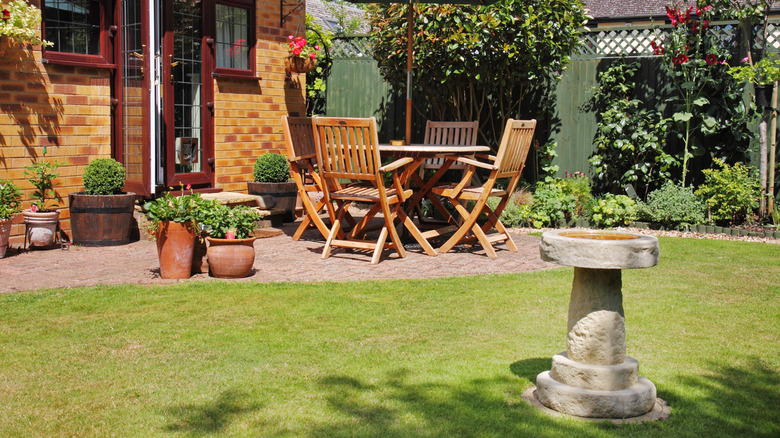
Planting a new garden or tree in place of that old stump in your lawn can offer a lot of benefits to the surrounding ecosystem by creating new wildlife habitats. Gardening can also give you a lot of mental health benefits, while providing you the chance to eat healthier by growing your own veggies. However, just being out in nature is enough to improve your physical and mental health, and this includes designing an outdoor patio space that you can spend time in. If you aren't interested in gardening, or the space around your removed stump has trouble growing plants because of the leftover wood shavings, you could instead build out features like birdbaths to improve biodiversity in other ways.
Having a birdbath in your lawn comes with other considerations, like finding affordable ways to keep that birdbath from freezing come winter, but it's worthwhile — especially in conjunction with surrounding gardens. Birds will eat pests like invasive insects, as well as spread seeds, improving the health of plants in your yard. You should consider filling out your lawn with other features, like birdhouses, alongside new patio furniture to improve the experience of living with it after removing an old stump. Just don't forget to maintain any new grasses you plant in the area so your lawn stays healthy into the foreseeable future.