

How To Clean Your Walls Without Damaging The Oil-Based Paint
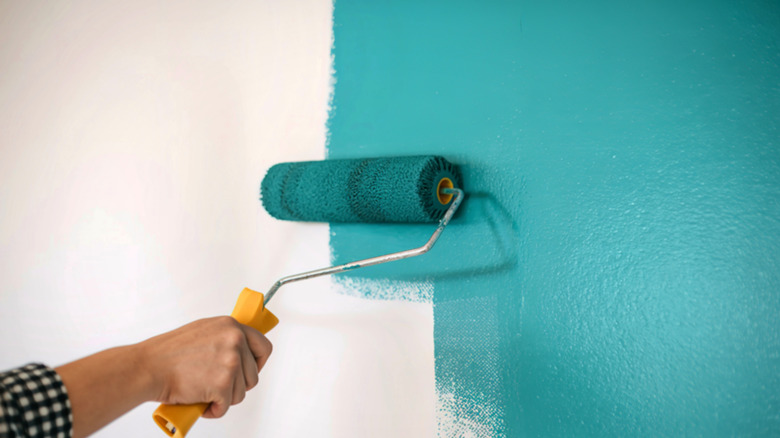
Water-based or oil-based? That's one of the most common questions home owners ask when choosing paint for their interior walls. If you end up using oil-based paint in your home, it's because of the advantages, like having an attractive glossy, smooth finish, its durability, and better resistance to wear and tear. However, applying this paint can be quite the uphill task, from enduring the strong fumes, and long drying time, to the messy, labor-intensive cleanup afterwards. So after going through all the trouble to have your beautiful oil-based painted wall, the least you can do is take good care of it. That's why even a seemingly simple chore like cleaning your walls should be approached strategically, making sure you avoid the mistakes everyone makes when cleaning painted walls so you don't damage the paint. Generally, a good rule of thumb is to apply gentle effort when cleaning and using mild products and soft cleaning items, such as warm water and dish soap.
While oil-based paint is considered more durable in comparison to water-based varieties, it's actually more prone to chipping or cracking if not handled properly. That's why the force you use when wiping needs to be measured: moderate enough to remove stains but not too much that it exerts excess pressure on the paint. At the same time, the sponge or cloth you use ought to be soft. Avoid abrasive scrubbers as those can scratch the paint coating or even cause chipping. And for the cleaning detergent, the milder it is the better.
Gently clean your oil–based painted walls to prevent damaging them
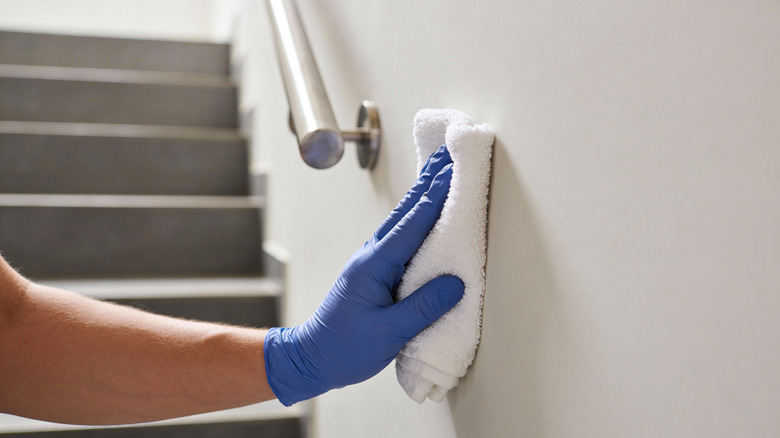
Before any water touches your wall during cleaning, the preliminary step you should start with is dusting your walls. Do this from top to bottom using a microfiber duster or a vacuum with a brush attachment. You don't want that loose dirt combining with water and creating messy smears. After that, it's time to prepare your cleaning solution using warm water in a bucket. Add one teaspoon of dish soap per quart of the warm water. This is sufficient for regular cleaning. But if your walls are exceptionally dirty, especially with greasy stains, you can add 1/2 teaspoon of white vinegar per quart of warm water. Yes, vinegar is such a versatile cleaning tool that you can use it on your walls, too.
Now, dip your microfiber cloth or soft sponge in the soapy solution and wring it out. You're aiming for a damp cloth, not soaking wet, because that excess water will drip on the wall as you clean, resulting in ugly streak marks. Once you've wiped your oil-painted wall from top to bottom using the damp soapy cloth, let it sit for a few minutes so any caked dirt can soak in the liquid and soften. Now, take another cloth and dip it in a bucket of clean water and again wring it out completely. Use this to rinse the wall. Repeat a few times to ensure you've removed all the soap and dirt. Do a final wipe with a dry cloth and that's it.