

Your House Was Condemned: Here's What You Do Next
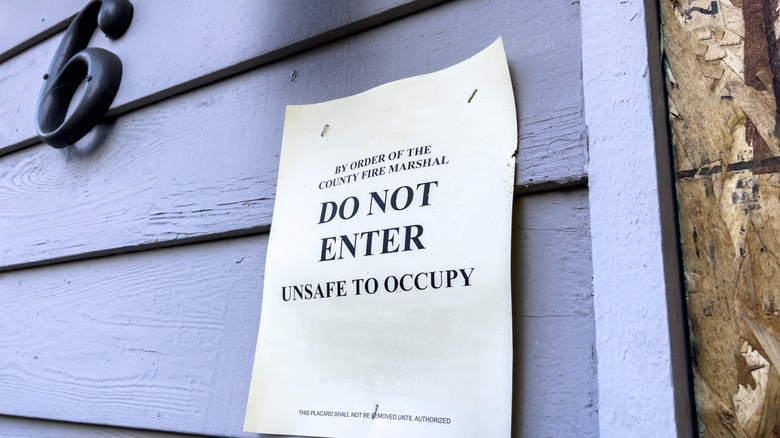
Returning home to a "condemnation order" posted on your wall can be appalling. That's your city's way of letting you know that it deems your home unlivable, and you must pack your bags and move elsewhere unless the house is repaired. Ignoring such orders isn't an option, as they list short deadlines by which you must vacate your lot. Failing this, the sheriff may forcibly remove you from the property and secure it.
After your home is condemned, your next step is to hire an attorney and understand the exact building code violations that triggered the order. When the city locates a dilapidated home during its windshield survey or receives complaints about a nuisance home, it sends a building code or fire safety official (or from the health department) for a formal inspection. They list the exact points of contention, based on which the city sends a formal notice and offers a short time to make a representation. You may accordingly arrive at an arrangement with the city to make the necessary repairs within a stipulated deadline, although you can't inhabit it during that time. In some cities, you may even have to register your home in the Vacant Building Registration (VBR) program. Alternatively, you may appeal against the order in court. If you fail to make the repairs or lose the appeal, the government can have the court pass an order to demolish your home.
Sell the house if you can't repair it
Being served a condemnation order doesn't automatically deprive you of your property rights. All it does is drive home the fact that staying in your home is hazardous for reasons that aren't exclusive to, but may include, black mold, fire damage, failed electrical or plumbing systems, pest infestation, discontinuation of utilities, unlawful construction, and poor sanitation. If you undertake the repairs and the inspector passes them, the condemnation order will be removed.
But if you lack the funds for repairs or feel the cost to make such repairs exceeds your home's resale value, you can prepare to sell your house, if it's allowed in your area. Naturally, the poor condition and the "condemned" label to boot (you have to list it on the seller's disclosure form) will drastically reduce your buyer pool. Plus, you're only likely to get the price of the land, with the demolition cost netted out. That being said, cities can put penalties and liens on condemned homes when the repairs aren't made, or the property taxes aren't paid, which isn't unusual for such homes. The house may eventually be sold to the highest bidder for recovery.
Your house may be condemned for a public cause
There's another reason for a city to declare your home condemned: public use. In case your home's location interferes with the city's development plans — say they want to build a freeway — then they hold the right to seize your property for a "just compensation" in exchange. In fact, they may hand over your home to a private company, as long as it serves a public purpose. This is why many utility companies and even school boards can apply to the administration to have a house condemned.
Unfortunately, you can't refuse to sell your property. If you do, the government can file an "eminent domain" lawsuit and have the court order you to sell for a fair price, which is usually the current market value of the house. If you're unhappy with the amount, you can appeal it within 120 days (or one year, depending on the area). For that, you must have an expert appraise your home and map out comparable sale transactions to justify your demand for a higher price.