

The Adorable Backyard Bird To Look For In Winter (& How To Best Attract It)
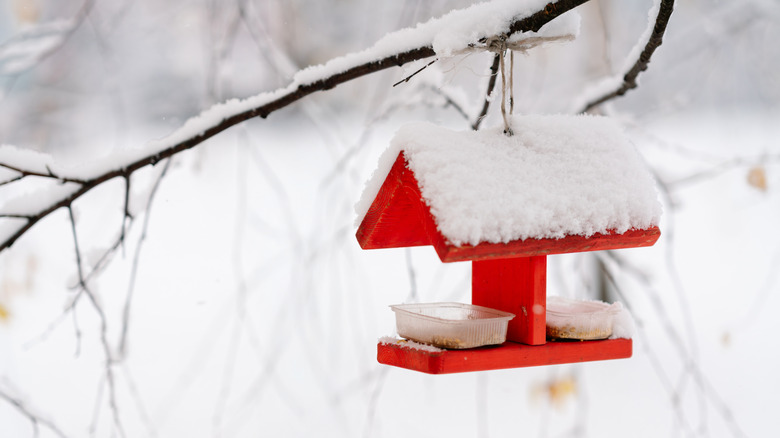
The deep freeze of winter has settled over the landscape, but your backyard doesn't have to feel empty or still. Yes, most of the songbirds you see in summer have long since departed for warmer climes, but there's still one tiny visitor that likes to hang around in the cold: the black-capped chickadee (Poecile atricapillus). This is arguably one of the most charming birds you'll encounter during these cold months (certainly more charming than geese). These hardy little creatures are famous for their "chick-a-dee-dee-dee" call, which can add a bit of delight to a snowy morning. Interestingly, the more "dee" notes they add to the end of their call, the more alert they are. Their natural curiosity makes them a favorite for homeowners, because they're often the first birds to come check out a new bird feeder or watch you through your kitchen window.
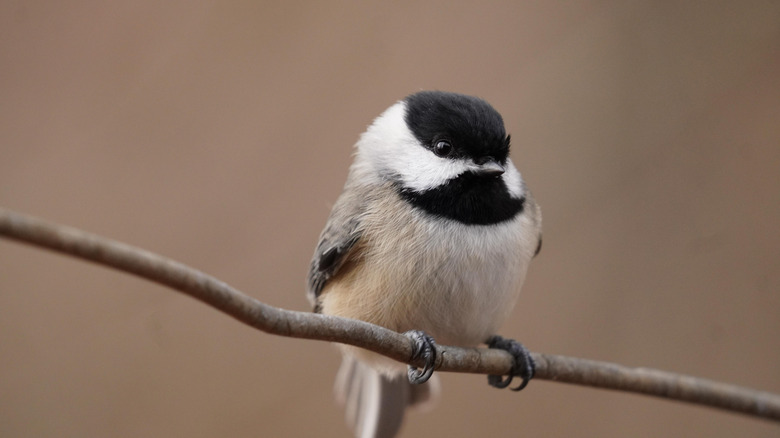
Identifying these birds is a cinch, even for beginner birdwatchers. Black-capped chickadees are easily recognized by their namesake black "cap" and matching black tuxedo-like bib, which beautifully contrast against their bright white cheeks and soft gray wings. Their bodies are round and, like nearly all birds, they fluff up their feathers in winter to help keep warm air around them. For chickadees, this makes them look like adorable animated softballs darting through the trees. Unlike more skittish bird species, chickadees are also bold and seemingly fearless. Their friendly nature and social behavior make them one of the best birds to have in your yard (they'll eat annoying pests there, too).
How to create a winter sanctuary for black-capped chickadees
While there are many common birds you might find in your garden in winter, if it's chickadees you're wanting, you need to give them a reason to visit, like good food. Chickadees have super-fast metabolisms and can lose a big portion of their body weight during a single freezing night. So, the best way to support their health is by setting out some black oil sunflower seeds. These seeds have a higher oil content than regular sunflower seeds, and thinner shells that are easier for chickadees to crack open. Suet cakes are another winter essential for your feeding station; these are raw fat blocks that provide the concentrated calories and protein chickadees need to maintain their body temperature. Try hanging a suet cage with peanut, fruit, oats, or insect-infused blends near a window for a front-row seat to their dining habits.
Beyond food, safety and hydration are also key to making a bird-friendly backyard. Since natural ponds and puddles often freeze solid in winter (especially overnight), adding a heated birdbath is a total game-changer for local wildlife, letting chickadees drink and bathe comfortably. You might also place your feeders near shrubs or dense trees so the birds have a quick place to hide from predators. Providing consistent food, fresh water, and a safe place to rest are what you need to attract a diverse variety of birds to your yard, including the plucky chickadee. Taking these small steps not only ensures you'll attract the attention of nearby chickadees; it also ensures they'll stay healthier and safer until the first signs of spring appear.