

13 Mid-Century Furniture Brands Worth Looking Out For In The Thrift Stores
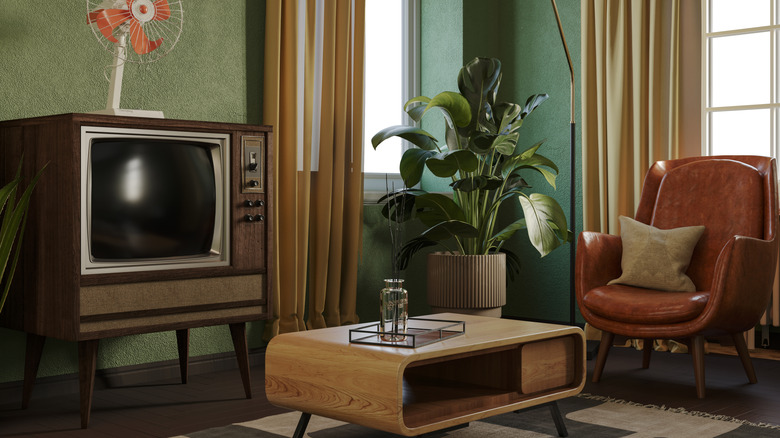
Few experiences can compete with the thrill of thrift shop hunting for mid-century modern furniture. The popular style, known for its clean lines, walnut finish, and natural materials, can be found in thrift stores from Goodwill to quaint, small-town favorites. Mid-century never quite went out of fashion, but it experienced a resurgence in popularity in the 2010s. That popularity has faded a bit, but the design still has many fans. Furnishings in this design might be over 60 years old, but their better quality means even the thrifted pieces can be a better investment than a brand-new media console from West Elm or Amazon.
Not all mid-century designs in thrift shops will be worth the price, even if it's discounted. But there are ways to gauge a console or chair's value. First, try lifting the piece. You don't need to lift it above your head, but see how heavy it is. Furnishings that are made of real hardwood, steel, or other high-quality materials will be difficult to lift. Particle board or medium-density fiberboard will feel significantly lighter. Maybe you couldn't move it yourself, but you could try. Second, inspect it for a label. Pull open the drawers and check the undersides of the piece. It's always good to have an idea of the furnishing's history when thrifting, but having that label might make your find even more valuable. Some mid-century modern furniture is now even worth thousands of dollars. Here are the 13 mid-century furniture brands worth looking out for in thrift stores.
Henry Miller remains the ultimate find
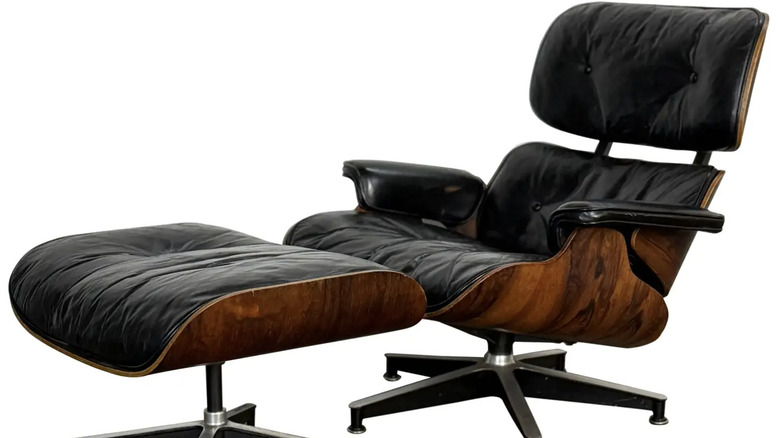
Few brands truly epitomize mid-century modern design. When thinking of it, no other brand comes to mind like Herman Miller. The iconic brand started as the Michigan Star Furniture Company until owner D.J. De Pree convinced his father-in-law, Herman Miller, to buy the majority of shares in the company in 1923. Now renamed the Herman Miller Furniture Company, the brand prospered making reproduction furniture until the Great Depression. To stay competitive, the brand brought in designer Gilbert Rohde, who convinced De Pree and Miller to move towards creating furnishings better suited to how Americans were currently living their lives. The partnership flourished, and Rohde's designs debuted at the Century of Progress Exposition in Chicago in 1933. Over the next few decades, other partnerships with designers such as George Nelson, Charles and Ray Eames, and Isamu Noguchi drove innovation in office and home furnishings and lighting, giving the company an almost mythical status.
Many of the company's most recognizable designs, such as the Eames lounge chair and ottoman and the Nelson bubble lamps, are still in production, but savvy thrifters may also be able to spot originals in stores near them. These products will be a real find. Some original Herman Miller furnishings sell for thousands of dollars on sites such as 1stDibs. Locating an original in a thrift store might be tough — most owners know their value. Even so, that's part of the thrill of the hunt.
United Furniture may be gone, but not forgotten
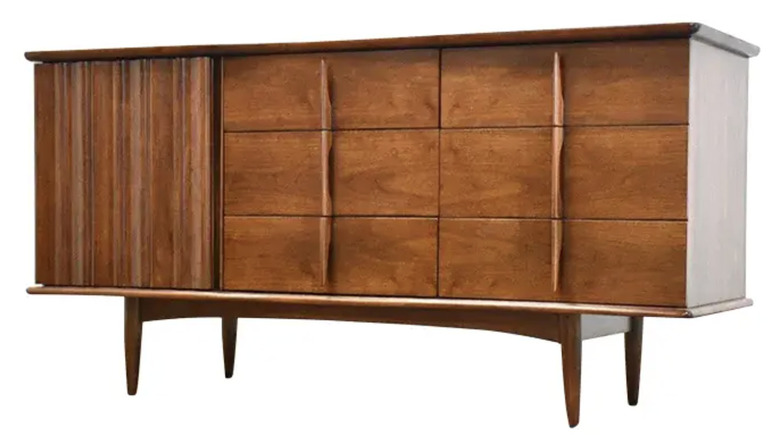
United Furniture Corporation came from simple beginnings. It was founded in Lexington, North Carolina, in 1905, producing bedroom and dining room furniture that fit a modest budget. The company's reputation for high-quality materials, thoughtful designs, and a reasonable price point helped grow it into one of the largest furniture manufacturers in the U.S. In the '50s and '60s, the brand hit its stride with a line of mid-century modern furniture that was sold not only in United Furniture showrooms but also in department stores and other retailers all over the country. Like many other American brands, United faced tough competition from imports and changing design tastes in the latter half of the 20th century. In 1987, the company was sold, and production stopped soon after.
Today, United Furniture pieces may be some of the best furniture to try to thrift first. The craftsmanship that drove the brand's popularity remains intact, especially in furnishings that have been well cared for over the years. Finding an original United Furniture nightstand or highboy may be tough to come by, but if you do find one, you might want to think of it as an investment. If you hold onto it, a pair of nightstands could sell for several thousand dollars.
Drexel Furniture wins consumers over with simplicity
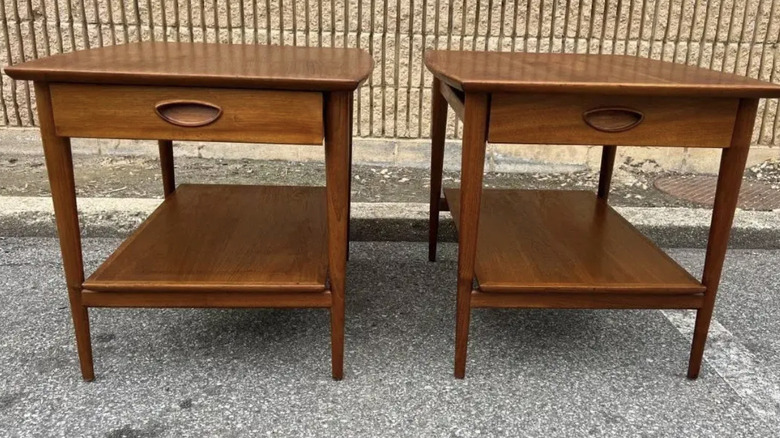
Another American brand launched in North Carolina, the Drexel Furniture Company started as a manufacturer of more traditional designs that were lower in quality and price. In the 1930s, Robert O. Huffman, the son of one of the four principal founders, took over the company and made some changes that helped propel its status. He turned away from making low-quality furnishings and prioritized higher markets. Huffman expanded the company in the post-war era and diversified the company's product line to include more contemporary styles alongside the traditional ones consumers knew best. In 1955, only one-third of company sales came from traditional styles, while contemporary sales grew to 36%. The company rebranded as Drexel Heritage Furnishings, Inc. in 1968 after U.S. Plywood Champion Papers bought it. The brand was then bought, sold, and rebranded several times before officially ceasing operations in 2014.
Drexel never sought partnerships with well-known designers such as Herman Miller, so the resale value of its pieces won't be quite as high. The company's line of mid-century modern furniture remains in demand today because the quality has held up very well despite years of use. You will likely find more traditional Drexel designs in thrift stores, but any mid-century finds are worth purchasing. A Drexel dresser or pair of nightstands can be resold for several thousand dollars if the piece is kept in good condition.
Poul Hundevad brings Danish influence to mid-century modern
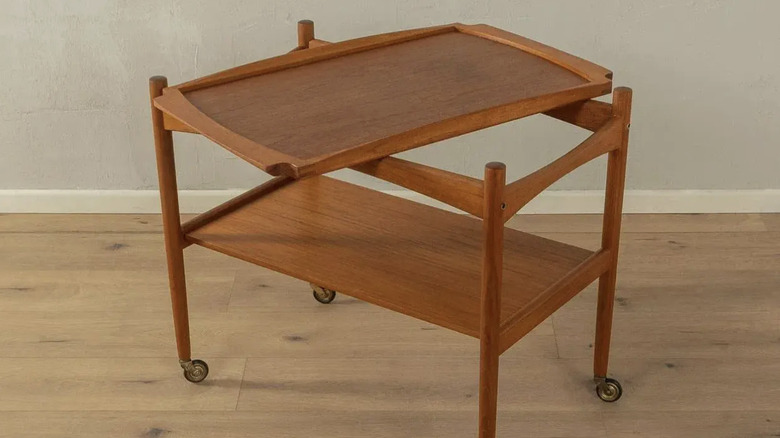
Mid-century modern and Scandinavian designs often go hand in hand. They both value simplicity in design and the use of natural materials in construction. The two styles draw from each other, and no other designer embodies the two like Poul Hundevad. The Danish-born designer opened his own furniture company in the 1940s and began producing his own designs heavily influenced by contemporaries in his home country. Hundevad adopted the same simplicity and functionality into his work, and he became well known for using teak. His most recognizable designs include the "rolling bar cart" and "Model 60" chair, both of which remain in production today.
Finding an original Hundevad product second hand will be difficult, but it could be one of the most valuable items to seek out at a thrift store. His designs have been reproduced by many other companies. If found in a thrift store, however, it will definitely be worth buying immediately. Sites such as 1stDibs regularly list Hundevad designs for anywhere between several hundred to several thousand dollars, depending on the size and care of the piece.
Vintage IKEA becomes a hit
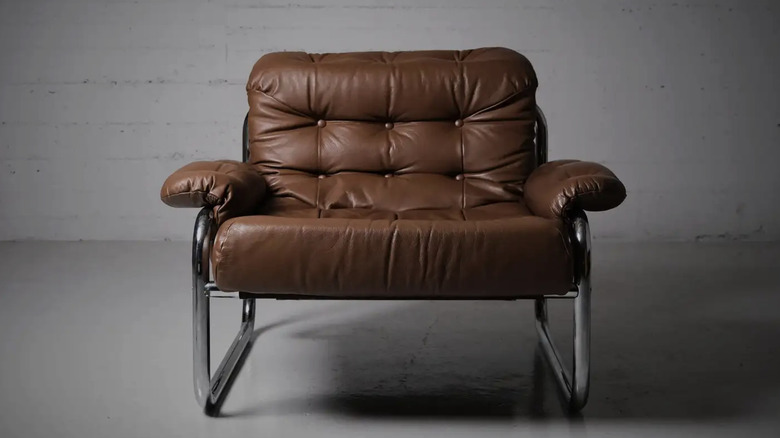
To most American consumers, IKEA is known for two things: flat-packed furniture that requires assembly and its Swedish meatballs sold in stores. The company attracts first-time furniture buyers seeking simple designs and a low price point. But IKEA is much more than that. The brand has been around since the early 1940s and began selling furniture in 1948. It has remained true to its Scandinavian designs, focusing on function and sustainability. Now vintage seekers are targeting the company's mid-century products. Thanks to its partnerships with designers like Bengt Ruda and Johan Bertil Häggström, IKEA has seen an explosion in the value of its older furnishings.
Since the vintage pieces are in demand now, they will be harder to find in thrift stores, but certainly not impossible. Before hunting, it's worth looking up which styles are worth the investment. A pair of Grill chairs designed by Ruda, for example, can go for more than $8,000. Staying knowledgeable about what's in demand and how to spot valuable, high-end items at thrift stores will help you land a real find.
Knoll brings Bauhaus to mid-century modern
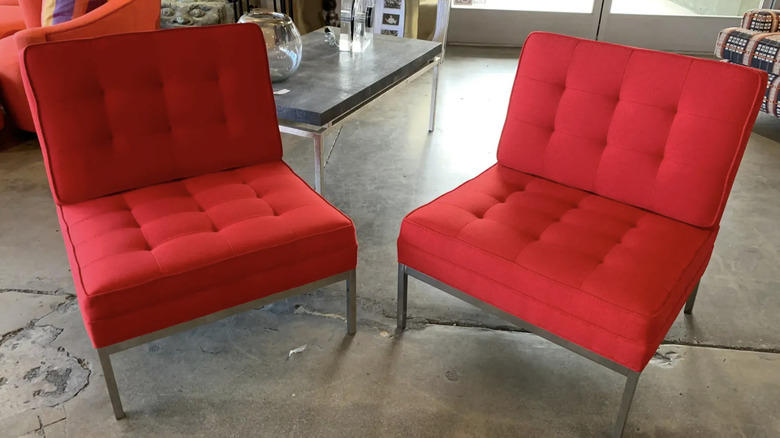
Another mid-century modern darling, Knoll brought to its designs the Bauhaus philosophy, marrying the room's architecture to the furniture in order to create a harmonious look. The founders, Florence and Hans Knoll, each infused the brand with their strengths. Hans Knoll was a businessman who had already started a furniture company when he met his wife. Florence Knoll was a skilled designer, and she connected with other creatives to innovate the brand. As a result, Knoll worked with some of the top designers of the mid-century era, including Ludwig Mies van der Rohe and Marcel Breuer, and continues production today as a subsidiary of Herman Miller.
Knoll's legacy remains strong to this day, and its products are a favorite among collectors. It will likely be difficult to find Knoll furniture in thrift stores. For those that do locate a piece, it will be worth the investment, whatever the current price. Resale sites such as Chairish often list Knoll chairs for over $2,000 and casegoods going for over $5,000. Knoll is also one of the top furniture designers to look out for at estate sales for those thrifters with range. Like any investment, though, you will need to take care of your furniture if you plan to resell it in the future.
Thonet's legacy makes for a comfortable seat
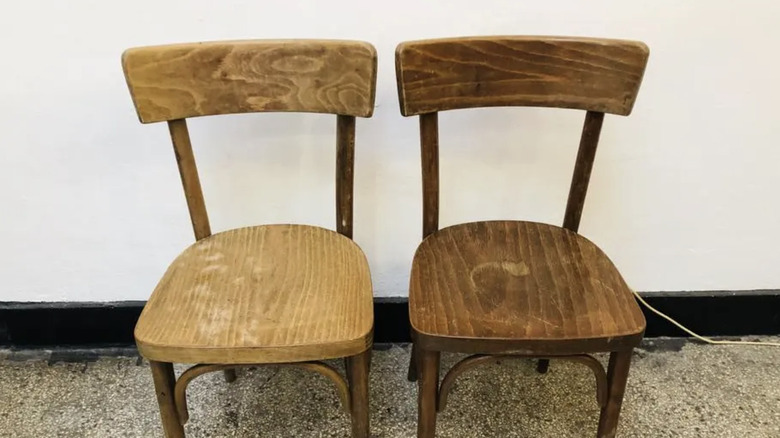
The oldest company on this list, Thonet began manufacturing way back in 1819 when cabinetmaker Michael Thonet opened his first workshop in Germany. He later moved to Vienna and founded Gebrüder Thonet in 1853. His company specialized in making chairs for cafes and coffee houses as the culture around these establishments was booming. The chairs, No. 14 to be exact, became so ubiquitous in restaurants, casinos, and other gathering places that they found their way into the works of Henri Matisse and Henri Toulouse-Lautrec. In the early 1930s, Thonet expanded with a line of chairs made from tubular steel. The company's chairs remained popular throughout the mid-century heyday, and No. 14, now known as Brentwood 214, can still be purchased today.
A brand as old as Thonet gives thrifters a big advantage. This is one of the few brands that will be easier to find and less expensive. So many chairs have been produced over the company's long history, making them less of a rarity and keeping the prices low. But that doesn't mean that finding a Thonet chair isn't an exciting prize. The quality of materials used in its chairs means that finding one in good condition will be a worthy purchase on its own, and some styles can fetch higher prices on Chairish.
Hooker Furniture breaks with tradition for mid-century modern
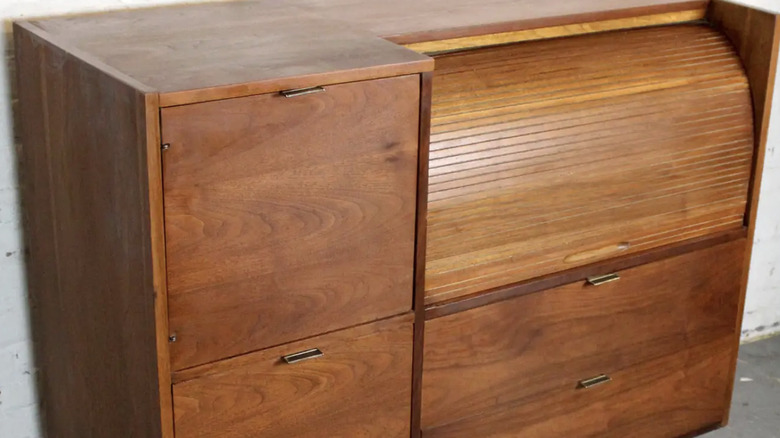
Hooker Furniture remains one of the last few family-owned furniture companies in the United States. Founded in 1925 and based in Martinsville, Virginia, this manufacturer may not be an exclusive mid-century modern firm, but in its long history, it has dabbled in the design. Though no longer exclusively manufacturing in the U.S., Hooker still operates several factories in Virginia and North Carolina. Finding any Hooker pieces in a thrift store might be a great deal, so even if the piece isn't mid-century modern, consider giving it a second look anyway.
The company's mid-century line was called Mainline by Hooker. Its pieces can still be found in thrift stores, though they may be tough to locate. The line included many casegoods made of solid wood that have held up in living rooms and bedrooms over the years, but the products don't command the price point that a vintage Knoll piece might. Depending on the product and its condition, Mainline by Hooker furnishings can resell for around $2,000 on second-hand sites. Today, Hooker has a limited number of mid-century designs in production, but the brand itself remains an interior designer favorite, definitely worth a glance if you find it in a thrift store.
Lane Furniture remembers its mid-century era
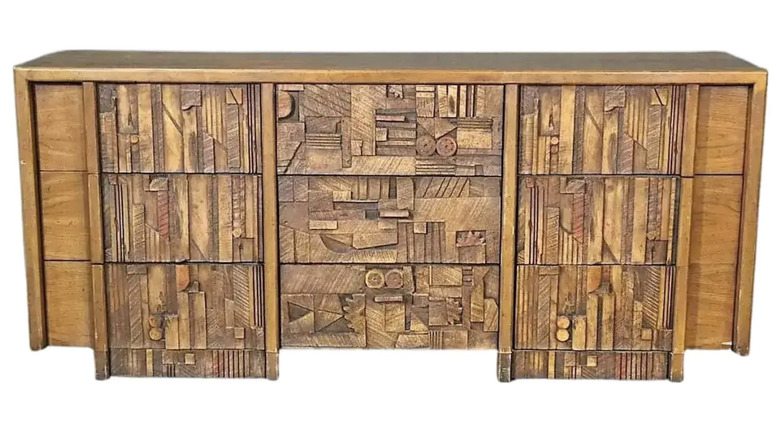
Lane Furniture started out as the Standard Red Cedar Chest Company in 1912, producing heirloom-quality cedar chests that stayed popular up through World War II. After the war, however, the company evolved and began producing more home furnishings, including bedroom furniture and occasional tables. The brand also launched several mid-century collections, from the Perception collection designed by Warren C. Church to Ernest Swarts and O.B. Solie's "bowtie" Tuxedo collection. United Furniture bought the company in 1968, and it still manufactures in Virginia and Mississippi, though the styles tend to lean more contemporary than mid-century.
Manufacturing in the U.S. means that more of Lane's products are likely to appear in thrift stores. This gives bargain hunters a better shot at landing a piece from one of these collections. However, the resale value on Lane's mid-century lines may not be nearly as high as some others on this list. As with most vintage items, it depends on the quality and design of the piece. Brutalist designs from Lane will likely see a higher demand. If you do find a Lane dresser, take good care of it to help it retain its value if you decide to sell it later.
Mengel Furniture teams up with an American icon
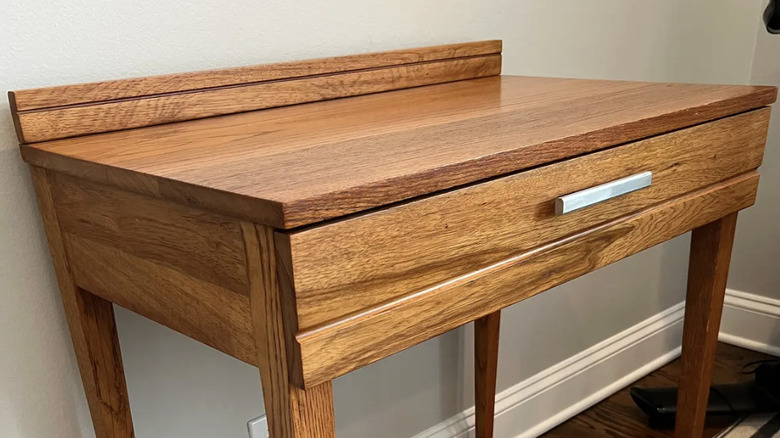
The Mengel Furniture Company began as a lumber manufacturer in 1877, producing whiskey barrels and tobacco boxes in Louisville, Kentucky. But after World War II, the company decided to embark on a whole new direction with a furniture collection. To do the work, Mengel hired Raymond Loewy, the designer who would leave a huge mark on American industrial design. He's best known for creating the Coca-Cola bottle, the Shell logo, and the Lucky Strike package. Later called Perminized, the furniture collection for Mengel may not be one of Loewy's most accomplished designs, as he had quite a prolific career, but mid-century fans today still appreciate his innovative yet pragmatic approach to furnishings.
Having one of Loewy's pieces is like owning a little bit of design history, given his influence on American culture. The quality of the furnishings in the collection is high, and they can be worth a lot when resold. Loewy designed products for other companies after Mengel. It's worth researching his designs and keeping an eye out for them if you think of yourself as a history buff.
Craft Associates hypes the walnut finish
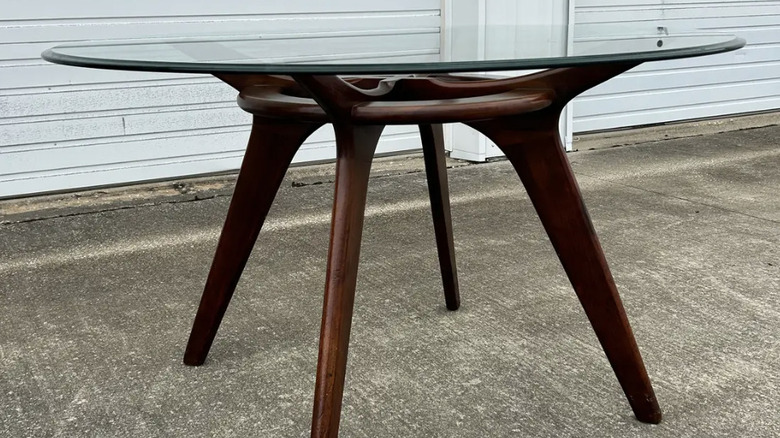
It's hard to imagine mid-century modern without that standout walnut finish. But someone had to help popularize the trend, and that someone was Adrian Pearsall, founder of Craft Associates. Unlike legacy brands such as Thonet or Drexel, Craft Associates was formed in 1952, just as the mid-century style was heating up. Pearsall quickly became known for his glass-top coffee tables with walnut bases. From there, he grew the company from eight to 600 employees, and in 1968, he sold the brand to Lane Furniture. While he went on to launch other furnishing companies, Lane kept Craft Associates in production until the late 1970s, when it closed the line for good.
Craft Associates represents a double-edged sword for thrifters. On the one hand, the company had a relatively short life, which means only so many products made it off the factory assembly line. That scarcity means higher prices. However, many of Pearsall's designs, such as his coffee table, have been reproduced by other brands. In fact, Craft Associates was even relaunched under new ownership in 2017. Bargain hunters should double-check all labels and try to authenticate any thrifted finds to best understand the piece's true value.
Broyhill Furniture finds its stride in mid-century modern
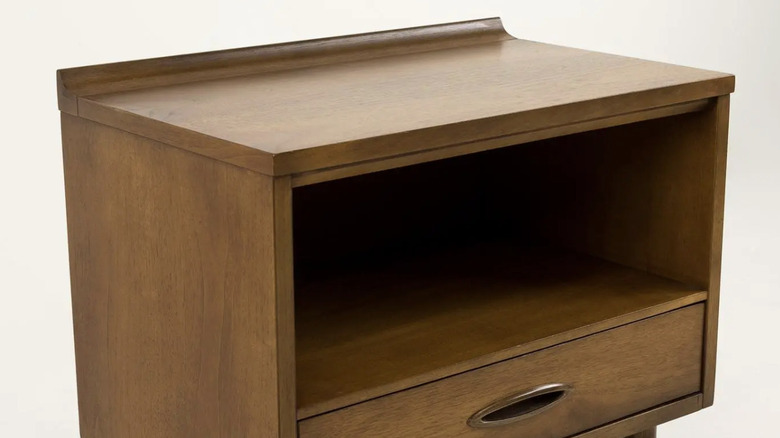
Broyhill Furniture, like Thonet, spent its early days in 1926 making chairs as the Lenoir Chair Company. Its founder, James Edgar Broyhill, expanded the company during the 1930s and 40s, and by the time the mid-century hit, the brand was ready to embrace the new style taking shape. Broyhill truly hit its stride with the launch of several lines, such as the Premier Sculptra collection in 1957 and Brasilia in 1962. Though the company has changed ownership since then, its mid-century pieces are known for their superior quality and artisan craftsmanship.
Uncovering Broyhill furnishings in a thrift shop will be tough, but smart bargain hunters who find them will have both a statement piece and an investment. Mid-century pieces are in high demand. For thrifters that hold onto their finds, they'll likely be able to resell the pieces for over a thousand dollars, if not more, depending on the quality. One smart tip for buying second-hand furniture: always measure your space before you go shopping. The last thing you want is a Broyhill nightstand that won't fit your bedroom.
Bernhardt Furniture has impressive mid-century designs, too
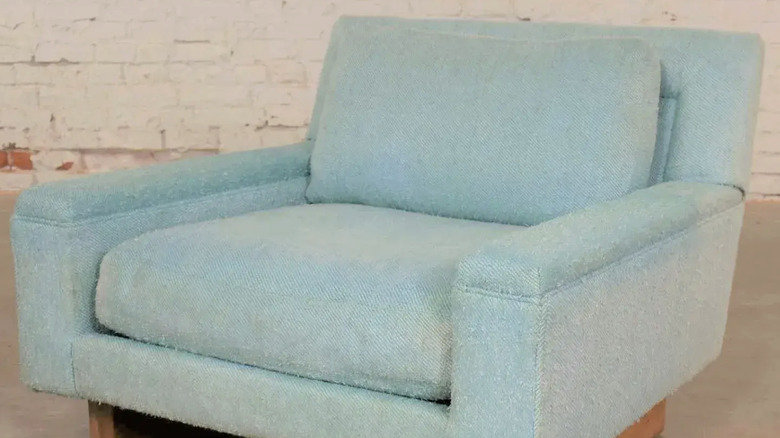
One of the top names in luxury furniture, Bernhardt may not be the first brand that comes to mind when thinking about mid-century design. However, the company's long history and commitment to contemporary designs mean it has dipped its toe in the mid-century pool. The company started production over 135 years ago, and it remains family-owned to this day, with fourth-generation Alex Bernhardt, Jr. at the helm. Today, the brand focuses more on modern designs, but in the 1960s, the newly launched Flair Division showed off some impressive mid-century looks that were expertly upholstered and remain in high demand among thrifters today.
Just about any Bernhardt product found at a thrift store will be a good deal. The company sells almost exclusively to retailers and interior designers, which means the initial price of their pieces is already high. Bernhardt may not be the most sought-after for its mid-century designs, but its quality and innovation will drive up the prices regardless of demand. Products from the Flair Division will likely be worth the investment, so if you see one, snap it up before someone else does.