

The Blooming Indoor Plant That Thrives In The Cold Rooms In Your Home

Indoor plants provide a living pop of spring or summer color to a home — even in the dead of winter when snow covers the ground. The conundrum is that when the weather gets really cold, it can get expensive to run your heating high enough for houseplants to survive. After all, most are tropical or subtropical plants that prefer — or even require — temperatures above 70 degrees Fahrenheit. Plus, heating systems don't always warm every room evenly. If you have a fireplace, space heaters, or a pellet or wood-burning stove, you may only have consistent heat in the main living area or bedrooms. You don't have to give up on indoor plants in the colder rooms of your home; you just need to find the right candidates. Enter: the cyclamen.
There are plenty of ways to tweak your houseplant care routine for winter, but growing a cyclamen is one of the easiest. Wouldn't you rather spend your days bundled up by the fire or heater than tending plants? This small perennial flower grows from tubers and can be grown outdoors in Zones 4 to 8. However, the cyclamen's compact size and cold tolerance also make it perfect for the frigid spots in your home. Not only do they grow especially well in containers, but they thrive in daytime temperatures of 60 to 65 degrees Fahrenheit. The best part? Take care of them well and they'll bloom all through winter! You can expect red, white, pink, or lavender flowers to burst onto the scene in fall and last until spring.
Grow a cyclamen in a cold room for stunning winter blooms
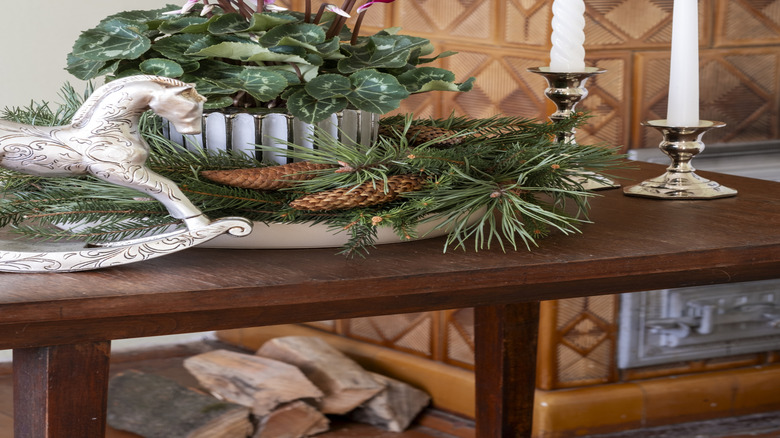
We've established cold isn't a concern for cyclamen — the plants can withstand nighttime temperatures down to 50 degrees Fahrenheit. However, there are other things your houseplant needs to survive winter indoors. To take care of your cyclamen plant in the best possible way, start with lighting. Cyclamens grow best in bright, indirect sunlight, so keep your houseplant in a room with an east-facing window. Dress sunny windows with sheer (though, of course, not light-blocking) curtains. With that sorted, you can turn your attention to watering, which is arguably the most difficult part of cyclamen care. Soil that's too wet or too dry can have an immediate impact on the health of your plant.
Yellowing leaves are a common sign of unmet water needs. When the surface of the soil feels dry to the touch, water your plant thoroughly. Make sure, too, that it's growing in a container with good drainage. To prevent moisture from flooding the roots, don't water the plant itself. Avoid the crown — or center — of the plant and water the soil around it instead. Humidity levels can also be a concern for cyclamens. They grow best with humidity levels above 50%, which is on the higher end of what's advisable in a home. If you need to boost humidity, especially in winter when levels are typically lower, use a humidifier, or try more creative ways to increase humidity for plants, like placing your cyclamen on a pebble tray or grouping pots together. Keep the plants away from dry air and hot or freezing drafts, too.