

The Unique Floor Choice That'll Help Your Home Become More Energy Efficient
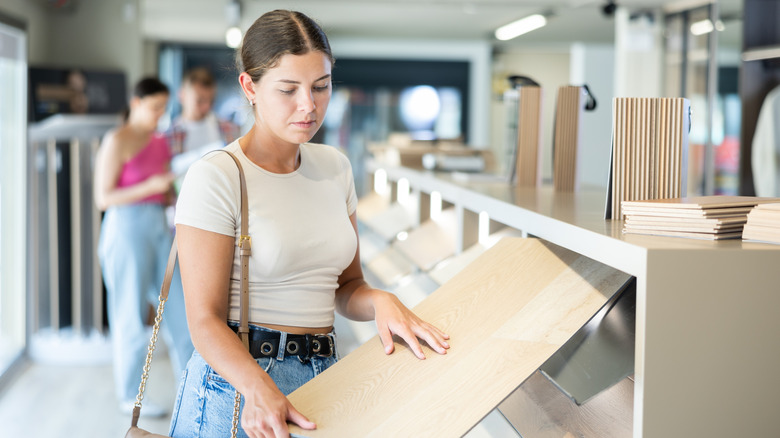
When choosing flooring, you probably think about factors like durability and comfort, but you might not have considered the material's impact on your home's energy efficiency. Whether your concern is a rising power bill or lowering your carbon footprint, there's one floor type that shines when it comes to energy efficiency, and that's cork. This unique natural material can have a greater impact on your power bill than you might think, and you can choose different installation types depending on your needs.
When you're trying to decide if cork is the right choice for your home, you'll want to know more about where it comes from, as well as the many benefits it can provide. Cork is featured among sustainable flooring trends for many reasons, including its renewable nature and its harvest from a type of oak tree. It's actually more eco-friendly than hardwood floors because the trees don't need to be cut down to harvest the cork. In addition to improving energy efficiency, it is naturally fire-retardant and helps reduce sound. Plus, this long-lasting, lightweight material has a natural give that makes it soft on your joints.
Cork's unique features help save on home heating & cooling
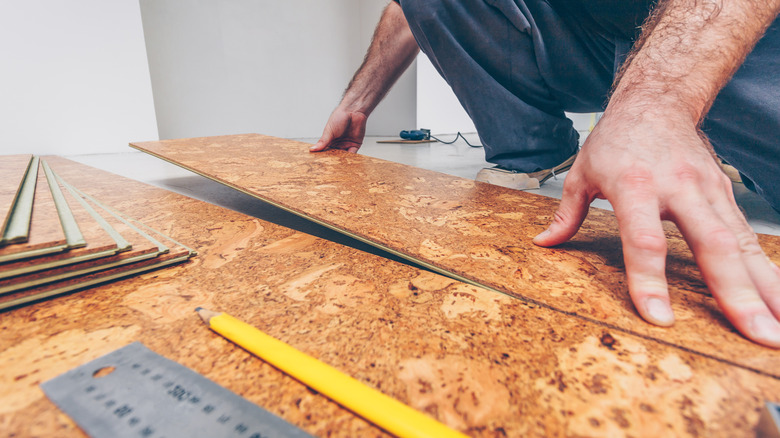
If you're feeling the pinch of rising energy costs, choosing this comfortable flooring can be part of your strategy to lower your power bill. Cork improves energy efficiency because it is an excellent insulator. This sustainable material has millions of tiny cells filled with air, which makes it difficult for heat to move through. When used as flooring, the air in those cells helps buffer the indoor environment from hot or cold weather.
Since cork won't transfer heat or cold from your subfloor, its insulative properties will help you maintain comfortable conditions in your home year-round. In fact, this flooring maintains a steady temperature better than other materials, such as vinyl, ceramic, or wood, making it a great choice if you like walking around your home barefoot. And as a bonus, since this material is naturally water-resistant, you can even give your kitchen or bathroom a gorgeous upgrade with cork. However, opt for cork tiles rather than planks in those rooms. The planks have a high-density fiberboard (HDF) layer, which may become damaged when wet. The tiles don't have such a layer, making them a better option.
Types of cork to consider installing
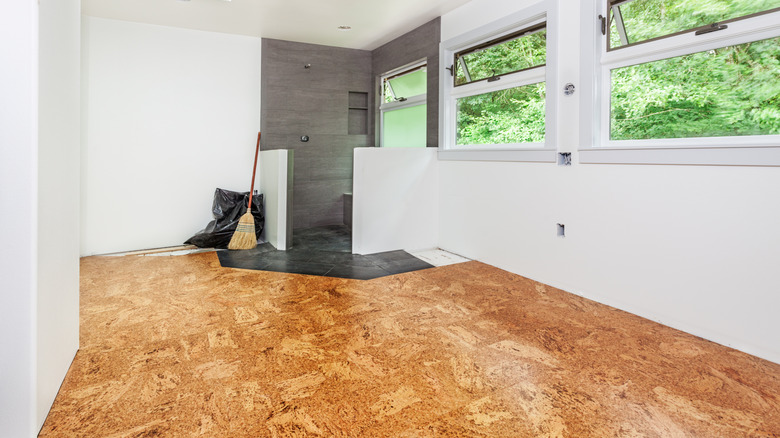
There are two main types of cork flooring — glue-down tiles and floating planks that click together. The first option is also called solid cork flooring, while the second is engineered and has a fiberboard core. For DIYers used to installing click-lock vinyl planks, the engineered type will be more familiar and may be easier to lay down. However, many of us who prefer glue-down tiles don't find this type difficult to install. We're also swayed by the durability of solid tiles compared to engineered planks.
Of course, there are a few drawbacks to using this energy-efficient material underfoot, as there are with any type of flooring. In areas where the floor gets direct sun exposure, the color may fade. There is also the potential for scratches and dents, which are easier to remove from tiles than planks since the former can be sanded. Both engineered types and glue-down types need to be resealed periodically to keep them looking fresh and protect them from damage. Nonetheless, when properly maintained, a cork can last at least 40 years.