

How To Prune An Apricot Tree For A Thriving Plant & Better Fruit Production
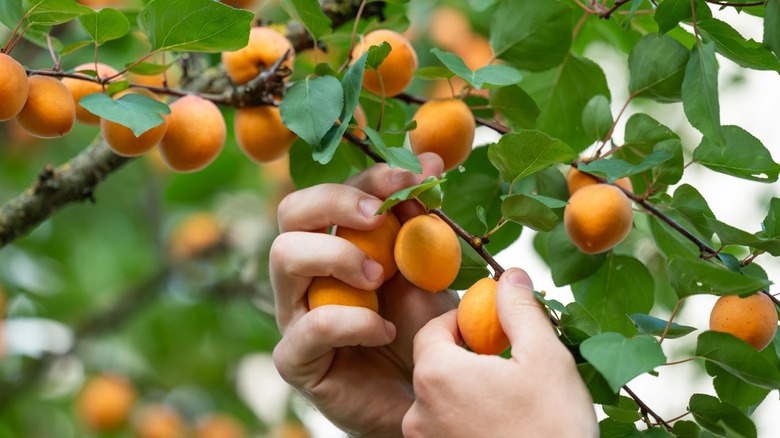
When planting a fruit orchard in your yard, make sure you don't forget about pruning. Neglecting to prune your fruit trees, including your apricot trees (Prunus armeniaca), creates added stress and may lead to poorer fruit production. First, it's imperative to start off by training a new apricot tree to make maintenance pruning easier in the future. You can prune an apricot tree similar to an apple tree (with a central leader) or a peach tree (with an open center). Apricot trees are also fruit trees that are perfect to espalier, which trains them to grow flat against a wall or trellis, if you have the time and patience. Whichever training method you decide upon, this step will lead to a thriving tree that exhibits robust fruit production each year.
If you have just brought your tree home, decide how you will train it after planting. Typically, choose one of two methods — either with the central-leader system or the open-center system. The central-leader system results in a pyramidal tree shape with a single central branch that side branches grow from. By comparison, the open-center system results in a vase shape with side branches closer to the ground and more air circulation. With the central-leader system, your apricot tree grows tall and upright and has access to plenty of light. A main, central branch should be selected, and interfering branches cut away to promote an upward, pyramid shape. For a more manageable tree for harvesting, the open-center system features a few main scaffold limbs with wide angles and no central stem. In this system, select a few branches evenly spaced on your tree and remove all others, including the leader.
Tips for pruning your apricot tree
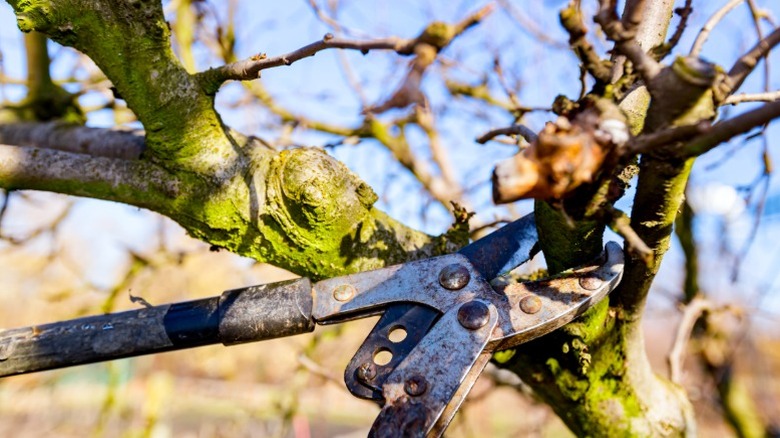
The cuts you make while training an apricot tree for either system are similar, involving cutting off branches to open up the trees and develop a uniform structure. To accomplish this hand-pruning of an apricot tree, you will need a few tools. Depending on the type of cut, select hand shears, lopping shears, or a curved pruning saw. The bigger the branch or stem, the bigger the tool you'll need.
You should also know how to make different types of cuts. Apricot trees may require both thinning and heading cuts at different points in time. Thinning cuts are necessary when you need to remove the entire branch. Keep in mind that this type of cut is done on apricot trees to get rid of older branches that no longer produce. Heading cuts are different. A heading cut should remove the end of a branch, with the goal of promoting growth below the cut. These invigorating pruning cuts may be more common, as you do not want to remove too much wood on an apricot tree while it is still producing fruit.
No matter which method you pick, pay attention to timing. Apricots in particular are at risk for developing fungal diseases, so pruning should be done during reliably dry weather. Avoid months when rain or frost can occur within a six week window (which is as long as it takes the cuts to heal.) For this reason, your pruning schedule is dependent on the region you live in.
Pruning apricot trees as they mature
Prune early-on in an apricot tree's development, but continue to prune as they age. Regular pruning is necessary to account for an apricot tree's short-lived spurs. New spurs, the short branches that bear fruit, can be encouraged by proper thinning of branches and old spurs. However, you should also be mindful of the older branches while pruning apricot trees. Flowering buds will appear on one-year-old wood and older spurs. If you cut out all the old spurs to encourage new growth, you might be limiting the tree's fruit production for the immediate future.
Mature apricot trees also require maintenance pruning each year. When you set out to complete maintenance pruning, focus on removing dead and damaged branches. Then, to promote good air circulation and access to sunlight, use thinning cuts to get rid of crossing branches and those growing in the middle. Finally, regular thinning should remove spurs that have been producing for over three years and head back overly long shoots.
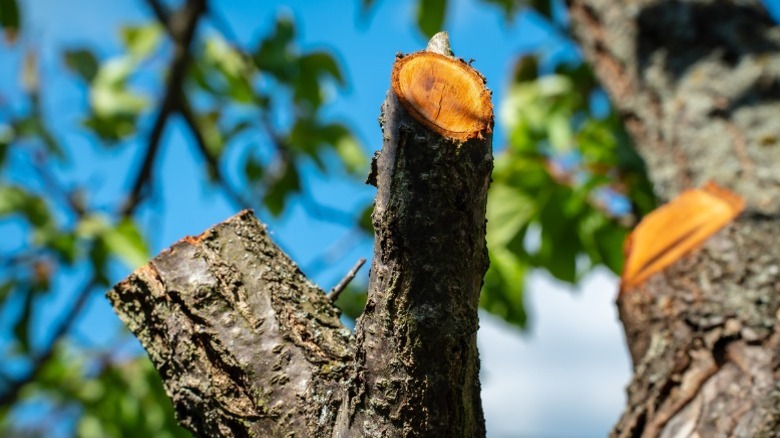
A problem you can run into when pruning apricot trees is making your cut at the branch bark ridge, which is the thick ridge where the branch and trunk meet. This might look like an ideal place to saw into, but it's vital that you avoid this fruit pruning mistake at all costs. The ridge holds specialized tissue that helps seal wounds, and if destroyed, it will slow down the healing process and increase the tree's risk for fungal diseases. Because of this, you want to cut above it.