

The Long-Season Plant You Should Start Sowing Indoors In January
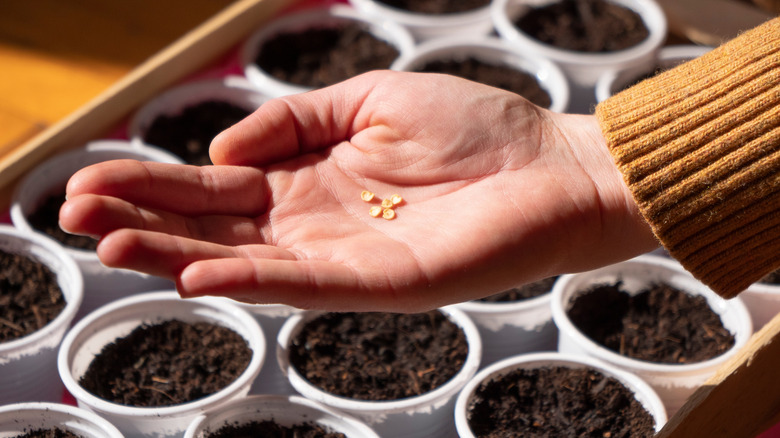
When winter storms cover your garden in inches or feet of snow in January, growing food may be the farthest thing from your mind. But if a delicious harvest of fresh red bells or sweat-inducing habaneros makes your mouth water, then it may be the perfect time to gather up starting mix and nursery pots. That's because slow-growing peppers (Capsicum spp.) are one of the plants you should start sowing in late winter to set your garden up for success.
Unlike cool-season crops, such as radishes, peas, and kale, that we can sow in the garden when the weather is still frosty, peppers need warm growing conditions and can be damaged by cold temperatures. These relatives of eggplants and tomatoes thrive when daytime temperatures are a comfortable 70 to 80 degrees Fahrenheit. However, for germination, a soil temperature of 80 degrees is best, so even indoors, they may need some additional warmth from a heat mat. For some gardeners, January may be the best time to get these seeds started in a cozy location to ensure a tasty harvest, but you'll need to do some calculations to make sure.
Start peppers out of the cold for a healthy summer harvest
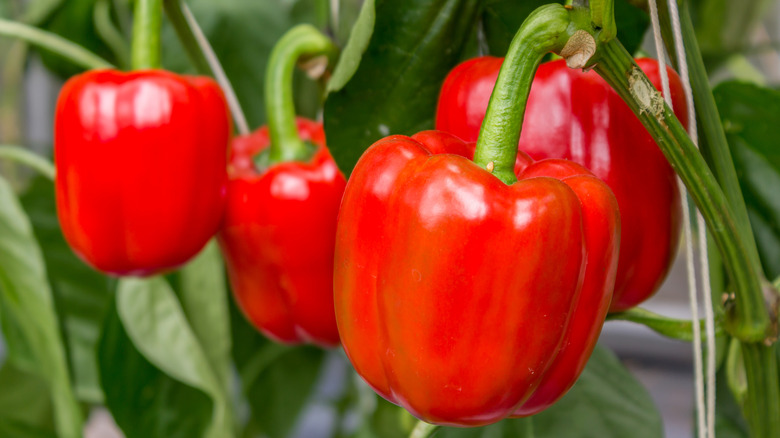
In addition to concerns about frost injuring the plants, another reason you don't want to direct sow seeds in your garden is that this long-season crop needs plenty of time to mature. Depending on the variety, you may need to wait up to 150 days after transplanting to see a successful harvest. To allow plenty of time for the seedlings to grow, you should plan to start peppers six to 12 weeks before transplanting – and you may need grow lights to keep the young plants healthy. If you want to move the seedlings to your garden in early to mid-April, you can start them before the end of January.
No matter how hungry you are for homegrown peppers, transplanting them into the garden in April might be too early for your area, requiring you to sow later than January. Planting seeds too early comes with disadvantages, such as seedlings becoming leggy, which weakens the crop and leads to a poor harvest. Your last frost date will determine the absolute best month to sow this crop indoors. You can start peppers up to ten weeks before your last frost date, and no matter what your cravings are telling you, you should be prudent and wait to transplant them two to six weeks after that same date.