

5 Reasons Why Your Backyard Is Flooding (& How To Prevent It)
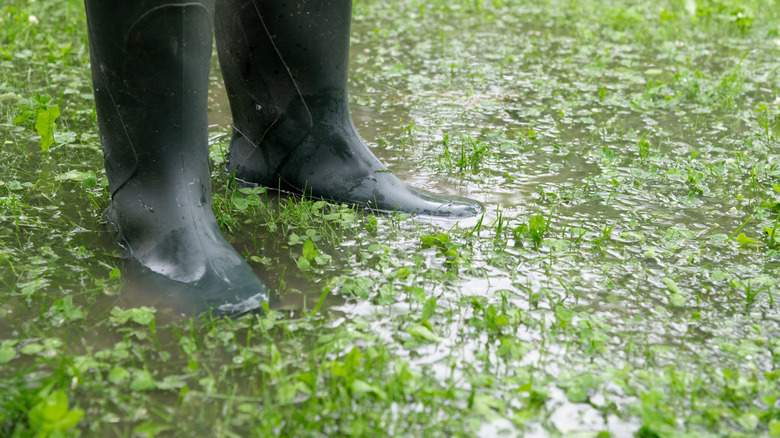
For a healthy, happy lawn, there are a few chores you may wish to handle in your yard after heavy rain. This can include simple tasks like covering any roots that may have become exposed due to erosion or adding some fertilizer in the days following the precipitation. However, tackling these much-needed TLC tasks can be nearly impossible when your backyard is flooding. As a result, it can be helpful to first identify why your yard is turning your home into waterfront property and then how to prevent that unwanted flooding from occurring.
Your backyard can flood for various reasons. One common reason has to deal with the composition of your yard, from factors like soil to grading to drainage. For example, if your soil is compacted, it won't be able to soak up nearly as much water, leaving the excess to pool on the surface. However, flooding can also occur as a result of needed maintenance, such as fixing clogged gutters, or even due to factors completely outside of your control, like a nearby natural water feature.
While many of these potential causes share solutions, there are a few that need specific fixes. Because of this, you'll likely want to figure out the reason why your backyard is flooding before trying to remedy the problem. Fortunately, there are some common culprits to look at first that can be easily fixed by making changes to your backyard.
Poor drainage is the most common culprit
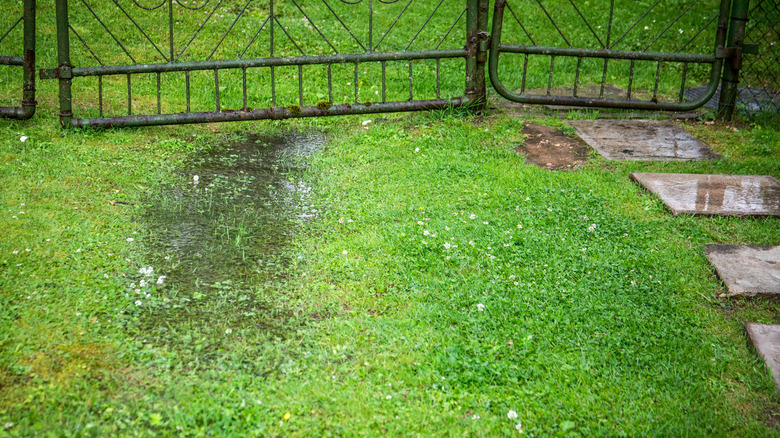
Poor drainage can be one of the top reasons that your backyard may be flooding. After a heavy rainstorm or snow begins to melt in your yard, all that water needs somewhere to go. Without the right drainage, rather than moving out of your yard like it should, that water sits and pools, leading to those flooded conditions you'd rather avoid. In some cases, you may be able to identify this as your culprit due to certain weeds you'll see when your yard has poor drainage.
Just as there are various reasons that your backyard can flood, there are several reasons your yard may have poor drainage. Soil conditions can be a significant factor, with soils composed mainly of clay often draining water at a reduced rate. Having a property with little to no sloping, low spots where water can collect, and other grading problems can also lead to poor drainage, as the water is corralled into a single location to sit.
As a result, to tackle drainage issues in your yard and reduce the likelihood of flooding, try to identify the reason behind your backyard's drainage problems. This can include paying close attention to where the water is pooling during and after a storm. From there, you can work on implementing the right solution, whether that's adding a slope to your yard that helps water drain or investing in a man-made drainage system to direct water out and away from your yard.
Lack of landscaping can lead to water pooling
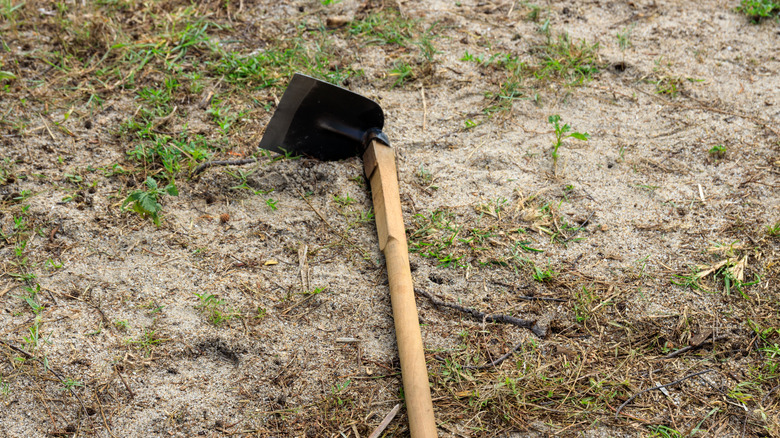
If your yard is no stranger to flooding, then the problem may lay in your landscaping. Plants can be a key part of a healthy yard, with roots that soak up excess water and keep soil in place. As a result, if your lawn is lacking greenery, it could lead to water pooling and a flooded yard after heavy precipitation.
To remedy this problem, consider creating a rain garden in your backyard, or at least incorporating more plants that thrive in wetland or waterlogged soils. Not all plants will do good in these specific conditions, with too much water leading to root problems, but taking time to research the best plants for a rain garden to help with flooding can make a difference in your yard. Adding a rain garden also offers other benefits, such as increased biodiversity that can attract a wide variety of wildlife (hello, spring mornings filled with birdsong) and increase the visual appeal of your backyard.
Of course, adding any plants to your yard can require time and dedication. On the bright side, however, many native plants can offer lower maintenance requirements than their non-native counterparts, as they're designed to thrive in your area's unique environment. Just ensure that you brush up on their ideal locations in your yard and day-to-day care, such as watering and pruning.
Compacted soil causes flooding for more than one reason
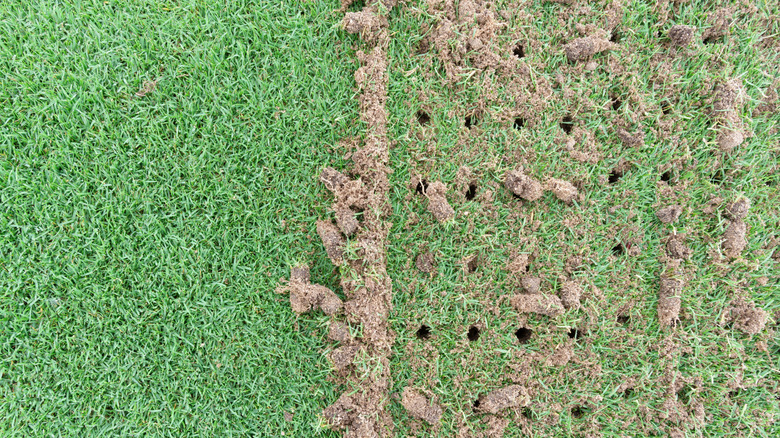
When it comes to the health and structure of your soil, compaction can lead to a whole host of problems. At the surface, compacted soil can cause poor drainage, which is a top culprit behind backyard flooding. However, compacted soil can lead to an increased risk for pooling water for other reasons as well.
Think about how a plant grows, with its roots tunneling and forcing through the dirt as the plant tries to establish itself. In aerated soil, this isn't too much of a feat, allowing plants (which can help reduce flooding) thrive in your yard. However, when your soil is compacted, plants can struggle to establish roots, and plants that do manage to grow may not be able to draw in as much water and nutrients from the soil as they need to survive.
There are several ways to fix compacted soil in your yard, and the right solution for you can depend on your specific situation and the severity of your soil's compaction. However, some options include aerating your soil, such as through plugging, or adding more organic material to the surface of your lawn. However, neither of these solutions will fix soil compaction without time and effort, and it may be worthwhile to add in other flood reducing features or also check out other potential causes as well in the meantime.
Nearby water features can easily overflow
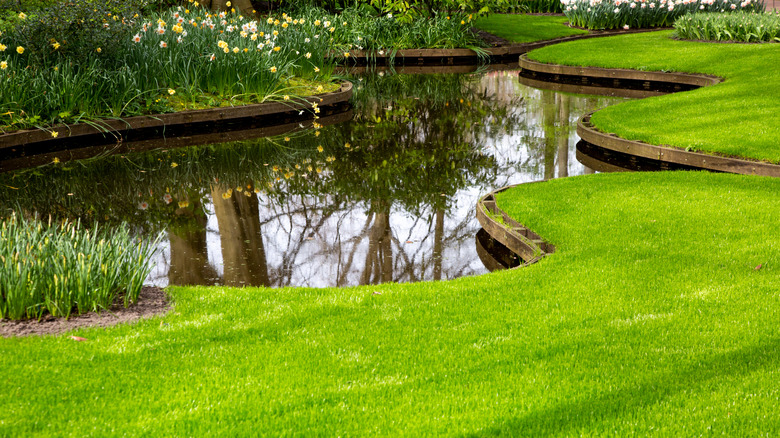
When you're shopping for the perfect home for you and your family, a nearby water feature can be appealing. After all, imagine those balmy summer days of opening your patio door to the sight of a glistening lake or the gurgle of a stream. Unfortunately, while nearby water features can offer visual appeal and an escape into nature, they do come with the downside of increasing the risk of flooding in your yard, especially during times of high precipitation when they may overflow.
Unlike other flood factors that you may be able to control, if the water feature isn't on your property, there may not be much you can do in that regard. On the bright side, many of these other fixes mentioned, such as choosing water-loving plants to soak up excess moisture or ensuring your yard has proper drainage, can help reduce the likelihood and intensity of flooding in your yard as a result of nearby water features.
Adding pavers or even a retaining wall to your yard can help as well. Some types of pavers are designed specifically with water management in mind, giving you functional décor to keep large amounts of water from ruining your yard. A retaining wall can also work, even if you choose a temporary build in advance of upcoming weather, rather than opting for a permanent option. For long-term solutions, ensure that your retaining wall is built with the proper drainage, otherwise you risk it collapsing.
Clogged gutters can lead to water pooling by the side of your house
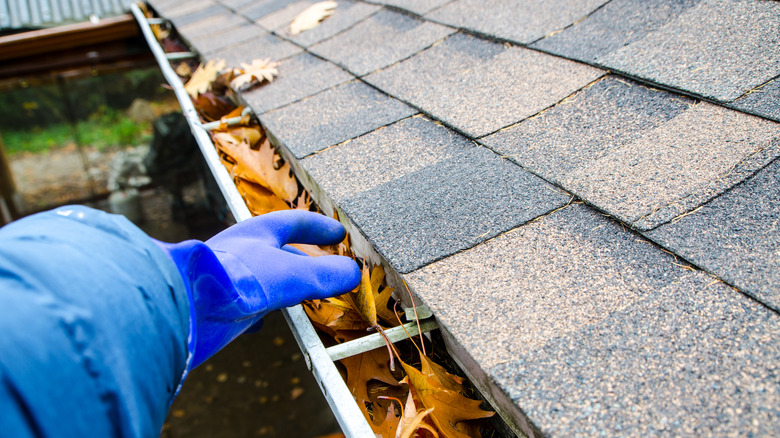
Gutters are the unsung heroes of your home, and while neglecting them may not lead to large-scale flooding throughout the entirety of your yard, it can impact the areas closest to your home. Gutters work by collecting the water that runs off your roof. Then, the water is channeled through your gutters to the downspout, which directs it away from your home's foundation. When your gutters are clogged, they aren't able to collect or direct as much water, which can leave it flowing over the side of your home into your yard. In instances of large amounts of precipitation, all that water building up in your backyard can lead to flooding.
If you're noticing new flooding in your yard that wasn't a problem before, it may be worth taking a look at your gutters. Or, you could keep an eye out for the tell-tale signs that your downspout is clogged. Your downspout could even be disconnected, preventing your gutters from completing their process. In many cases, these seemingly small gutter issues may be the culprit behind your yard's flooding, and a little TLC and maintenance can help.
With that being said, cleaning your gutters by yourself can be a bit risky. After all, in many cases, you'll need to climb a ladder to reach your gutters, even in a single-story house, and there is the concern of dangerous falls. As a result, if your goal is to maintain your gutters yourself, make sure to brush up on safety precautions. You may also wish to reach out to a professional for help with this outdoor chore.